
 AI photo
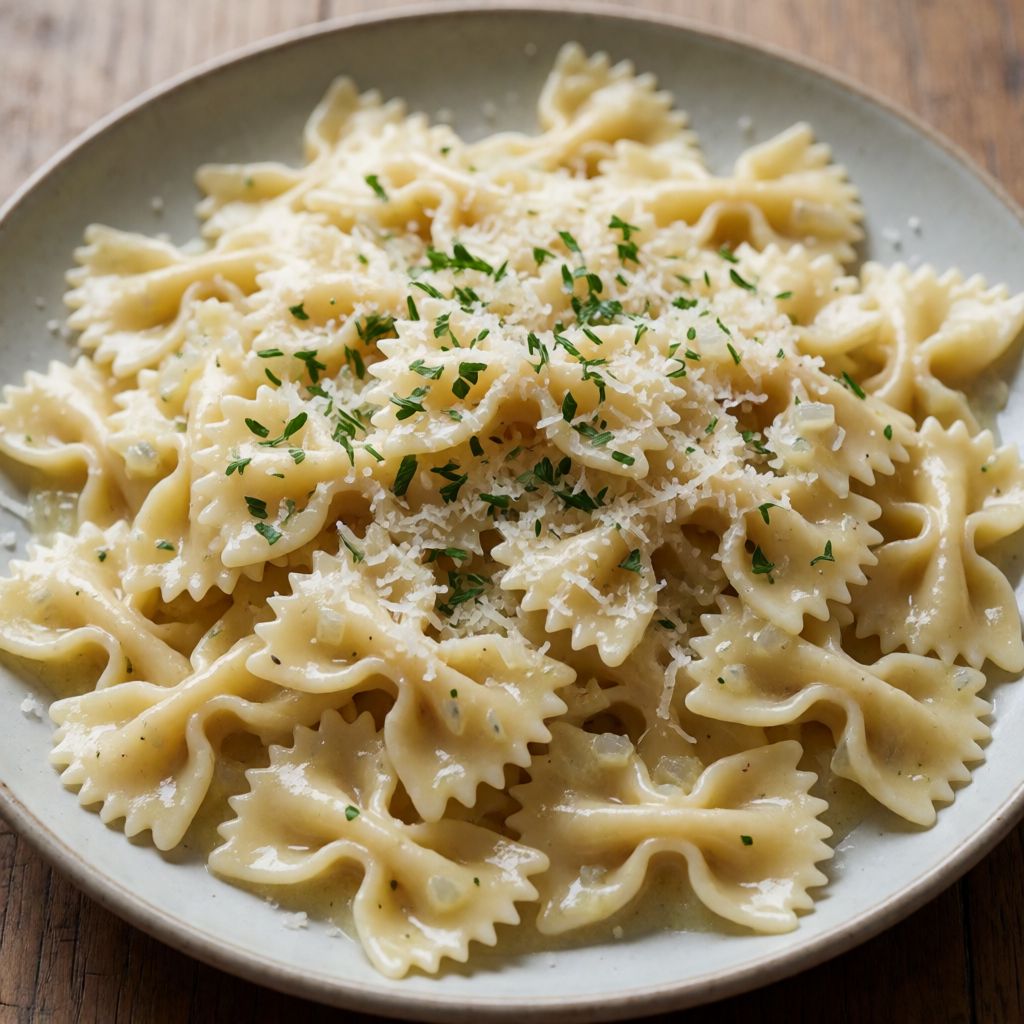
Farfalle with Creamy Lemon Sauce
A quick pasta dish with a creamy lemon sauce, finished with butter, cream cheese and parmesan.
Labels are worked out automatically from the ingredients and can be wrong. Check the packaging if it matters to you.
Ingredients
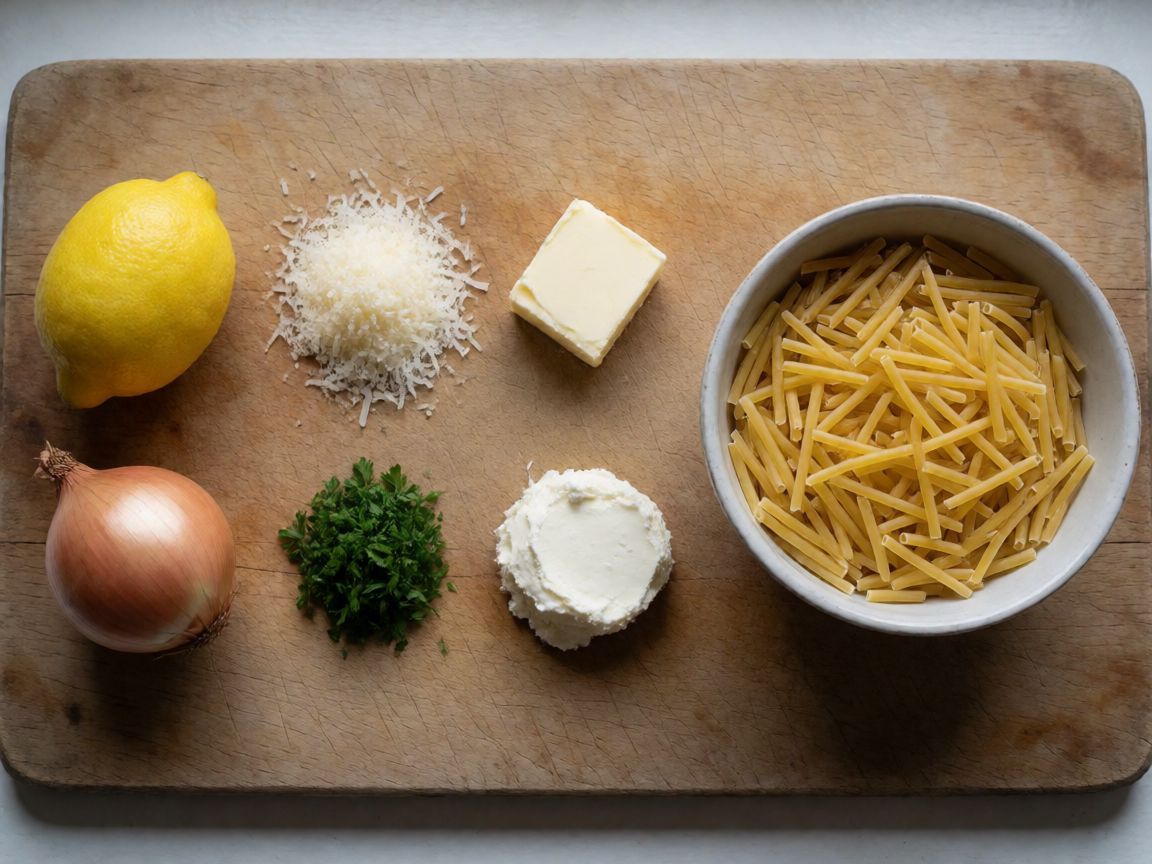
- 1 pcs Lemon
- 1 tbsp Parmesan
- 30 g Butter
- 1 pcs Onion
- Parsley to taste
- 80 g Cream cheese
- Salt to taste
- White pepper to taste
- 400 g Pasta (farfalle)









Steps
Zest the lemon and squeeze out its juice.
Cook the pasta in salted boiling water. In a pan, fry the chopped onion in butter, then add the lemon zest and pour in the lemon juice.
Add ground white pepper and transfer the drained, al dente pasta into the pan.
Mix in the cream cheese and 1 tablespoon of the pasta cooking water until the sauce is smooth and creamy.
Stir in the parmesan and serve, sprinkled with freshly chopped parsley.
Farfalle with lemon and cream cheese is a weekday dish built on one small trick: you make a cream sauce without cream. The thickness comes from cream cheese and a spoonful of starchy pasta water, not from reducing liquid on the heat. What decides whether this works is temperature at two specific moments — when the onion meets the butter, and when the cream cheese meets the pan.
Butter melts, the onion goes in while that fat is just shimmering, not spitting. You want the onion to go from white to gold, soft enough to give under a spoon — if it starts browning at the edges you've gone too far and the sweetness turns bitter. This onion is the base note the whole sauce stands on; skip softening it properly and the finished dish tastes thin, like lemon water with pasta in it.
Lemon goes in two parts, in order, and the order isn't fussiness, it's forced by the fruit. Zest first, because the fragrant oil sits only in that outer yellow skin — the white pith underneath is bitter and brings nothing useful. Juice second, because once a lemon is squeezed you can't zest it anymore.
The real hinge of the recipe is the moment cream cheese goes in. Some say — no, don't boil a cream sauce to thicken it, that's how you split it. Dairy protein tightens and grains when it meets fierce heat too fast; what thickens this sauce isn't evaporation, it's the fat in the cheese binding with the starch in the pasta water into something smooth. Pull the pan back from a hard bubble before the cheese goes in, and it melts into silk instead of curdling into little white flecks on your plate.
Farfalle itself is chosen for shape, not whim — the folds hold a thin sauce in little pockets instead of letting it slide off the way a flat noodle would. Any short pasta with a ridge or a twist does the same job: fusilli, conchiglie. A UK bag is usually 500g, so you'll have some left over for another day; 400g is roughly four fists of dry pasta if you'd rather not weigh it.
Onion and butter work as one unit here. A standard yellow or white onion, chopped fine enough to soften within a few minutes but not to mush, gives the sauce its sweetness; a shallot or two does the same job more gently, same mechanism, smaller dose of sugar breaking down in fat. Butter carries that flavour because milk solids in butter are already a small emulsion on their own, which is why it helps the sauce hold together later too. If you have none, any fat with no smell of its own and a tolerance for gentle simmering stands in — a neutral oil, say — though you lose a little of that round, dairy finish at the end.
The lemon should be firm with tight, unblemished skin; a soft or wrinkled lemon has already lost oil from its zest to the air, which is the only part doing real flavour work — the juice is just sourness. UK lemons are usually waxed for the shelf, so give it a hot-water wash and a scrub before zesting, or you're grating wax into dinner, not flavour.
Cream cheese is the whole structural idea of the dish. It's already a stable mix of fat and protein, so it doesn't need the slow, careful cooking a raw cream or milk sauce demands to hold together — which is exactly why this works on an ordinary flat's hob, no bain-marie, no standing over a pot of simmering water with a whisk. Mascarpone is close enough in fat and does the same job with a sweeter edge; a low-fat soft cheese won't, because it carries less fat to anchor the emulsion and tends to weep water back out once warm.
Parmesan goes in last, off any serious heat, for salt and the long-aged sharpness no fresh cheese has — grate it yourself if you can, since the pre-grated bags carry anti-caking starch that dulls both melt and taste. White pepper rather than black isn't fussiness either, it's about the plate: black pepper would fleck a pale cream sauce with dark specks that read as dirt rather than seasoning. No white pepper in the cupboard — finely ground black, sieved through a tea strainer, gets you most of the way, with a touch more heat and a touch less of that faint fermented edge white pepper has.
The one thing no ingredient list can give you is a mug of the pasta's cooking water, scooped out before draining. It's cloudy with starch washed off the pasta's surface, and that starch is what lets fat and liquid sit together as a sauce instead of splitting into grease on top and watery lemon underneath. Once it's down the drain there's no getting it back. And patience is the real last ingredient here — bring the sauce together slowly over gentle heat, stirring, rather than forcing it hot and fast. Rushed, it splits. Given a minute, it holds.