
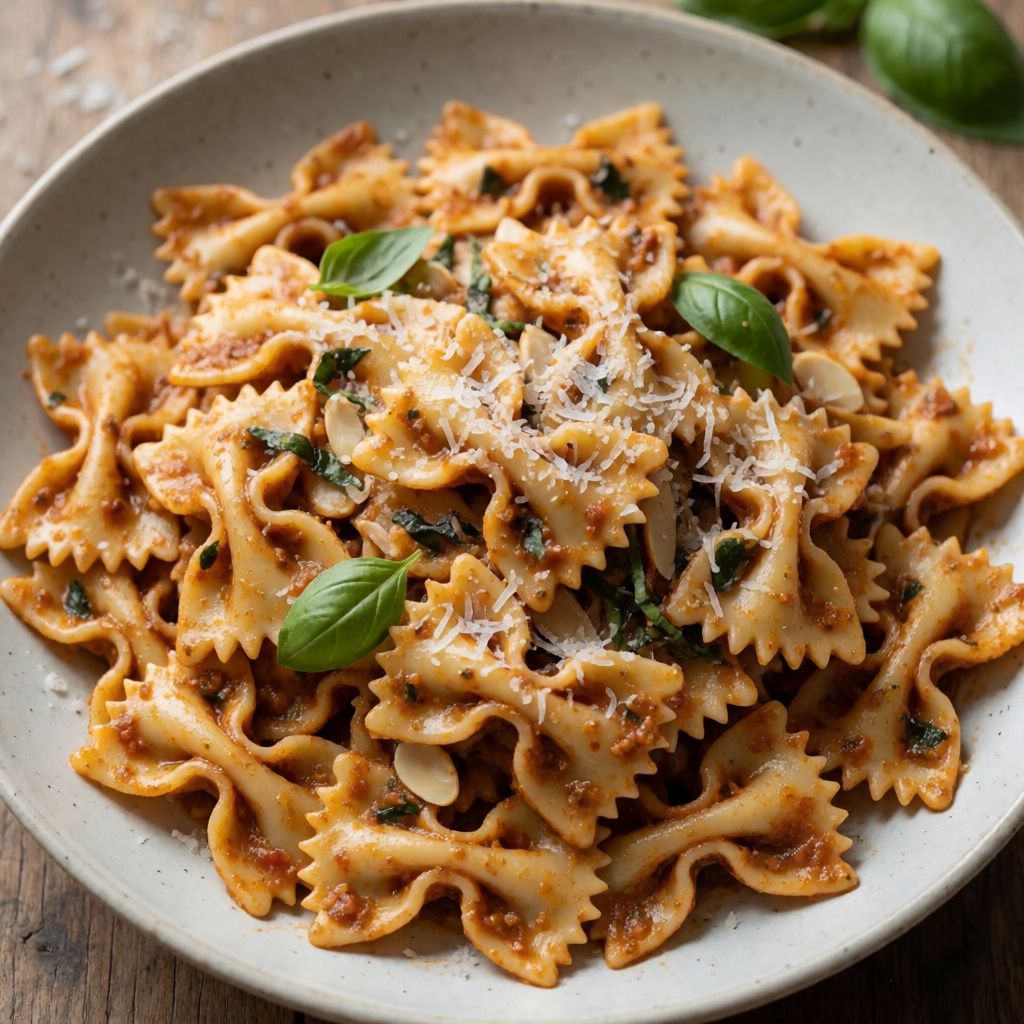
 AI photo
Farfalle Pasta with Basil and Sun-Dried Tomato Pesto
A quick pasta dish tossed in a vibrant basil and sun‑dried tomato pesto.
Labels are worked out automatically from the ingredients and can be wrong. Check the packaging if it matters to you.
Ingredients








Steps
Cook the farfalle in salted water; meanwhile, blend the basil, salt, sun-dried tomatoes, almonds, Parmesan and olive oil in a blender until you have a rough pesto.
12 minDrain the pasta al dente and toss it with the prepared pesto.
3 minServe, sprinkled with grated Parmesan to taste.
2 min
This isn't a cooked sauce, it's a cold paste that rides along the hot pasta. Basil, sun-dried tomato, almonds, cheese and oil go into the blender raw and stay raw — the only heat they ever see comes off the farfalle itself. So the whole dish stands or falls on two things meeting at the right moment: pasta still with bite, and pesto still tasting like itself and not like bruised green mush.
The real danger isn't the pasta — boiling water is forgiving, you taste a piece, it bends between your teeth instead of fighting you, done. The danger is the blender. Basil leaves are thin and full of chlorophyll that oxidises fast once the cell walls break; run the motor too long and the friction heat turns bright green into a tired khaki and the taste goes from sweet-grassy to bitter, almost metallic. Pulse it. Short bursts, check, pulse again. You want the leaves torn open, not cooked by the blade.
Some say pesto has to be done in a mortar, by hand, or it isn't real pesto. No — because the mortar's whole job is exactly what the blender does: rupture the cell walls so the chlorophyll and oils release and bind with the fat and salt into one paste. A pestle just does it slower and cooler. If your blender runs hot, that's the one real argument for the mortar — not tradition for its own sake, physics.
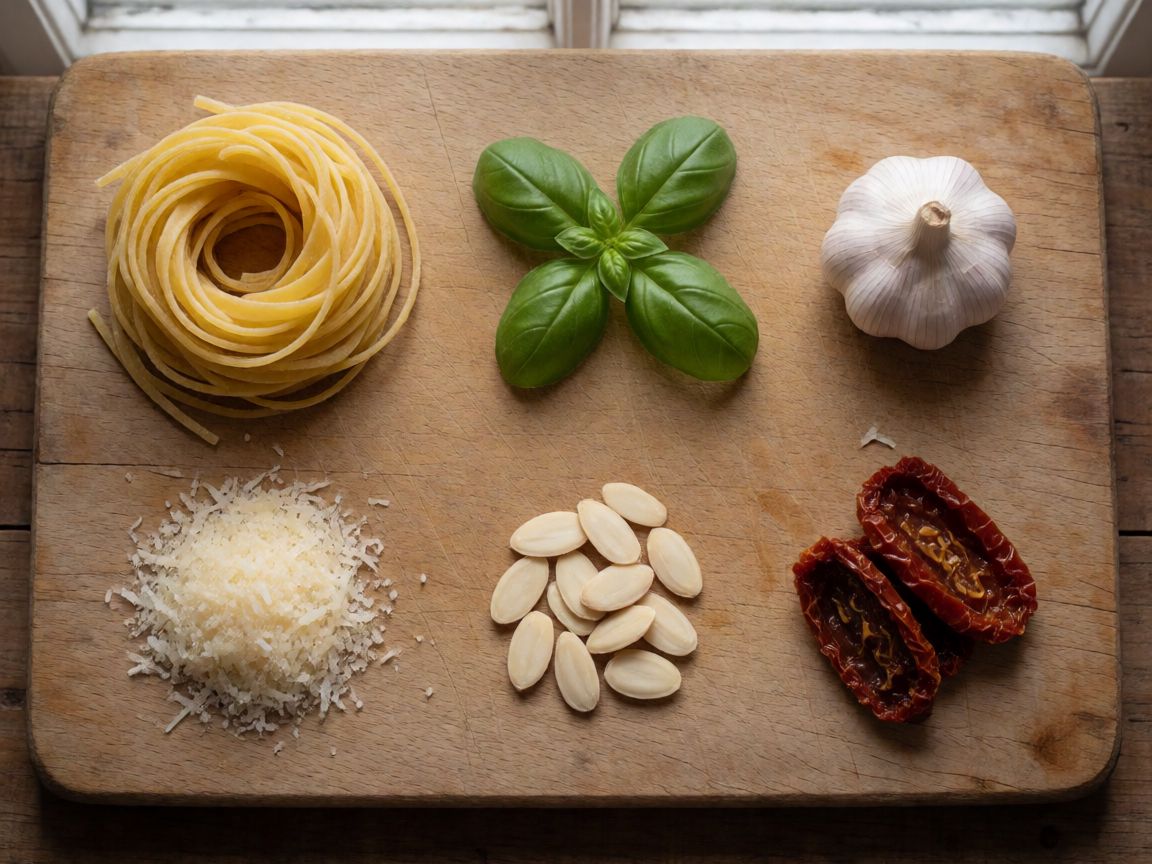
Basil is the one ingredient with no real substitute here — its aroma is the whole point of calling this a basil pesto rather than just a tomato-nut paste. Buy it with leaves that give a little under your thumb, not ones already blackening at the edges — black spots mean the leaf has already started the same oxidation you're trying to avoid in the blender, just slower. If you truly have none, parsley will make something edible and green, but say goodbye to the smell that made you want this dish in the first place — that's not a swap, that's a different sauce wearing the same name.
Garlic goes in raw, one clove, no more — it's there to sit at the back of the taste, not to announce itself over the basil. If a raw clove this size frightens your digestion more than your tongue, you can drop it into the pasta water for the last minute of boiling to soften its edge; it won't taste identical, but it won't fight everyone at the table either.
Parmesan does two jobs at once: salt and body. The hard, aged rind gives you crystalline bits of flavour and enough natural salt that you should taste before adding more at the start — easy to over-salt a pesto that already has salty tomato and salty cheese in it. Any hard, long-aged cheese with real bite will do the same work — pecorino romano, for instance, which is saltier still, so go lighter on it.
Almonds carry fat, and fat is what lets a blended paste turn into a sauce instead of staying a rough paste that won't coat the pasta. Raw or lightly toasted both work — toasted gives you a rounder, warmer note, raw keeps things cleaner and closer to the basil. Any oily nut can stand in here on the same logic — cashew, walnut, even sunflower seeds in a pinch — the test is fat content, not the specific nut in the jar.
The sun-dried tomatoes are drying's whole economic reason for existing: a way to keep summer's surplus tomato edible through winter by pulling the water out and concentrating everything that was left — sugar, acid, the tomato taste itself, all packed smaller. Jarred in oil, they're already softened and already carrying flavoured oil you can blend straight in; the dry, unsoaked kind need a soak in warm water first or they'll grind up tough and leathery instead of pasting smooth.
For the oil, the rule is simple: in a sauce that never gets cooked, every flavour the oil itself carries ends up in your mouth undiluted, so use one with a taste you actually want there — a decent extra virgin olive oil, not the cheapest bottle on the shelf, and not a neutral one either, since here the oil's own character is doing real work, not hiding behind heat. On an ordinary flat's hob there's no kazan and no need for one — just use your biggest pot for the pasta water, because an undersized pot loses its boil the second you drop the farfalle in, and pasta cooked in water that's stopped boiling turns gluey rather than firm. Keep a cup of that pasta water back before you drain — a splash stirred into the tossed pasta loosens the pesto just enough to coat every bowtie instead of clumping in patches, and costs you nothing but remembering to do it.