
 AI photo
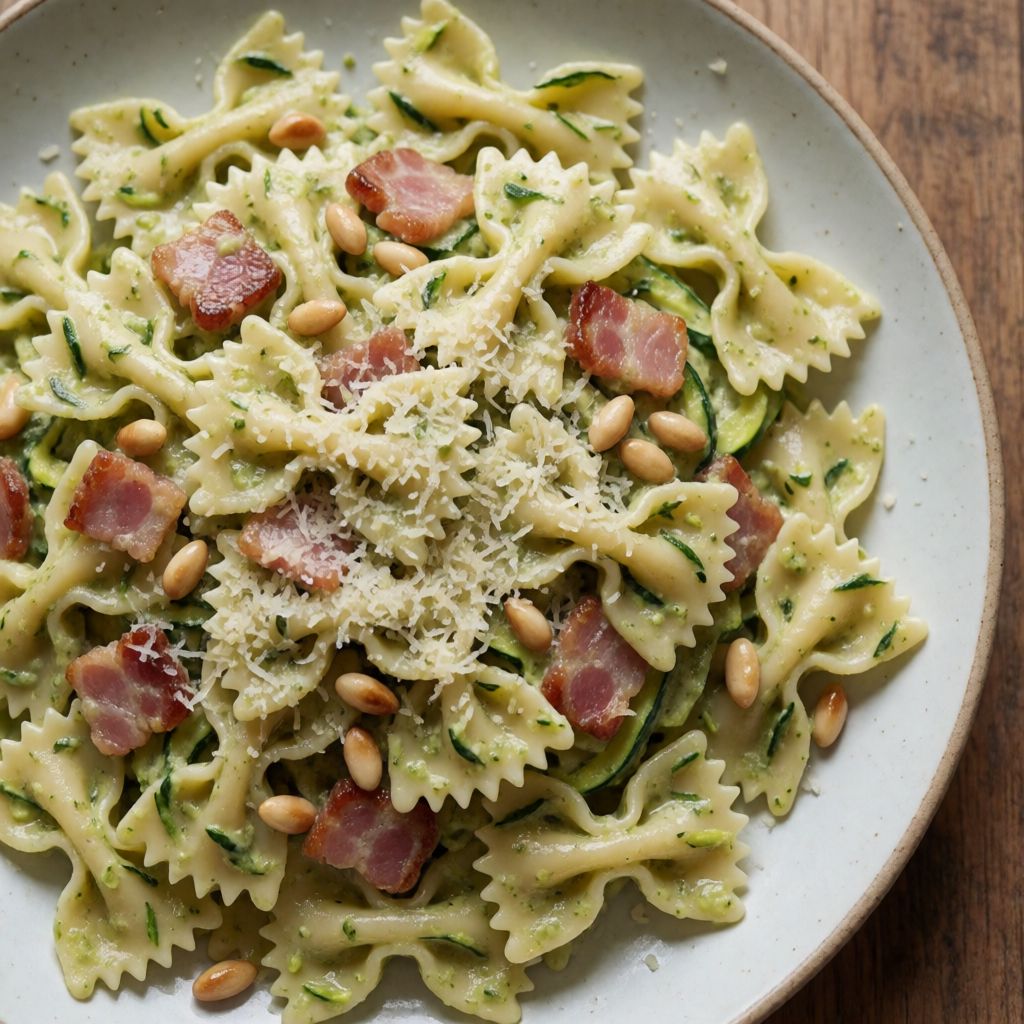
Farfalle with Courgette Pesto and Bacon
A quick pasta dish with a creamy courgette pesto and crispy smoked bacon.
Labels are worked out automatically from the ingredients and can be wrong. Check the packaging if it matters to you.
Ingredients
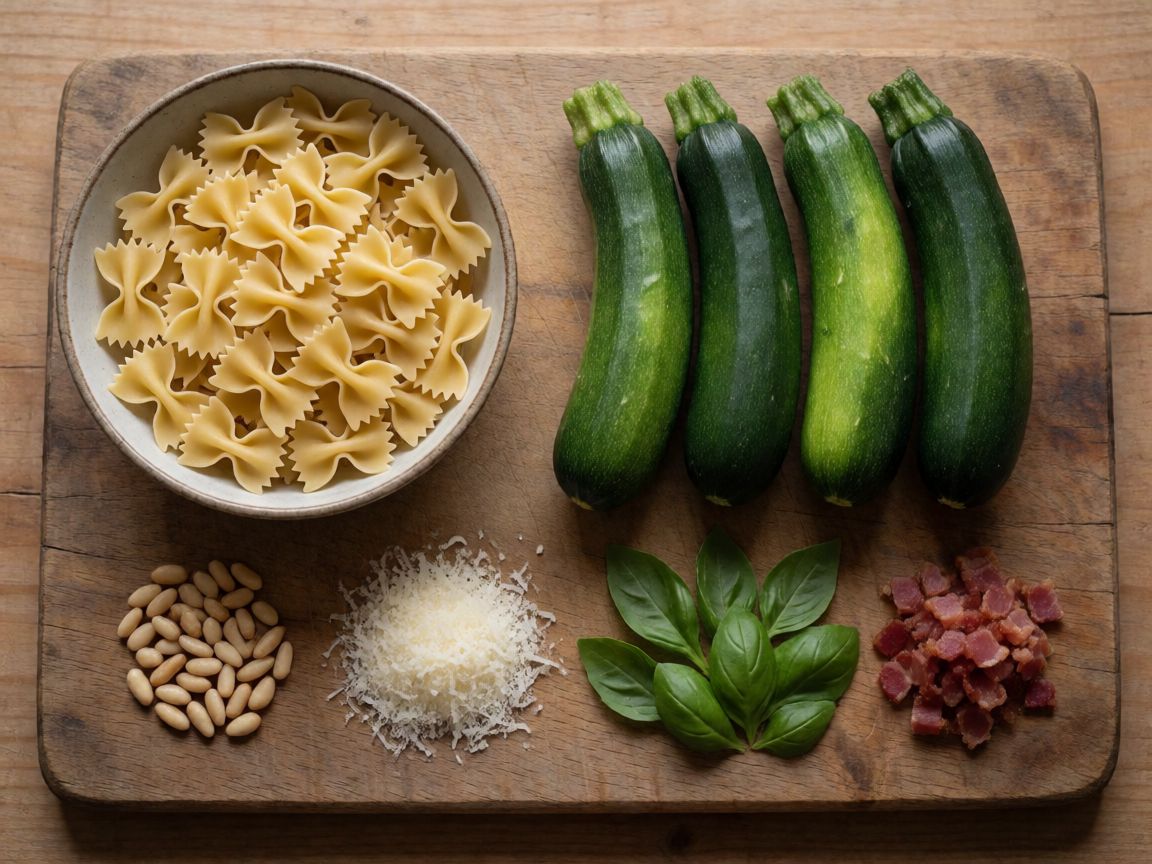








Steps
While the farfalle cook in a large pot of salted boiling water, cut the washed and dried courgettes into large chunks.
10 minBlitz the courgettes in a blender, then add the basil, pine nuts, grated pecorino romano and parmesan, and a pinch of salt.
5 minBlend until smooth, gradually drizzling in enough olive oil to make a very creamy pesto.
2 minFry the smoked bacon in a pan; make sure it reaches an internal temperature of at least 70°C.
8 minAdd the drained al dente farfalle to the bacon and toss with the courgette pesto.
3 minServe, garnished with grated pecorino romano and a basil leaf.
1 min
What you're making is pesto logic stretched over a glut vegetable. Classic Genoese pesto is basil pounded with pine nuts, two hard cheeses and oil until it holds together as a thick green paste — the word itself just means "pounded." Here most of the basil is swapped for raw courgette, so you get a lighter, less intense version that still behaves like a pesto if you build it the same way. Add bacon, because a vegetable sauce this mild needs something salty and smoky to lean on, and you have a weeknight pasta that isn't trying to be Italian so much as using an Italian trick to deal with four courgettes nobody asked for.
The whole dish turns on one moment: drizzling the oil into the running blender. Do it slowly and the oil breaks into tiny droplets that get trapped in the courgette pulp and the grated cheese, which is what gives you "very creamy" instead of "watery with an oily skin on top." Tip the oil in all at once and it has nowhere to go but up — it floats, the pulp stays wet and thin underneath, and you've made courgette juice with a slick on it, not a sauce. This is the same physics as mayonnaise, just with less patience required and more forgiveness if it wobbles.
Courgette is the reason this recipe exists at all, and it's worth saying why: it's a plant that gives you kilos from one allotment row in a British August, and it has almost no flavour of its own, which is exactly what makes it a good base rather than a good star. Pick ones that feel heavy and firm for their size — soft ones have gone spongy inside and will give you more water, not more pesto. There's no real substitute that keeps the dish's point, which is lightness; if you must, a courgette-marrow mix works, but a proper marrow alone is too watery and bland even by this dish's low standards.
Pine nuts bring fat with almost no taste of their own, which is their job — they thicken the pesto without arguing with the basil. The criterion for swapping them: any nut that's mild and buttery rather than sharp or bitter. Cashews do the job almost identically and cost less; walnuts work but push the pesto towards something more autumnal and slightly tannic; skip almonds unless blanched, the skins turn the sauce grey-flecked and bitter.
Basil is doing more work than its small quantity suggests, because it's the only ingredient here with real aroma — courgette, cheese and oil are all mild or fatty, basil is the only sharp top note. Wash it and dry it properly before it goes anywhere near the blender: water clinging to the leaves dilutes the pesto, and bruised wet leaves blacken faster once cut. For the garnish leaf at the end, tear it by hand rather than slicing it — a metal blade speeds up the browning, your fingers don't.
Pecorino and parmesan together aren't fussiness, they're balance: pecorino is sheep's milk, sharper and saltier; parmesan is nuttier and rounder. Use one alone if that's what's in the fridge, just taste before you add extra salt — pecorino alone will usually cover it. The oil you want here is the opposite of what you want for frying: for a raw pesto you want an oil with its own fruity character, because it's not just a carrier, it's a flavour in the finished sauce — a decent extra virgin olive oil, not the cheapest bottle on the shelf. For the bacon, don't add any oil at all; British smoked bacon, back or streaky, renders its own fat as it heats, and extra oil just makes the pan spit and the bacon pale instead of browned.
Patience is the actual ingredient in step 3, more than any single item on the list. Rushing the oil in breaks the emulsion; rushing the bacon before it's rendered its fat leaves you with limp, sweating strips instead of ones with some bite at the edge. If your finished pesto still looks tighter than you'd like once it hits the hot pasta, loosen it with a splash of the pasta's own cooking water rather than more oil — the starch in it binds sauce to pasta in a way raw oil never will, and it costs you nothing, since you were about to pour that water down the sink anyway.