
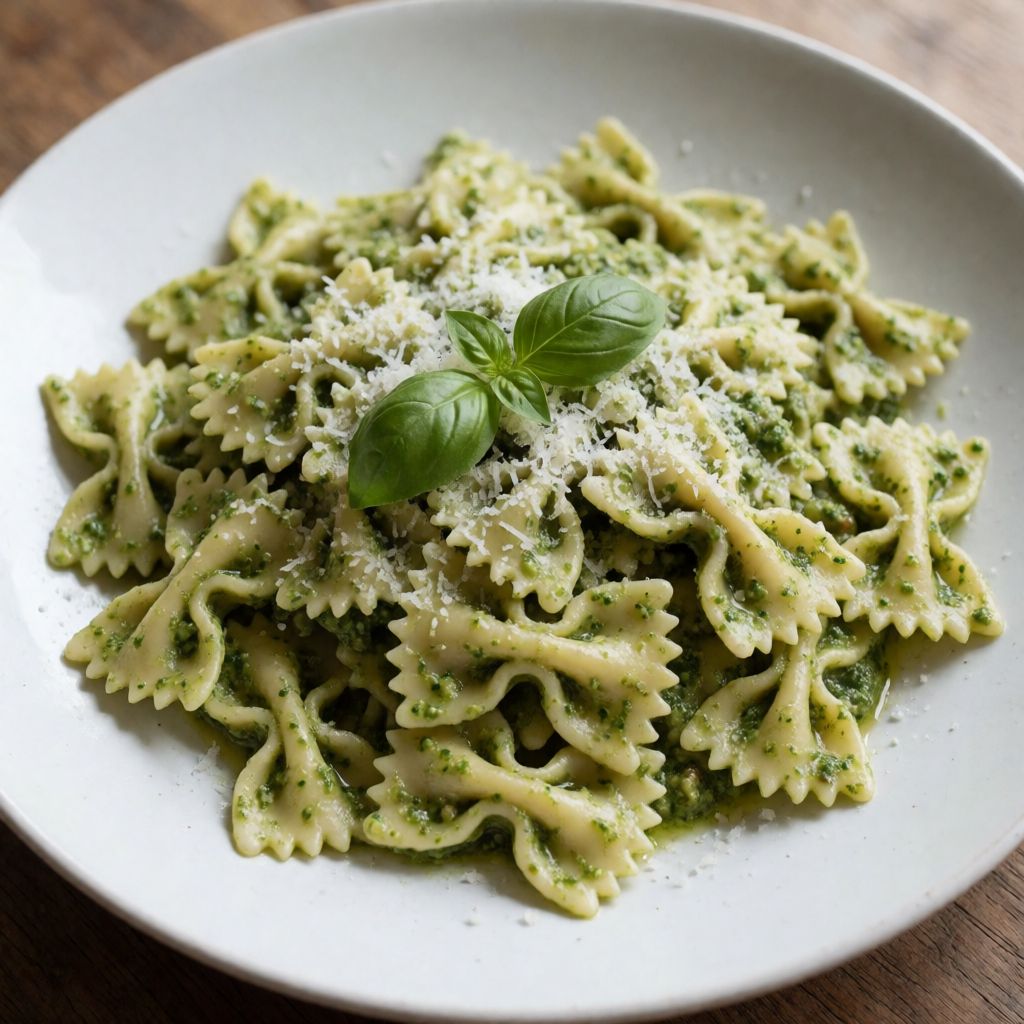
 AI photo
Rocket and Basil Pesto Farfalle
A quick farfalle pasta dish tossed with a fresh rocket and basil pesto.
Labels are worked out automatically from the ingredients and can be wrong. Check the packaging if it matters to you.
Ingredients
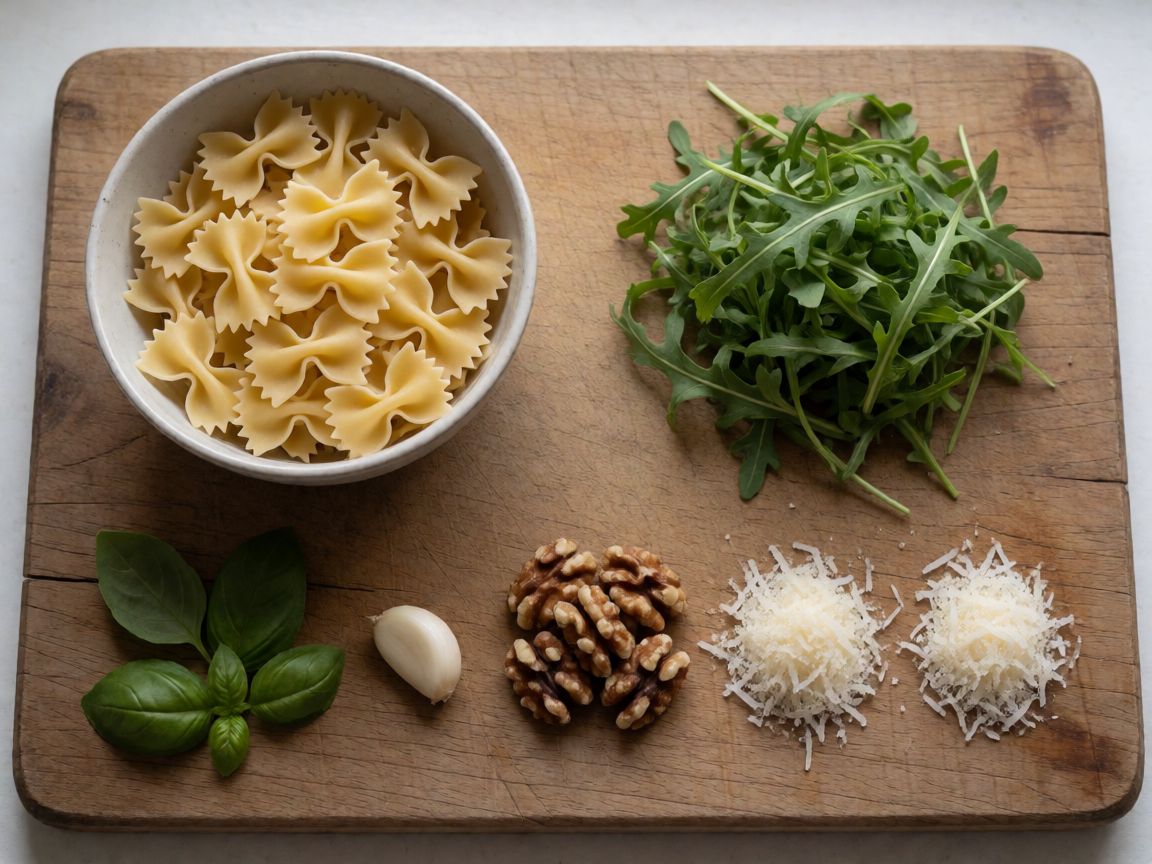









Steps
In a blender, combine the rocket, basil, garlic and a pinch of salt and blitz until smooth.
5 minAdd the walnuts, Pecorino Romano and Parmesan, plus the olive oil, and blend until you have a smooth, runny pesto.
5 minCook the farfalle in salted boiling water until al dente.
12 minDrain the pasta, reserving a little of the cooking water, and toss with the pesto.
2 minServe, sprinkling with extra Pecorino Romano if you like.
1 min
This dish is nothing more than a cold, raw sauce - the pesto - meeting a hot one - the pasta - and the whole trick is in how those two different temperatures agree to work together. Everything that can go wrong here goes wrong either in the blender or in the draining colander, nowhere else.
First the blender. You are not cooking the greens, you are crushing them, and a blender does that by friction - the blades spin fast enough to generate real heat at the cutting edge. Run it too long or too fast and the basil and rocket go from bright green to a tired khaki, and the flavour turns bitter and a bit cooked, even though nothing touched a flame. Some say you need a mortar and pestle for a pesto that stays green - no, because the mortar is not magic, it is just slow and cold by nature. A blender does the same job if you pulse it in short bursts, scraping down between them, and don't let it run on. Cold ingredients, short bursts - that's the whole secret, not the tool.
Rocket and basil together is not a compromise, it's an old trick dressed as a modern one. Classic basil pesto comes out of Liguria, where basil was grown on terraces in quantity and nothing else much was - so basil alone made economic sense there. In a British kitchen, basil sold in little plastic clamshells is expensive and wilts if you look at it wrong, while rocket is cheap, grows like it's trying to escape the garden, and keeps its peppery bite even after a few days in the fridge. Using rocket to bulk out a small, pricier bunch of basil isn't cutting corners - it's the same economic logic that built the original dish, just transplanted to a different vegetable patch. The rocket also brings its own pepperiness, which basil alone can't give you, so the flavour isn't a diluted basil pesto, it's a different, sharper thing.
Garlic: one clove, raw, blitzed straight in with the greens. Raw garlic is sharp because crushing it releases a compound that basically doesn't exist in the whole clove - cut it and you get a mellow smell, crush it hard and fast in a blender and you get the full punch. If a whole clove feels aggressive to you, use half, or a smaller clove - don't cook it first, because cooked garlic is a different, sweeter flavour, and that's not what a raw pesto is for.
Walnuts stand in for the pine nuts you'd find in a Genovese pesto, and the swap works for a plain reason: what the nut is actually doing is adding fat and body to bind the sauce, and any nut oily and mild enough to melt into the paste rather than fight it will do that job - walnuts, pine nuts, even a blanched almond at a push. Skip anything bitter-skinned or strongly flavoured (a raw peanut, say) because it'll argue with the greens instead of supporting them.
Pecorino Romano and a spoon of Parmesan together give you two different kinds of hard cheese doing two different jobs - the Pecorino, made from sheep's milk, brings a sharper, saltier edge; the Parmesan softens that with a rounder, slightly sweeter note. If you've only got one of the two, use more of it and taste as you go, because the salt in the dish is largely coming from these cheeses plus the pasta water, not from a separate pinch added by hand.
Olive oil here isn't a cooking medium, it's doing the same job raw oil always does in this kind of sauce - carrying flavour and binding the paste - so the criterion is simple: use an oil you'd be happy to drink cold off a spoon, because that's effectively what's happening to it. A flavourless oil would just go missing in the mix. If you've no olive oil, reach for another cold-pressed oil with its own character, not a neutral one, because neutral is the wrong direction entirely for this particular sauce.
Last thing, and it costs nothing but is skipped more than anything else here: wait. Let the blended pesto sit a minute before you taste and adjust it, let the pasta actually drain rather than rushing it from pot to pan, let the starchy water do its slow work of binding instead of stirring once and giving up. None of this needs a kazan or a professional hob - a wide pan and an ordinary British electric ring handle it fine - it needs you not to hurry the last two minutes.