
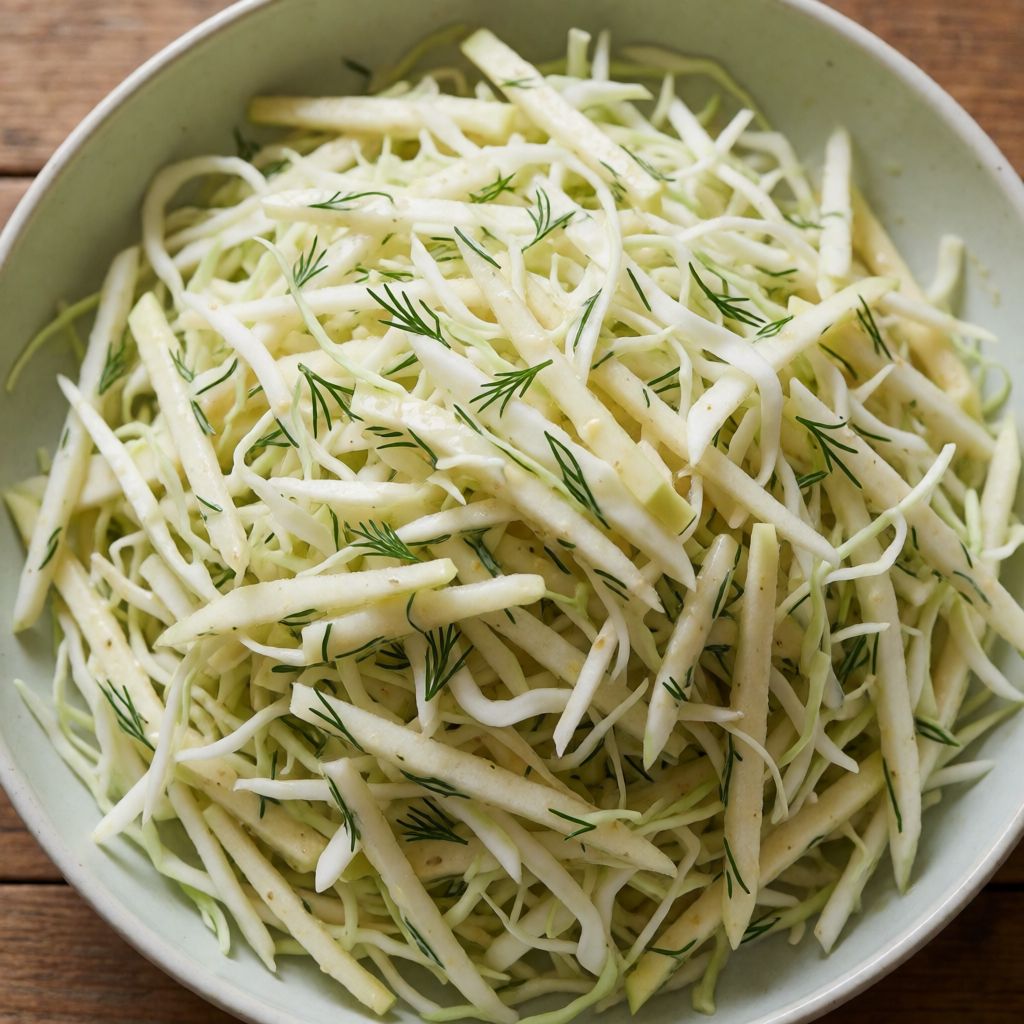
 AI photo
Fennel Salad
A crisp salad of fennel, cabbage and apple tossed in a tangy yogurt dressing.
Labels are worked out automatically from the ingredients and can be wrong. Check the packaging if it matters to you.
Ingredients
- 150 g Pointed cabbage thinly sliced
- 2 pcs Fennel thinly sliced
- 1 pcs Apple cut into wedges
- 2 bunch Dill roughly chopped, fresh
- 200 ml Yogurt
- 1 tsp Dijon mustard
- 1 tsp Honey
- ½ pcs Lemon juice and finely grated zest
- Salt to taste
- Black pepper freshly ground, to taste







Steps
Mix the ingredients for the yogurt dressing and season with salt and pepper to taste.
2 minToss the dressing with the cabbage, fennel and apple.
Scatter generously with dill just before serving.
This is not a cooked dish at all — the only heat in the whole recipe is the warmth of your hand on the knife. It's a raw slaw: cabbage and fennel sliced thin enough to behave like something dressed, not something that needs forty minutes under salt to go soft. The whole mechanism rests on three things — how thin you cut, how balanced the yogurt dressing is, and how late you throw the dill in.
Pointed cabbage and fennel are both fibrous and crunchy raw. Cut thick, they stay stubborn and the dressing just sits on top of them like rain on a car bonnet. Cut thin — shave thin, really, a knife held almost flat to the board — and the surface area multiplies, the yogurt clings, and the fibres start to give almost at once without needing an hour in the fridge. That's the whole trick of a slaw: you're not softening the vegetable by waiting, you're softening it by exposing more of it.
Some say fennel only works cooked, that raw it's too aggressive, too aniseed. No — because thin slicing and an acidic, fatty dressing do to fennel exactly what braising does, just by a different route: they blunt the sharp top notes and leave the sweetness. You lose nothing by skipping the pan here, and you gain the crunch that cooking would have taken away.
The apple is there to do what the fennel can't — add a different kind of sweetness and a wetter crunch — and the lemon in the dressing is doing double duty: cutting the yogurt's flatness and stopping the apple going brown and sad on the plate before it even reaches the table.
Pointed cabbage (sometimes sold as sweetheart) is the right choice because it's softer-leaved and sweeter than a round white cabbage, which fights back too hard raw. If you only have white or red cabbage, use it, but shave it thinner still and expect a firmer bite — nothing wrong with that, it's just a different salad.
Fennel: buy the bulb, not the seed, and pick one that feels heavy and tight, not spongy — a spongy bulb has already given up its moisture and will taste of not much. Slice across the bulb, following the natural curve of the layers, and you get those pale, almost translucent half-moons that take dressing well. No fennel in the shop? Celery sliced thin gives you the crunch without the aniseed, which is an honest substitution, not a cheat.
The dressing is yogurt carrying mustard, honey and lemon — three things doing three different jobs, not decoration. Mustard is an emulsifier before it's a flavour: it's what stops the oil-free, fat-light yogurt dressing separating into watery yogurt and sharp lemon juice sitting at the bottom of the bowl. Honey balances the sourness of the lemon and the slight bitterness fennel still carries even raw. Use a plain yogurt with a bit of fat in it — thin, watery fat-free yogurt won't coat the vegetables, it'll run off them, and you'll end up with dressing pooling at the bottom of the bowl instead of clinging to the cabbage. Greek yogurt works, just loosen it with a spoon of water or extra lemon juice so it coats rather than sits.
Salt and pepper go into the dressing itself, not onto the salad afterwards — seasoning the liquid means every shred of cabbage gets some, rather than you finding a salty patch and a bland patch on the same fork.
Dill goes in last, and this is the one place patience runs backwards: here the patience is in waiting, not in cooking. Dress it too early and the warmth of the kitchen plus the acid in the dressing will wilt it into something closer to spinach than herb, and you lose the point of it — that fresh, almost medicinal green note cutting through the yogurt. Scatter it at the very end, ideally after the bowl has already reached the table.
For a Sunday roast this earns its place the same way a sharp apple sauce does — it's not there to be the main event, it's there to cut the fat on the plate. Make it in the ten minutes while the meat rests, and don't toss cabbage, fennel and apple with the dressing until you're nearly ready to serve: salt and acid will pull water out of the cabbage the longer it sits, and a slaw that's been dressed an hour early is a slaw sitting in its own juice by the time it reaches the table.