
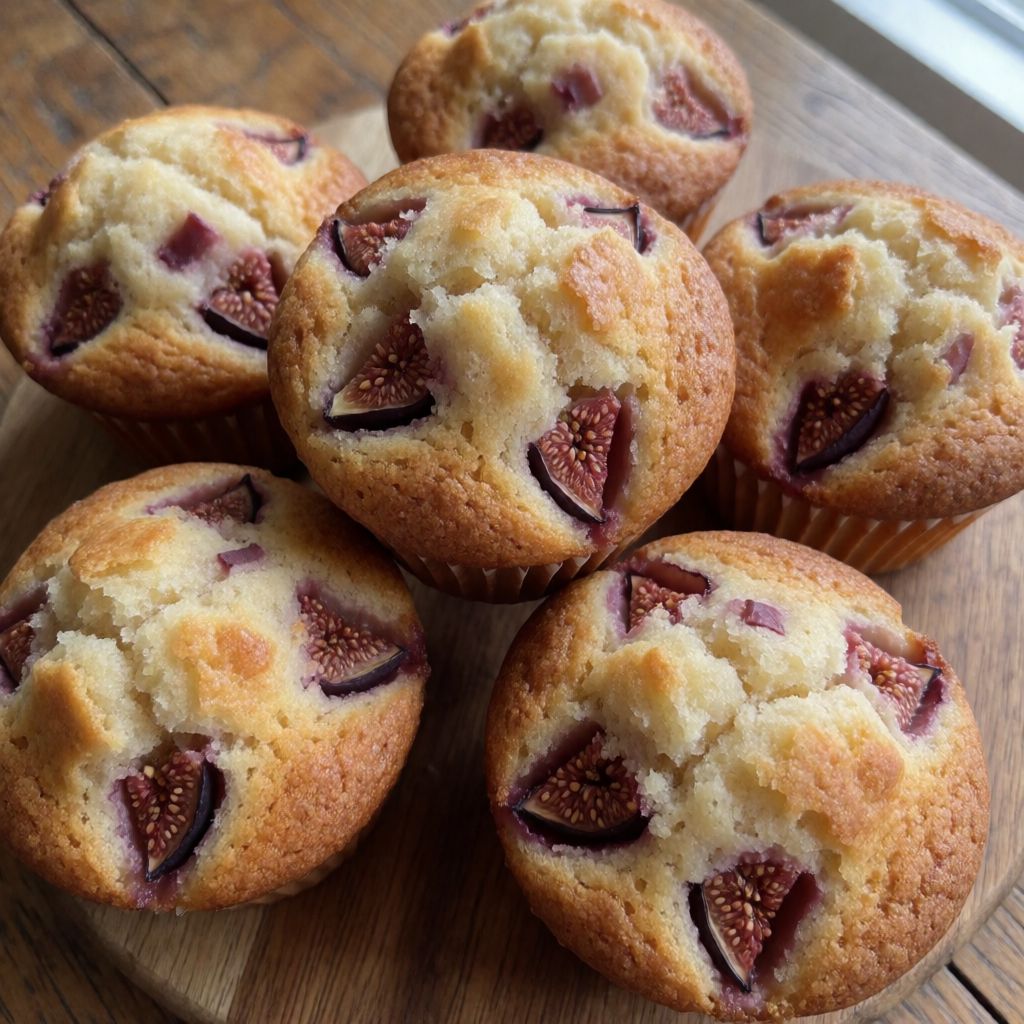
 AI photo
Fig and Almond Muffins
Soft muffins packed with chopped figs and toasted almond flakes, lightly spiced with cinnamon.
Labels are worked out automatically from the ingredients and can be wrong. Check the packaging if it matters to you.
Ingredients
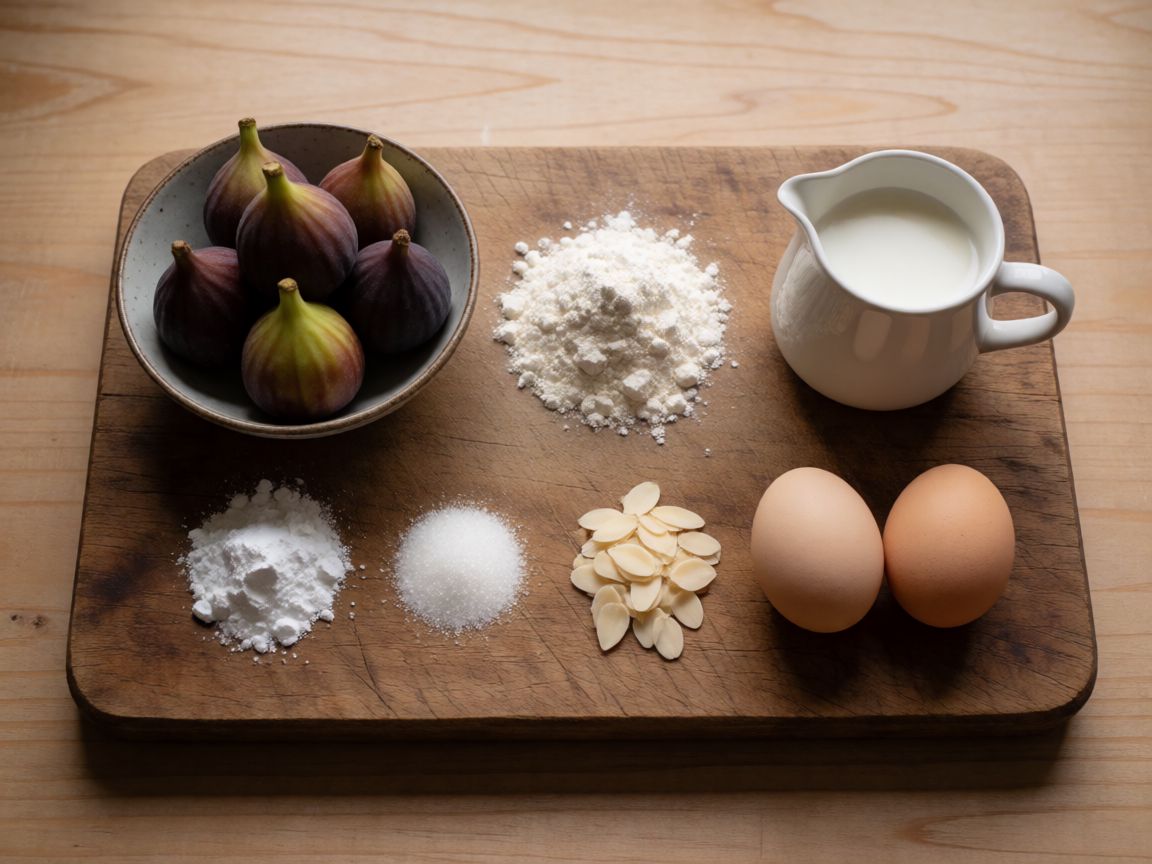
- 300 g Figs
- 200 g Plain flour
- 50 g Potato starch
- 8 g Baking powder
- 100 ml Almond milk
- 100 g Caster sugar
- 2 pcs Eggs
- 80 g Flaked almonds
- 60 ml Olive oil
- Cinnamon to taste
- pinch Salt
- pinch Icing sugar for dusting, to taste












Steps
Wash the figs, peel them and cut the flesh into small cubes.
Toast the flaked almonds in a dry pan, without oil, until golden.
Sift the plain flour, potato starch and baking powder, and mix in a large bowl.
Add the eggs, caster sugar, a pinch of salt, olive oil and almond milk to the dry mix, stirring in gradually.
Mix the batter, making sure it is neither too runny nor too thick.
Fold in the chopped figs and toasted flaked almonds, and continue mixing.
Spoon the batter into muffin cases, filling them about two-thirds full.
Bake the muffins at 180°C.
20 minRemove from the oven, let cool, then dust with cinnamon or icing sugar.
A muffin is a batter problem, not a figs problem. Everything that can go wrong here goes wrong because someone treated flour, starch and baking powder as interchangeable white powders instead of three different jobs. Flour gives structure. Potato starch breaks that structure up, so the crumb stays soft instead of turning into bread. Baking powder is the only thing doing the rising — there's no yeast, no time, no proving, which is why this is a twenty-minute job and not a morning one.
What decides whether it works is restraint at two points: how wet the batter is, and how full the case is. Too runny and the figs sink to the bottom, where they stew in their own sugar and leave you a soggy foot. Too thick and the baking powder can't lift it — it just puffs the top and stays dense underneath. "Neither too runny nor too thick" isn't vague cooking-writer talk, it's a real test: the batter should fall off a spoon in a slow ribbon, not pour and not plop.
Some say you should fill the case right to the top for a bigger muffin. No — because the rise has to go somewhere, and if there's no headroom it goes sideways over the paper, burns on the tin, and you get a flat-topped muffin with a skirt instead of a dome. Two-thirds full leaves room for the baking powder to do its one trick before gravity and crust catch up with it.
Figs here aren't decoration, they're a moisture source you have to manage. Fresh figs release juice as they bake — cube them small and fold them in late so the batter doesn't sit around going translucent and weepy before it even sees the oven.
Flour and potato starch together aren't a fussy European affectation — it's the cheap way to get a lighter crumb without buying expensive soft cake flour. UK plain flour is harder (more protein) than French pâtissier flour, so left alone it bakes closer to bread than to cake. Potato starch has no protein at all, so cutting it in with the flour dilutes the gluten, the same logic as adding cornflour to a Victoria sponge. If you don't have potato starch, cornflour does the identical job — same principle, flour's structure, starch's softness, split 80/20 in favour of flour and you won't notice the difference.
Almond milk here is doing moisture, not flavour — it's thin, low-fat, and barely tastes of almond once it's in a batter with real almonds and figs. Any milk with no strong character of its own works: ordinary cow's milk, oat milk, even water with a spoon more oil if you're out of everything. The point is liquid to let the eggs and oil emulsify through the dry mix, not a dairy-free statement.
Olive oil instead of butter is a texture decision as much as a health one. Butter sets solid when it cools, which is what gives a Victoria sponge its close, slightly dry crumb. Oil stays liquid at room temperature, so the muffin stays moist for days instead of drying out the way a butter cake does by day two. Use a mild olive oil, not an aggressive peppery one that fights the figs — or any neutral oil (sunflower, rapeseed) if you'd rather the figs speak alone.
Figs: ripe enough that the skin peels off without a fight, which is your cue, not a date on a punnet. If you can only get hard, underripe ones, leave the skin on and chop smaller — the skin's bitterness will sit better diced fine than in a big cube. No fresh figs at all — dried figs soaked twenty minutes in warm water to soften, then chopped, get you most of the way there, though you lose the little pockets of juice that burst in the oven.
Toasting the almonds in a dry pan isn't a fussy extra step, it's the difference between almond flavour and almond cardboard. Raw flaked almonds baked inside a wet batter steam rather than toast — they come out pale and taste of nothing. Toasting first, dry, no oil, gets you past that: watch them, don't walk away, they go from pale to gold to burnt in the time it takes to answer the phone. Gold is the point to stop, because carry-over heat finishes the job while they cool in the pan.
The 180°C in your oven is a convection-oven number — ovens vary enough between flats that this is a floor, not a guarantee. Check doneness the way you'd check a sponge, not a stopwatch: the top should spring back when pressed, not leave a dent, and a skewer in the centre should come out with crumb on it, not wet batter. Twenty minutes is the lower bound — give it another few if your oven runs cool, which most domestic ones do compared to what they claim on the dial.