
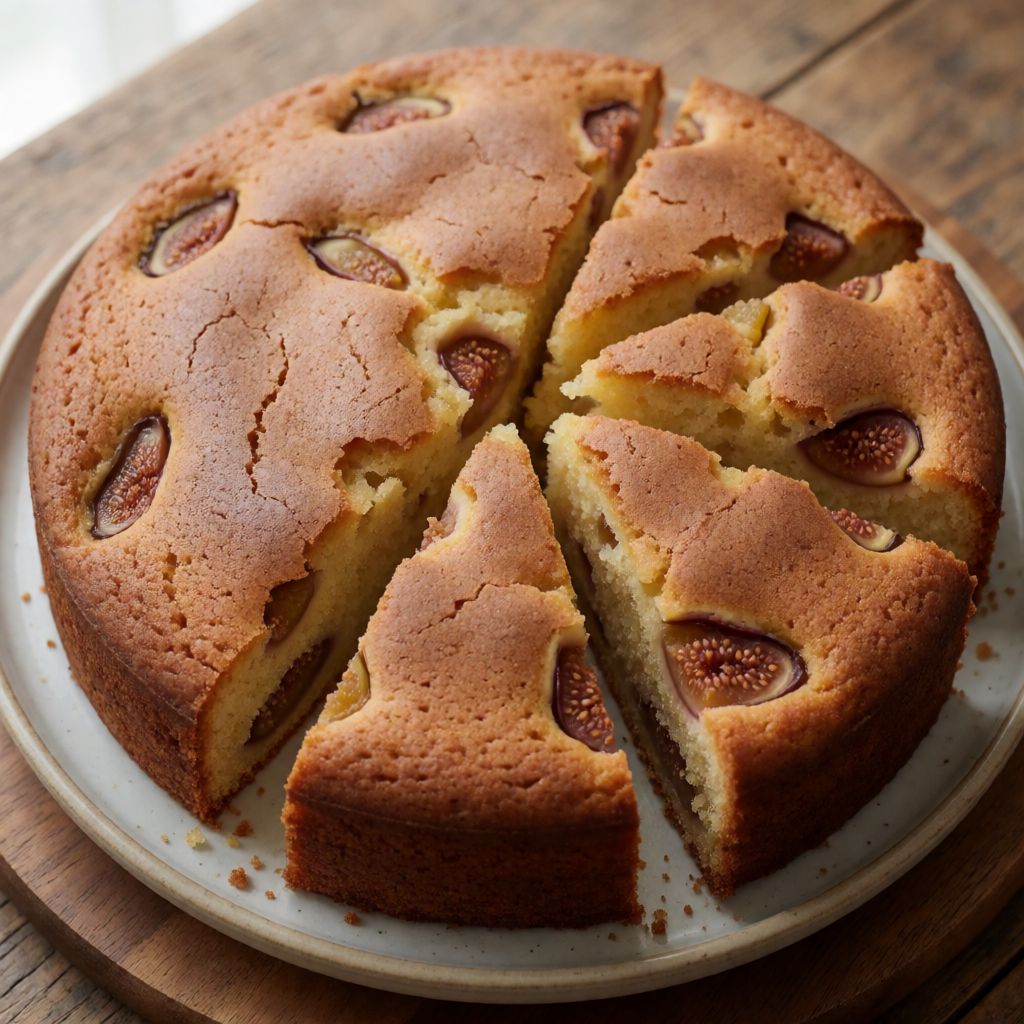
 AI photo
Fig Cake Without Butter
A simple butter-free cake studded with juicy figs and finished with a sprinkle of brown sugar.
Labels are worked out automatically from the ingredients and can be wrong. Check the packaging if it matters to you.
Ingredients
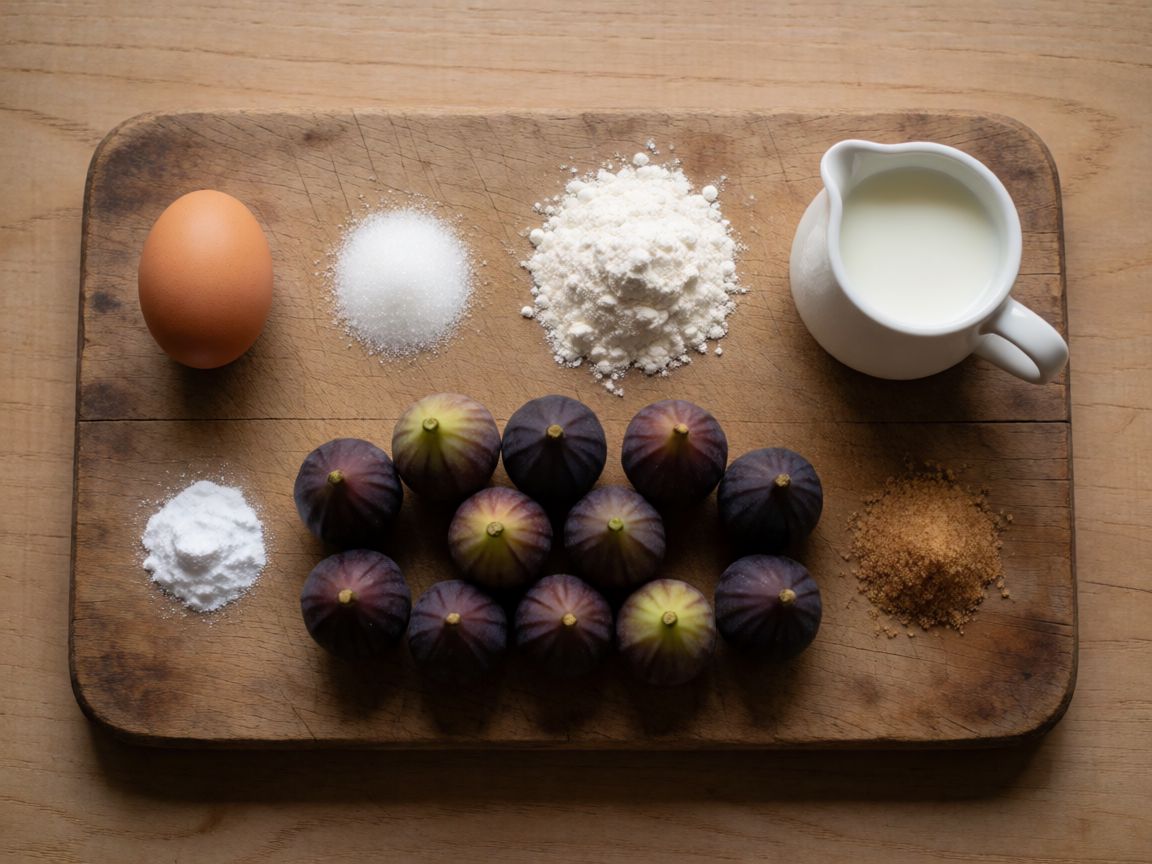
- 1 pcs Eggs
- 75 g Sugar
- 200 g Flour
- 50 ml Milk
- 50 ml Vegetable Oil
- 8 g Baking Powder
- 10 pcs Fig
- 1 tbsp Brown Sugar








Steps
Wash the figs thoroughly and let them air-dry naturally; set aside.
In a bowl, whisk the eggs with the sugar using a mixer until light and fluffy.
Add the vegetable oil and milk, continuing to mix.
Add the sifted flour and baking powder to avoid lumps, and mix until the batter is smooth.
Grease a baking tin, dust with flour, then pour in the batter, spreading it evenly.
Cut the figs into quarters and press each wedge into the batter, skin-side up, pressing gently.
Sprinkle the whole surface with brown sugar.
Bake in an oven preheated to 180°C.
30 min
This is a flat, loose-crumbed cake — nothing like a creamed butter sponge, because there's no butter to cream. All the lift comes from two places: the baking powder, and the air you beat into the eggs and sugar before the oil and milk go in. That whisking stage isn't a formality, it's the engine of the whole cake. Skip it or rush it, and you get something dense and eggy instead of something that holds a crumb.
What decides whether this works is the fig placement and the sugar on top, not the batter itself — the batter is forgiving. The figs go in cut-side down, skin-side up, pressed so they can't float to the surface or sink to the bottom. That orientation matters: the cut flesh sits against the batter and gives up its juice slowly as it bakes, while the tougher skin takes the direct heat on top and doesn't collapse into mush before the crumb around it has set. The brown sugar scattered over everything isn't decoration — at oven heat it draws moisture up and turns into a thin, cracked, amber shell instead of staying wet grains. If your cake comes out with soggy sugar instead of a shattering top, the oven wasn't hot enough yet when the sugar hit it, or the figs were too wet going in.
Eggs are doing structural work here, not just flavour — this is the only cake-raising mechanism apart from the baking powder, so whisk them with the sugar properly, past foamy, to where the mixture holds a ribbon for a second when you lift the beater. Any standard egg does the job; there's no trick substitute for this one, because nothing else carries air into a batter the way beaten egg does.
Sugar in the batter wants to dissolve under the whisk, so a fine caster-type sugar works a little faster than coarse granulated, though granulated gets there too if you keep beating. The brown sugar on top is a different job entirely — it needs the molasses in it, because that's what darkens and caramelises at oven heat rather than just melting into syrup. Light or dark brown sugar both do it; demerara works but gives you a coarser, crunchier crust rather than a thin shattering one, since the crystals are bigger and don't dissolve as readily.
The oil and milk together replace what butter would normally bring — fat for tenderness, liquid for a pourable batter. The criterion for the oil is simple: anything with no smell of its own, so sunflower or rapeseed, both easy to find in any British kitchen. Olive oil will fight the fig for attention, and anything that solidifies when cold — coconut oil, for instance — changes the texture of the cake once it's out of the oven and cooling, because it sets the fat inside the crumb instead of leaving it soft. Milk doesn't need to be anything special here — whole milk gives slightly more richness, but the amount is small enough that semi-skimmed won't be missed.
Flour and baking powder are sifted together for one practical reason: baking powder clumps, and an undissolved pocket of it tastes bitter and bites back at you from one corner of a slice. Sifting spreads it evenly so every part of the cake rises the same amount instead of one bit puffing and another staying flat. Note the recipe calls for plain flour with baking powder added separately, not self-raising flour — if you swap in self-raising and still add the full baking powder, you've doubled the leavening, and the cake will rise fast, then sink as it cools because the structure couldn't keep up with the gas.
Figs are the one ingredient where you need to think about what's actually in front of you. Fresh figs should be firm enough to hold a wedge shape when you press it into batter — an overripe fig collapses before it even reaches the oven. In Britain, fresh figs are imported and only really around in late summer into autumn, and they're not cheap. Dried figs are a fair substitute: soak them in warm water for ten to fifteen minutes to soften the skin and plump the flesh back out, then drain them properly, because the batter doesn't want that extra water diluting it.
There's a bit of history behind a cake like this: oil-based batters are the economical branch of cake-making, the kind that comes out of households where butter was either dear or already spoken for — on bread, in cooking, wherever. Olive-growing and fig-growing regions overlap for a reason, and a cake that uses what's already in the larder, oil instead of butter, ripe fruit instead of jam, isn't a compromise — it's just what thrift looks like when it tastes good. Tin-wise, since there's no parchment here, grease and flour the tin properly — that's the only thing standing between your cake and a torn bottom when you try to get it out.