
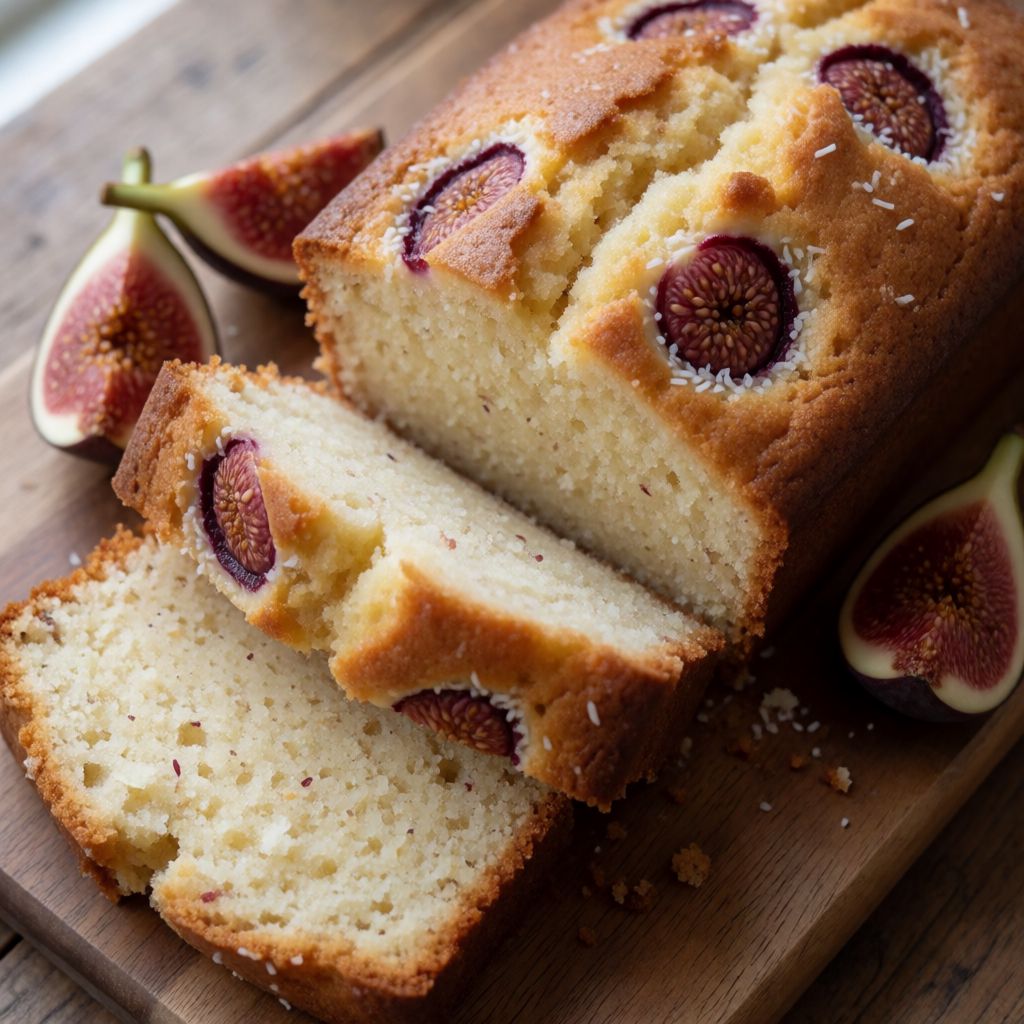
 AI photo
Fig and Coconut Pound Cake
A moist pound cake with fresh figs and coconut flour, finished with a touch of lemon zest.
Labels are worked out automatically from the ingredients and can be wrong. Check the packaging if it matters to you.
Ingredients
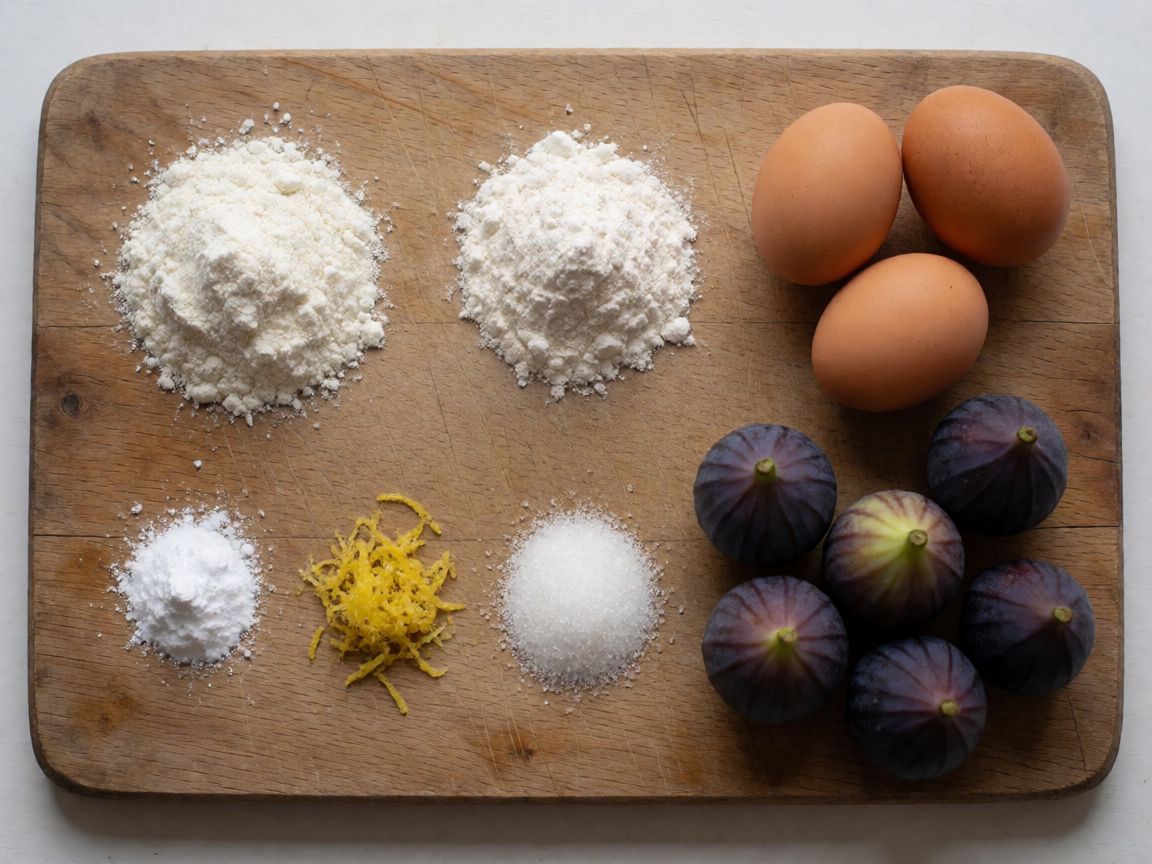
- 50 g coconut flour
- 250 g plain flour
- 90 g olive oil
- 3 pcs eggs
- 6 pcs figs
- 100 g caster sugar
- 1 pcs baking powder
- 1 pcs lemon zest








Steps
Prepare the figs and weigh all the ingredients. Peel the figs and cut them into small pieces.
In a bowl, mix the olive oil with the sugar and beat until light and smooth.
Add the eggs and lemon zest, and mix well.
In a separate bowl, sift the flour with the baking powder.
Add the chopped figs, flour and coconut flour to the oil and egg mixture, and mix well.
Take a 22 cm loaf tin, grease it with butter and dust with flour, then pour in the batter.
Smooth the surface of the batter with a spoon.
Preheat the oven to 180°C (static/conventional heat) and bake the cake.
40 minAfter 30 minutes, check if it is done with a wooden skewer; if needed, continue baking for another 5-10 minutes.
When the cake is ready, take it out of the oven and let it cool slightly.
A pound cake is really a ratio, not a recipe — fat, sugar, egg, flour leaning on each other in roughly equal weight, and here coconut flour and figs are let in to disturb that balance on purpose. The olive oil stands in for butter, which changes more than flavour: oil is already liquid at room temperature, so it coats flour proteins faster and gives a crumb that's dense and moist rather than light and sliced-thin. That's the point of this cake — it's built to be damp, almost custardy where the figs sit, not the airy brick-shaped thing you cut for a trifle base.
What decides whether it works is the creaming at the start. Oil and sugar beaten together won't trap air the way butter and sugar do — butter holds tiny air pockets in its fat crystals, oil has none — so "light and smooth" here means the sugar dissolving and the mixture turning pale and slightly thickened, not doubling in volume. Some say you can't make a proper pound cake with oil. You can; you just get a different cake, closer to a fig loaf than a Victoria sponge, and that's not a failure, that's the design.
The second thing that decides it is the figs. Fresh figs are mostly water held in a loose net of flesh — cut them small and they'll weep sugar and juice into the batter as it bakes, which is why coconut flour earns its place: it drinks up that extra moisture so the middle sets instead of staying gluey. Skip the coconut flour or swap it for more plain flour and you risk a sunken, wet centre, because nothing in the batter is left to catch the figs' water.
Look at what each ingredient is actually doing before you touch the bowl. Olive oil here is fat, full stop — not flavour, not tradition. Use one with no real taste of its own: a light, mild olive oil, or a neutral sunflower or rapeseed oil if that's what's in your UK cupboard. A peppery, grassy extra virgin will fight the figs and lemon and you'll taste olives in your tea-time cake, which nobody asked for.
Plain flour and coconut flour aren't interchangeable, and that matters more than usual here. Plain flour gives structure through gluten; coconut flour has none — it's ground coconut meat, mostly fibre, and it behaves like a sponge, soaking several times its own weight in liquid. That's exactly why only 50 g sits against 250 g of plain flour: it's there to manage the fig juice, not to build the cake. If you don't have it, don't just add more plain flour and call it even — you'll lose the moisture-control job entirely and the middle may stay wetter than you'd like. A rough stand-in is ground almonds, which also pull in liquid, though the crumb turns coarser and nuttier, not the same cake but a fair cousin of it.
Three eggs do two jobs at once: they bind the flour and fat into one batter instead of a split mess, and their water content thins the mixture enough that the coconut flour has something to drink. Standard medium eggs, UK-size, straight from the fridge is fine — cold eggs into warm oil-sugar mixture can make it look briefly curdled and separated, that's just temperature, not failure; keep mixing and it comes back together.
The figs are the whole reason for the cake, so buy ones that give slightly under your thumb — a hard fig has barely any sugar developed yet and will cut like raw turnip. No fresh figs in your week's shop (British supermarkets are patchy on them outside late summer)? Dried figs, chopped and soaked in warm water for ten minutes to soften, work as a substitute, though you'll get less of that weeping juice the coconut flour is meant to catch — which actually makes the baking more forgiving, not less, so don't panic if that's your route.
Lemon zest and the one sachet of baking powder are the quiet workers: zest cuts the dense sweetness of fig and sugar so it doesn't sit flat on the tongue, and baking powder lifts a batter that oil alone can't aerate — remember, oil gave up no air at the creaming stage, so the rise here comes almost entirely from the raising agent doing its job in the oven's heat, not from anything you whisked in by hand.
One honest note on your oven: 180°C static means the heat comes from top and bottom elements with no fan pushing air round, which is gentler and more even on a dense batter like this than a fan setting would be — if your oven only does fan-assisted, drop it roughly 15-20°C to avoid a cake that's crusted dark outside while the fig-heavy middle is still catching up, and lean on the skewer, not the clock, to call it done.