
 AI photo
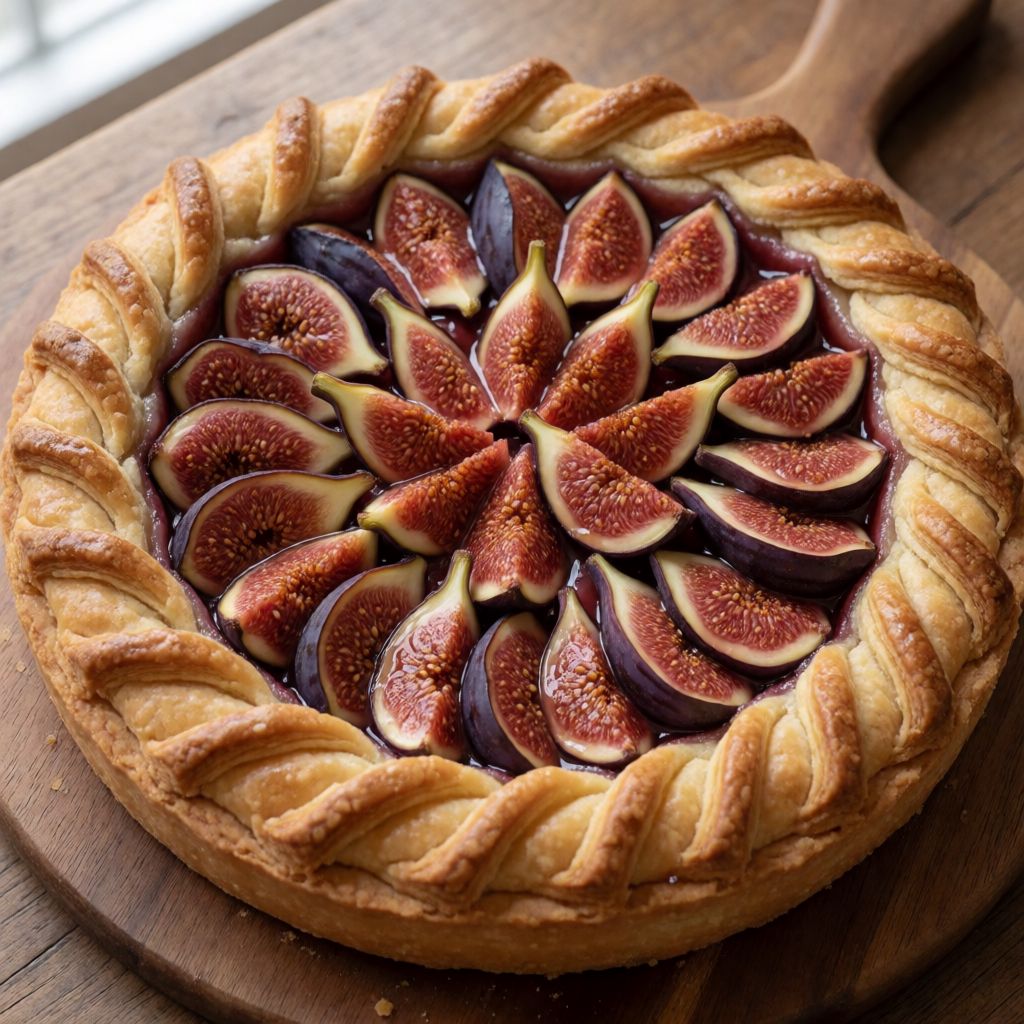
Fig Crostata
A sweet shortcrust tart filled with apricot jam, amaretti biscuits, hazelnuts and fresh fig slices.
Labels are worked out automatically from the ingredients and can be wrong. Check the packaging if it matters to you.
Ingredients
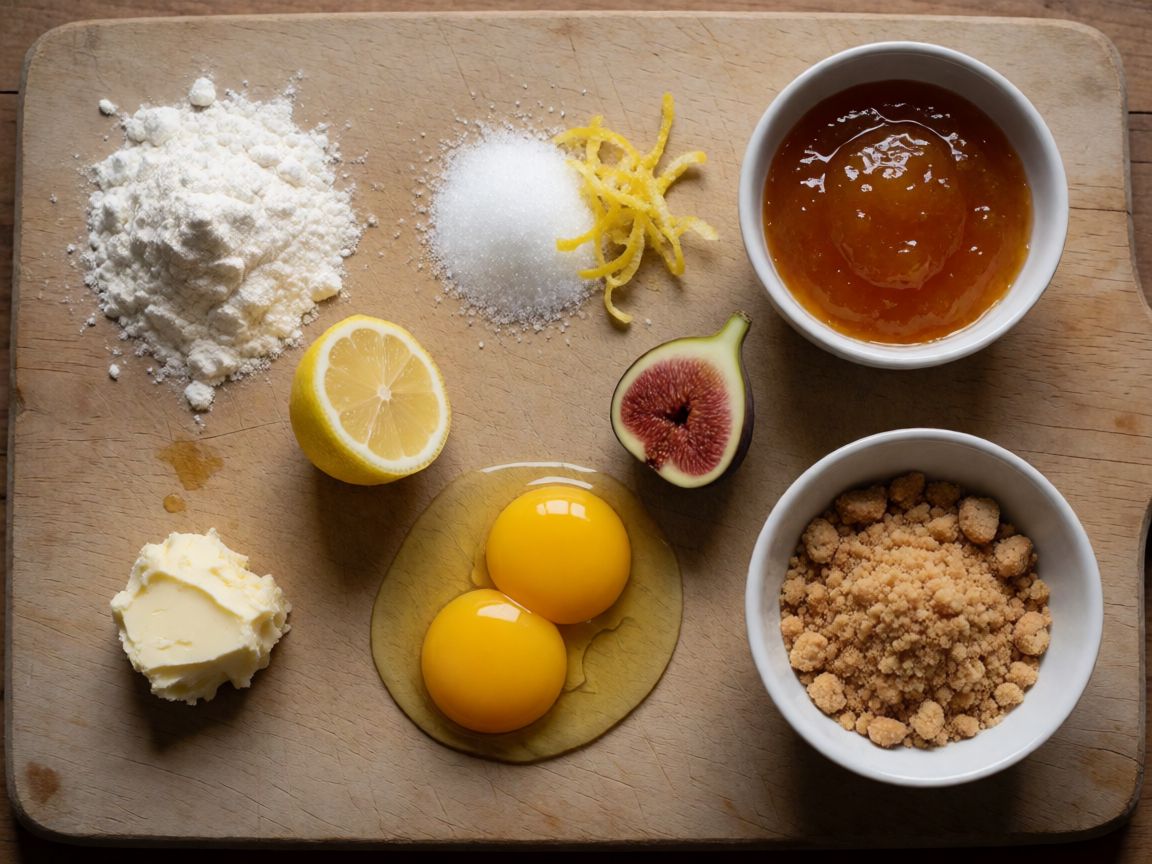
- 150 g Plain flour
- 75 g Caster sugar
- 1/2 pcs lemon zest
- 1 pinch Salt
- 2 pcs Egg yolk
- 90 g Butter
- 1 kg Figs
- 150 g apricot jam
- 100 g amaretti biscuits crushed
- 50 g Hazelnuts chopped
- Icing sugar to taste








Steps
Pile the flour on the worktop with a well in the centre; add the sugar, lemon zest, salt and egg yolks. Quickly rub together with your fingers.
Add the butter and knead energetically until the dough is smooth.
Shape the dough into a ball, wrap in cling film and leave to rest in the fridge.
40 minRoll out the dough to a thickness of 4-5 mm and transfer it to a 26-28 cm tin greased with butter and dusted with flour.
Press the dough firmly into the tin, trim off the excess at the edges and prick the base with a fork.
Bake the base in a fan oven preheated to 175°C.
10 minLet the base cool completely.
In a bowl, mix the apricot jam with the crushed amaretti biscuits and hazelnuts.
Wash the figs, pat dry and slice thinly.
Spread the filling over the cooled base and smooth with a spoon.
Arrange the fig slices on top of the crostata and dust with icing sugar.
Bake in a fan oven preheated to 180°C.
8 minLet the crostata cool slightly before serving.
This is pasta frolla — Italian shortcrust, not shortbread, not pastry-case pastry — holding a layer of fig under a quick second bake. What decides whether it works is almost entirely what happens before the figs ever touch it: a dough handled cold and fast, baked blind until it's actually biscuit-dry, and a filling underneath that's dry enough to not turn that biscuit back into dough the moment the figs' juice hits it.
The two-bake structure isn't fussiness. Figs are wet — properly wet, more than most fruit you'd put in a tart — and if you laid raw fig straight onto raw dough you'd get a pond, not a crostata. So the base gets baked alone first, cooled completely, then protected by a layer of jam thickened with crushed amaretti and hazelnuts before a single fig slice goes anywhere near it. That layer isn't decoration, it's a dam.
Some say shortcrust has to rest in the fridge because "all pastry needs resting." No — this one rests because the butter, worked in by hand, has gone soft and a little greasy from your palms, and a warm dough will slump and shrink unevenly in the tin. Cold firms the butter back up so it holds the shape you rolled, not the shape gravity wants.
The second bake is short and hot precisely because its job isn't to cook anything — the base is already done, the figs don't need cooking, they just need to soften at the edges and pick up a little colour where the sugar on top catches heat. Eight minutes at that temperature is a glaze, not a bake.
Flour, sugar, egg yolk, butter, lemon zest, salt — this is the whole architecture of pasta frolla, and each one has one job. Flour and butter in roughly this ratio (150g to 90g, so quite rich — more butter than most British shortcrust habits expect) give you short, sandy crumb rather than the stretch you'd get from more flour or more handling. Yolks only, no whites: whites bring gluten-toughening protein and water you don't want here, yolk brings fat and colour without either problem. Any plain flour with no bran in it does the job — a soft British plain flour is fine, nothing fancy needed. Caster sugar rather than granulated because it dissolves into the rubbed-in mix rather than sitting as grit; icing sugar would work too but it's finer than this needs. Lemon zest and a pinch of salt aren't there to be tasted outright — they're there so the whole thing doesn't read as flat sweetness, the way a pinch of salt in a Victoria sponge isn't there to taste salty.
Butter: use something with no odd flavour of its own, properly cold from the fridge, cut small before you start — any neutral, firm block butter works, and this is one of the few places where a UK "spreadable" butter, softer and wetter by design, will actually fight you, because the dough wants firm fat you cut in with a quick hand, not fat that's already halfway to cream.
Figs are the one ingredient you can't substitute your way around and still call it the same dish — a kilo for a 26–28cm tin is a generous single layer, slightly overlapping. Buy them ripe but not split and leaking; a fig that gives gently under your thumb is ready, one that's still hard as a plum stone will sit on the tart raw and dry rather than softening in that short second bake. British supermarkets sell figs properly ripe rarely and briefly — if yours are underripe, leave them out on the counter two or three days before you slice, don't trust the fridge to ripen anything. Out of season, you're better off making this with another thin-sliced fruit you trust (pear, some say) than forcing hard figs through it; figs out of season are a different product wearing the same name.
Apricot jam, crushed amaretti, chopped hazelnuts — this trio is doing the moisture-management job, not flavour alone. Jam alone would stay wet under the fig juice; the crushed amaretti drinks that moisture up as it bakes, like breadcrumbs in a frangipane-less filling, and brings a bitter-almond note that figs actually want next to them. No amaretti in the cupboard — plain digestive or any dry sweet biscuit, crushed, does the structural job, you just lose that almond edge. Hazelnuts give bite against the soft fig and the softened biscuit; almonds or walnuts, chopped the same way, do the same mechanical job if that's what's in your cupboard.
On the fan oven numbers: 175°C to set the base is enough to dry it through without colouring the edges to dark before the centre firms — this is thin dough (4–5mm) in a tin, not a thick rustic base, so it doesn't need long or fierce heat, it needs even heat. The base is done not by the clock but by look and touch: pale gold, dry to a fingertip press, no longer glossy-raw in the centre. Ten minutes is the floor, not the answer. Same with the 8 minutes at 180°C at the end — you're watching the fig edges for the first hint of colour and slight softening, you're not cooking a fruit, you're warming one through.
One more thing worth saying plainly, because it's the part nobody puts in the method: let the base go properly, fully cold before you put anything on it. Warm base plus jam filling means a softened base by the time it's served — this is just physics, not a ritual, but skipping it is the single most common reason a home crostata ends up soggy in the middle rather than crisp. Patience here isn't virtue for its own sake, it's the actual ingredient that keeps the bottom from betraying the top.