
 AI photo
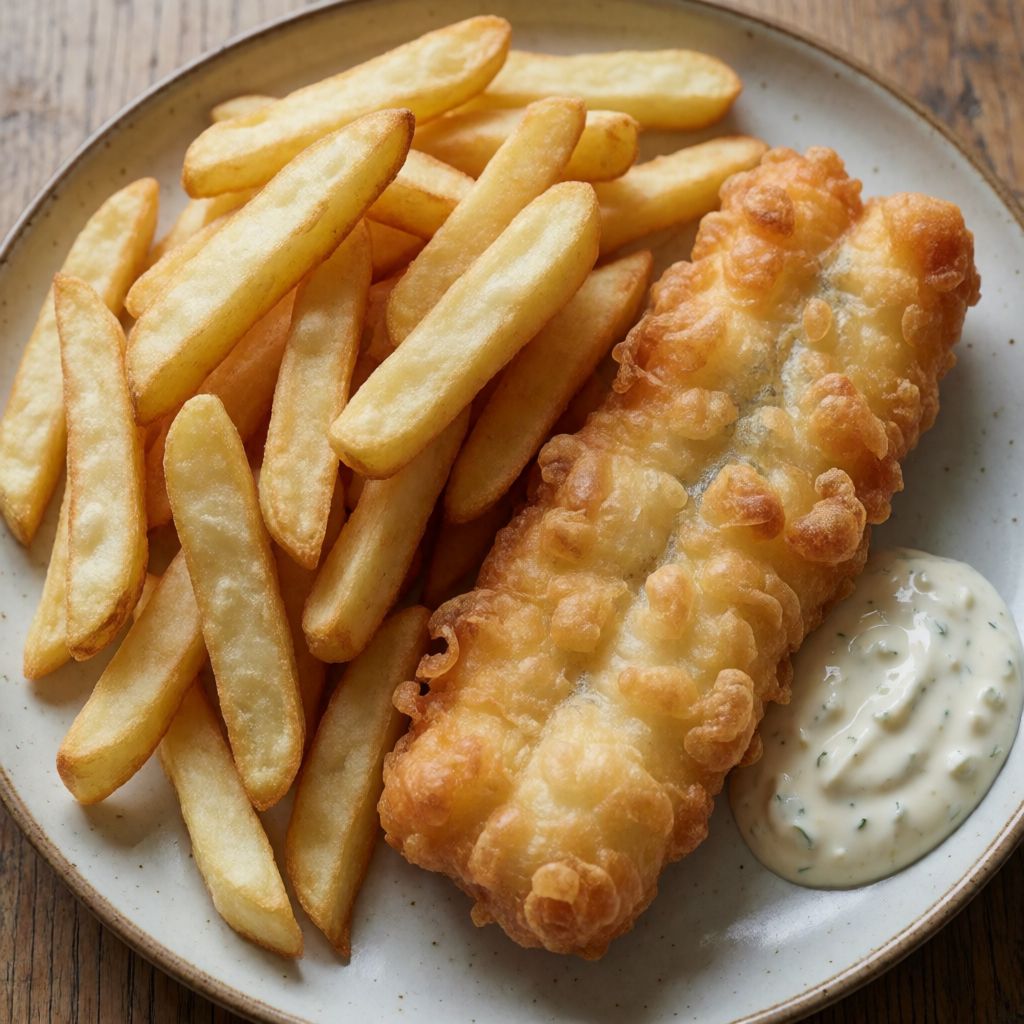
Fish and Chips with Tartare Sauce
Crispy beer-battered fish with golden potato wedges, served with a creamy homemade tartare sauce.
Labels are worked out automatically from the ingredients and can be wrong. Check the packaging if it matters to you.
Ingredients
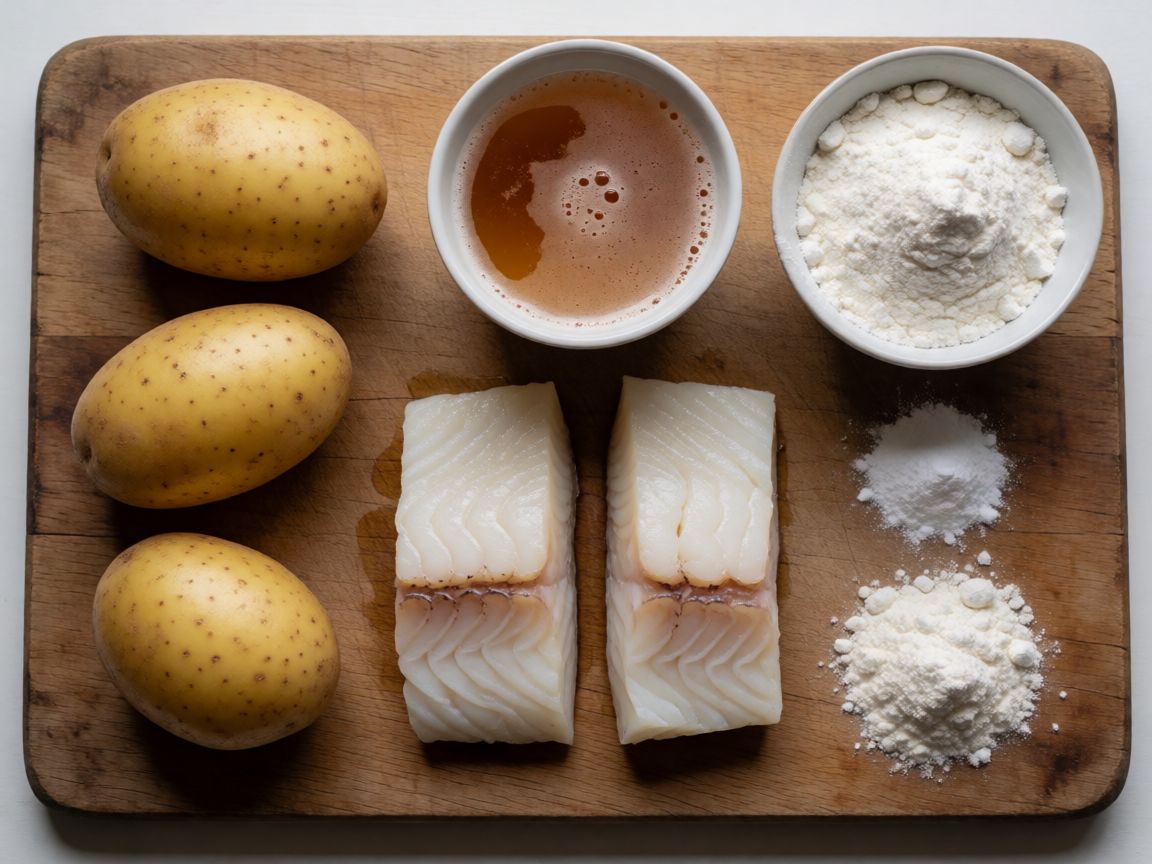
- 4 pcs Potatoes
- 4 tbsp Olive oil
- Salt
- 2 pcs Cod or haddock
- 250 ml Beer
- 200 g Plain flour
- ½ tsp Baking powder
- Salt
- Black pepper freshly ground
- 2 tbsp Plain flour
- 1 l Vegetable oil





Tartare sauce
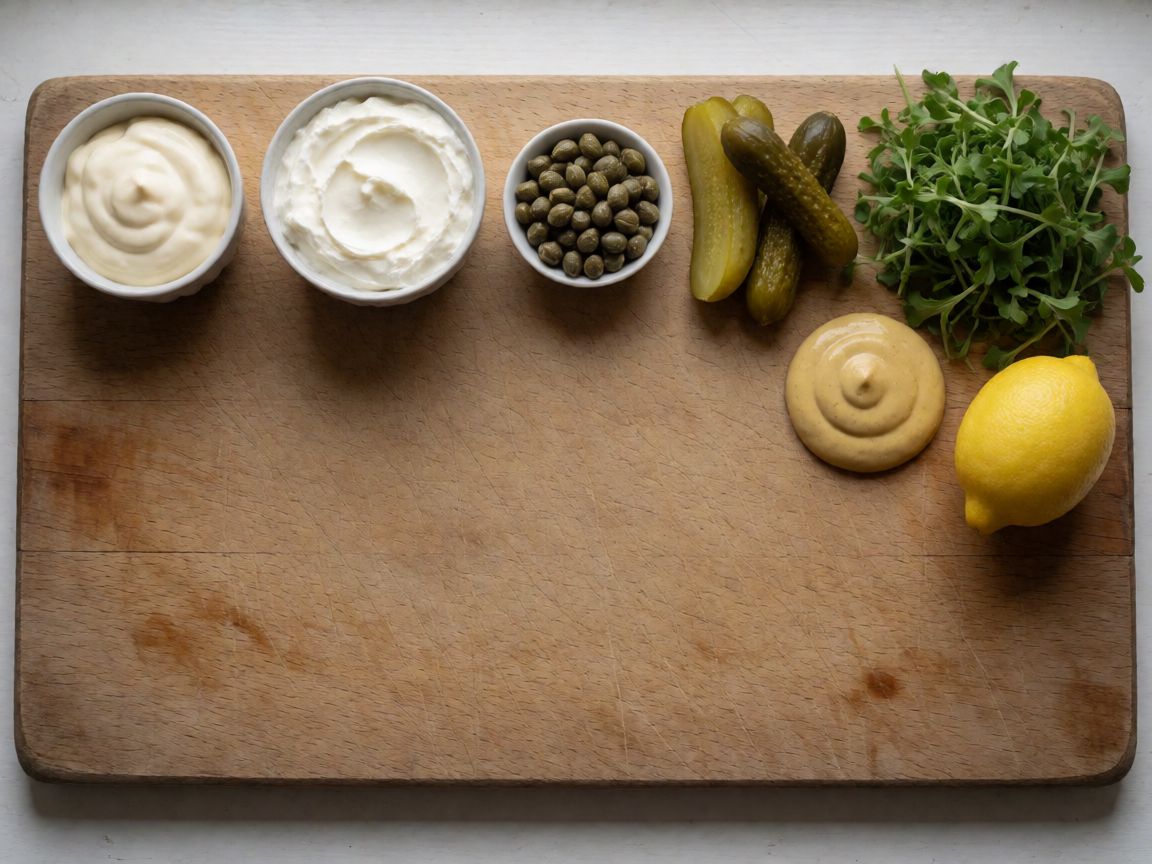
- 100 ml Mayonnaise
- 100 ml Crème fraîche 18% or 38%
- 2 tbsp Capers finely chopped
- 4 pcs Gherkins finely chopped
- 1 tsp Dijon mustard
- ½ pcs Lemon juice and finely grated zest
- 100 ml Fresh herbs finely chopped (e.g. chives, parsley and dill)



Steps
Tartare sauce: make the sauce first. Mix the mayonnaise, crème fraîche, capers, gherkins, Dijon mustard, lemon (juice and zest) and herbs; season to taste with lemon, salt and freshly ground pepper, adding more if needed. Let the sauce chill in the fridge until serving.
Potatoes: wash and peel the potatoes well, cut into thick, long wedges.
Toss the potato wedges with 4 tbsp olive oil and salt, spread on baking paper on a tray.
Roast the potatoes in a preheated fan oven at 225°C for 30–40 minutes, turning them a few times during roasting.
Fish: mix the flour with the baking powder, salt and pepper.
Slowly pour in the beer, whisking to a smooth, thin batter.
Let the batter rest for half an hour.
Cut the cod into portion-sized pieces and pat dry with paper towel.
Heat the vegetable oil in a pot.
The oil will be at the right temperature, about 175°C, when it starts to sizzle gently if you carefully dip, for example, the tip of a piece of fish into it.
Sift a little flour over the fish, then dip the pieces of fish into the beer batter.
Carefully lower two pieces of fish at a time into the hot oil and fry until golden and crisp.
Remove the fish with a slotted spoon and let it drain well on paper towel.
Fish and chips is street food that got respectable: a slab of white fish wrapped in a jacket of batter, dropped into oil hot enough to seal the surface before the fish inside even notices it's cooking, next to potatoes that have been roasted rather than fried because your flat doesn't have a chip-shop fryer and pretending otherwise just burns your oven and your patience. Nothing here is complicated. Everything here is timing and heat, and if you get those two right the rest looks after itself.
What decides whether it works is the batter and the oil talking to each other at the right moment. Beer in the batter isn't a flavour flourish, it's carbon dioxide and a bit of alcohol, both of which want to leave in a hurry — that's what gives you a shell full of tiny bubbles instead of a wet paste. Baking powder does the same job as a backup singer, pushing a bit more lift in. Rest the batter half an hour not because tradition demands a pause, but because the flour needs time to hydrate properly, otherwise you get streaks of raw starch taste under the crunch.
The chips, in this flat version, are wedges tossed in oil and roasted hard at a temperature that chars the edges before the inside turns soft — 225°C on a fan oven is hot enough that the surface starch sets fast, same principle as deep frying, just with air instead of fat doing the work. Some say oven chips can't crisp properly. No — they crisp fine, they just can't do it quietly; you need real heat and turning them so every face gets a shot at the top shelf.
Cod or haddock — either is a flaky white fish with almost no fat of its own, which matters because the batter is doing all the richness here; a fish with its own strong flavour (mackerel, say) would fight the beer batter instead of being carried by it. Cut it into pieces no thicker than your thumb at the joint — thicker and the batter's done long before the centre is, which is the actual cause of "soggy fish and chips," not some failure of the oil.
The beer: any pale, unsweet beer works, lager is traditional mostly because it was the cheap, cold, fizzy thing on hand in chip shops, not because of some magic flavour compound. No beer in the house — sparkling water with a splash of vinegar does the same carbonation job, just without the toasty note.
Flour twice: once dry, dusted straight onto the fish before it meets the batter, and once in the batter itself. The dry dusting isn't decoration — it gives the wet batter something to grip, otherwise it slides off the fish's damp surface in the oil and you end up with bald patches and a pan full of loose fried crumbs. Pat the fish properly dry first; water on the surface is what turns to steam and pushes the batter away from the flesh.
Oil for frying: a litre sounds like a lot for one pot in a small kitchen, but shallow oil means the temperature crashes the second you drop fish in, and a crashed temperature is exactly how you get grey, greasy batter instead of gold, crisp batter. Pick an oil with a high smoke point and no personality of its own — sunflower, rapeseed, plain vegetable oil — because olive oil's own flavour and lower smoke point work against you here. Checking 175°C with the tip of a piece of fish rather than a thermometer is an old habit, not a worse one — it tells you the oil is actually doing something, where a thermometer left on the counter tells you nothing about the pot in front of you.
Potatoes: thick wedges, not thin fries, because this is oven cooking and thin pieces would dry out long before they're soft inside. Peel them properly — skin left on roasts unevenly and burns at the thin ends before the flesh softens. The olive oil here is for coating, not frying, so any oil you'd happily eat raw works; it just needs enough to coat every face so nothing sits dry on the paper and scorches.
Mayonnaise and crème fraîche as the sauce base split the job between richness and acidity — crème fraîche's tang does what plain cream can't, cutting through the fried fat. If you've only got soured cream, use that; it's close enough in job even if it's thinner in texture. Capers and gherkins are chopped fine on purpose, not for looks — big pieces turn the sauce into a garnish you have to pick around rather than something that coats the fork. And patience again, at the very end: let the sauce sit cold while the fish fries, because a sauce made five minutes ago tastes like its separate ingredients, and a sauce that's rested tastes like itself.