
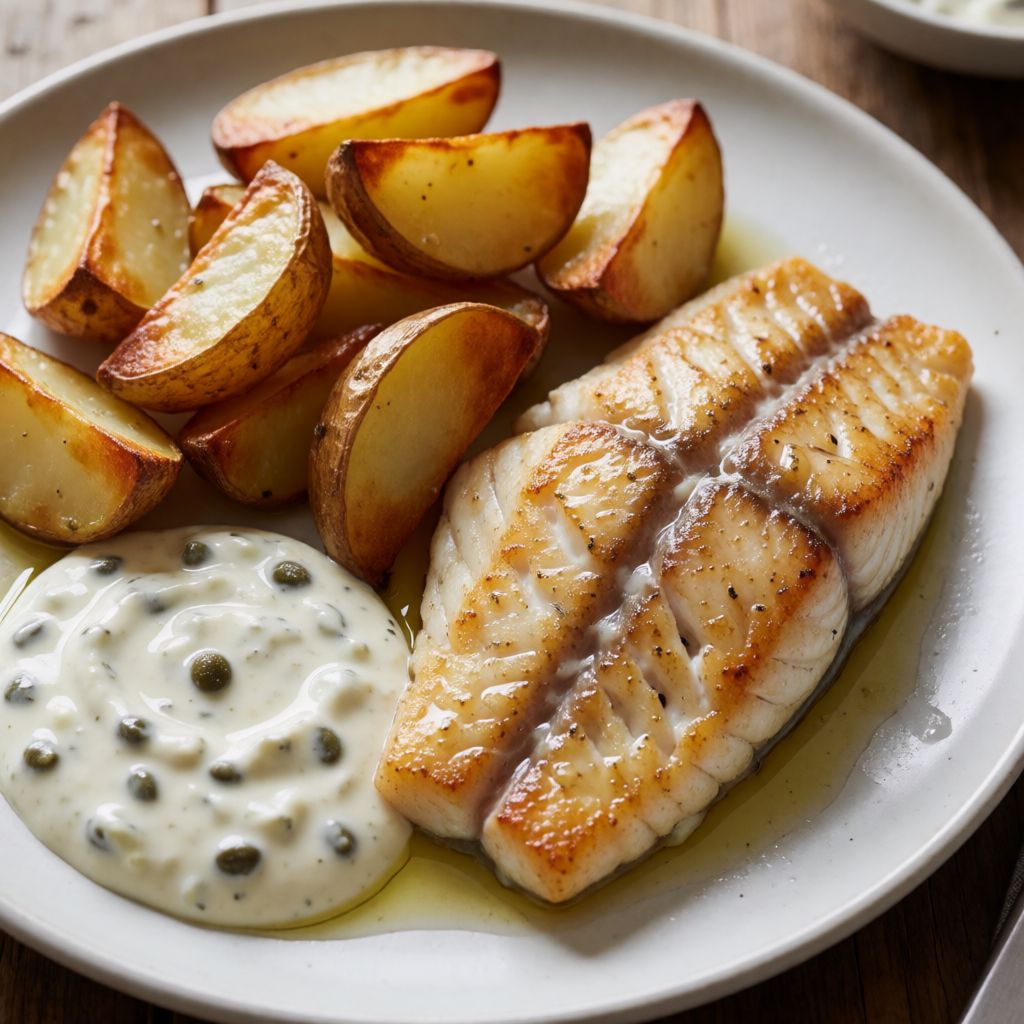
 AI photo
Flounder Fillet with Tartare Sauce and Potatoes
Crispy pan-fried flounder fillets served with roast potato wedges, homemade tartare sauce, cucumber sticks and lemon.
Labels are worked out automatically from the ingredients and can be wrong. Check the packaging if it matters to you.
Ingredients
- 1 kg Potatoes skin on, cut into wedges
- 2 tbsp Olive oil
- Salt
- 8 pcs Flounder fillets or another flat fish
- 2 pcs Eggs beaten
- 20 g Plain flour
- 30 g Wholemeal flour
- 20 g Butter for frying
- 2 tbsp Olive oil for frying
- Salt
- 1 pcs Cucumber cut into sticks
- ½ pcs Lemon cut into wedges





Tartare Sauce
- 50 ml Mayonnaise
- 100 ml Crème fraîche
- 2 tbsp Capers
- 4 pcs Pickled gherkins finely chopped
- 1 tsp Dijon mustard
- ½ pcs Lemon finely grated zest and juice
- 1 bunch Dill finely chopped
- 1 bunch Parsley finely chopped
- 1 bunch Chives finely chopped
- Salt and freshly ground pepper




Steps
Toss the potatoes with olive oil and salt, then spread them on a baking tray lined with parchment.
Roast the potatoes in a preheated oven at 200°C (fan) for about 30 minutes.
Turn the potatoes a few times during roasting.
Mix all the tartare sauce ingredients well and adjust the seasoning.
Beat the eggs in a bowl.
In another bowl, mix the plain flour, wholemeal flour, salt and pepper well.
Coat the fish fillets first in the beaten egg, then in the flour mixture.
Fry the fish fillets in butter and olive oil over medium heat for about 4-5 minutes on each side, until cooked through.
Serve the fish fillets with the potato wedges, tartare sauce, lemon wedges and cucumber sticks.
Flounder is a flat fish — thin, delicate, cooked through almost before you've noticed. That's the whole character of this dish: a crumb that has to crisp fast without the fish inside turning to paste. Everything else — the wedges, the sauce — is there to give the plate weight and contrast, because flounder alone is a modest, quiet piece of protein that needs company.
What decides whether it works isn't the fish, strangely — it's the potatoes going in first. A flat fillet fries in minutes; a wedge of potato needs real time in the oven to go from waxy to soft-centred with a dry, slightly blistered skin. So you start the oven, get the wedges roasting, and only then build the sauce and dredge the fish — the timeline is backwards from how people usually plan a fish supper, where the fish goes on first because it "feels" like the main event. It isn't, on the clock. It's the last thing.
The coating is doing one specific job: a thin crust that sets fast in hot fat and seals the fillet so the inside steams in its own moisture rather than drying into cardboard. Egg first, then flour — the egg is glue, the flour is the crust. Two flours, not one, because plain flour alone fries pale and a bit slick; wholemeal brings grit and colour, so the crust actually browns instead of just going translucent and greasy.
Start with the potatoes, because they're the slow part and a British kitchen already knows this rhythm from Sunday roast — the spuds go in before anything else is even thought about. Skin on, cut into wedges rather than small cubes: more surface for crisping, less surface lost to peeling, and the skin itself holds the wedge together so it doesn't collapse to mush at 200°C. Turning them "a few times" isn't fussing — it's preventing the side touching the tray from frying in its own steam while the top stays pale. Doneness here is a fork going in without resistance and a crust you can hear when you turn them, not a timer going off.
Olive oil for the potatoes: any oil that can take real oven heat without smoking or complaining works — a flavourless vegetable oil, sunflower, even light rapeseed, which is arguably more at home in a British larder than olive oil ever was. Olive oil is doing nothing magical here except not fighting the potato's own taste.
Flounder is a bottom-feeding flatfish — thin body, two small fillets off each side, delicate flake, forgiving price. If you can't get it, any other flat fish does the same job: plaice, sole, dab. The flatness is the point, not the species — it fries evenly in minutes because there's no thick centre lagging behind a cooked edge, the way there is in a cod loin. Don't substitute a thick round fillet without rethinking the frying time; it's a different animal on the pan.
The egg-then-flour sequence is the oldest trick in frying and it has a real reason: egg is sticky and wet, flour is dry and needs something to cling to. Reverse it — flour then egg — and you get a gluey, uneven mess, because the egg just slides off dry flour instead of binding to bare, slightly damp fish. Butter plus olive oil in the pan, not butter alone: butter alone burns before the fish is properly coloured because its milk solids scorch at a fairly low heat; the oil raises the point at which the fat starts complaining, and the butter still gives you that nutty smell and better browning than oil could manage on its own. "Medium heat" is really: hot enough that the crumb starts fizzing and colouring within the first thirty seconds the fillet touches the pan — if it sits there pale and silent, the pan wasn't hot enough and the fish will stew in fat instead of crisping.
The tartare sauce is mayonnaise and crème fraîche as the base — fat and tang, cut by capers and gherkins for salt and sharpness, mustard for a background heat you won't taste directly but will miss if it's gone, lemon zest and juice to lift the whole thing off the plate. If you've no crème fraîche, soured cream or even thick natural yoghurt stands in — anything with real acidity and body, not thin pouring cream, which just dilutes without adding anything back. Some say tartare sauce is "just mayonnaise with bits in" — no, because the capers and gherkins aren't garnish, they're the acid that stops the whole plate tasting of fried batter and fat.
The herbs — dill, parsley, chives — aren't decorative either; fresh and finely chopped, they bring a green, slightly bitter freshness that mayonnaise-based sauces always need or they sit heavy. Dried herbs here would be a false economy: dried dill in particular loses almost all its character and leaves you with dust, not flavour. Cucumber sticks and lemon wedges on the side do the same job raw that the sauce does blended — more acid, more crunch, because a plate of fried fish and roast potato, left alone, is entirely fat and starch and needs something cold and sharp fighting back.