
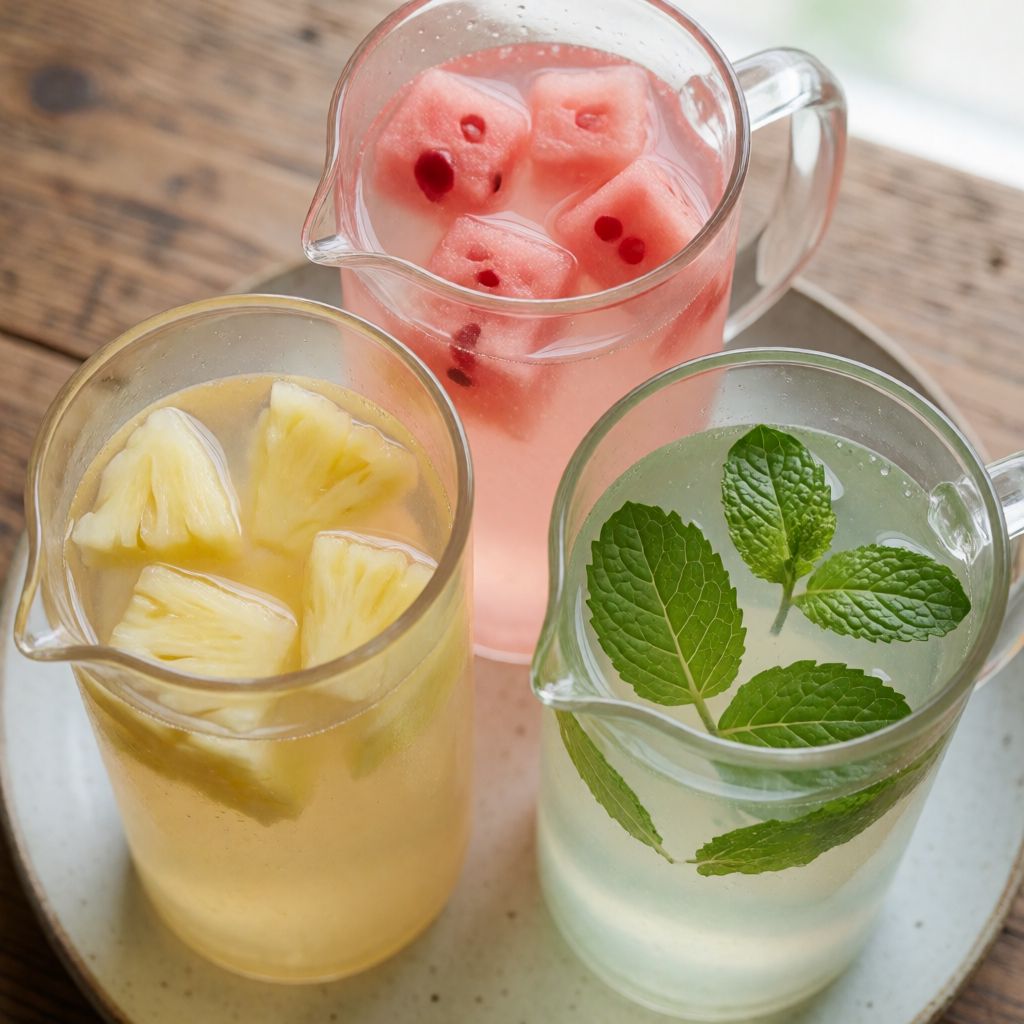
 AI photo
3 Flavoured Waters for Summer
Three refreshing infused waters to make at home over summer.
Labels are worked out automatically from the ingredients and can be wrong. Check the packaging if it matters to you.
Ingredients







Steps
Peel and slice the pineapple, then cut into cubes. Put it in a jug with 1 l of water and the mint.
Stir, cover the jug and place in the fridge for at least 8 hours.
480 minCut a slice of watermelon and dice the flesh, removing the seeds. Put it in a jug with 1 l of water and the mint.
Leave to infuse in the fridge for at least 1 day.
1440 minWash and peel the cucumber, then slice it thinly. Wash and slice the lemon.
Put 15-20 cucumber slices, 5-6 lemon wedges and the mint in a jug with 1 l of water.
Leave in the fridge for at least 6-8 hours, then strain and serve.
420 min
This isn't a drink you make, it's a drink you wait for. Flavoured water is really just fruit and herbs using cold water as a slow solvent — no heat, no sugar, no juicer. The whole mechanism is diffusion: molecules of sweetness, oil and acid drift out of torn and cut cells into the water around them, and that only happens when there's time and surface area for it to happen in.
That's why the three jugs have three different waits. Pineapple, cut into cubes, has the most exposed flesh and the most sugar to give up, so 8 hours is enough. Watermelon is mostly water itself holding a little flavour very loosely, which sounds like it should be instant — but weak flavour needs longer contact, not less, so it gets a full day. Cucumber and lemon sit in between: thin slices give plenty of surface, the lemon's acid helps pull flavour out faster, so 6–8 hours covers it.
Some say you should muddle or mash the fruit first to "release more flavour" — no, because that's bruising, not extraction, and bruised fruit floats brown and goes slimy in half the time it takes to actually flavour the water. Cutting evenly and leaving it alone is the whole skill here.
What decides whether it works isn't a recipe step, it's your fridge and your patience. Skip the wait and you've made fruit salad with a splash in it; give it the time and you've made water worth drinking.
Water is the base you shouldn't think twice about — straight from the tap is fine in the UK, it's clean enough and cheap enough that filtering it is a personal preference, not a requirement. Cold from the fridge or added after chilling speeds nothing up; the whole point is a slow, low-temperature extraction, and warm water would just encourage the fruit to spoil before it infuses properly.
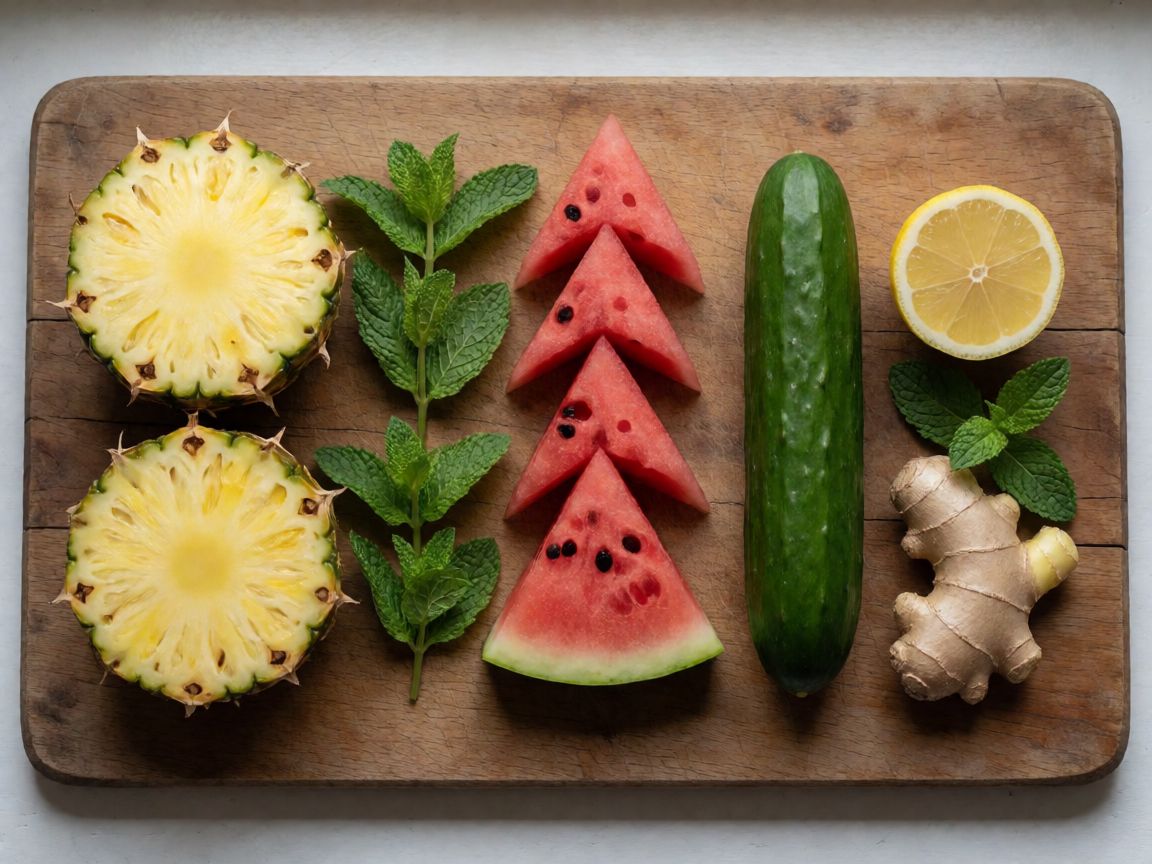
Pineapple: buy it ripe, because a hard, underripe pineapple hasn't built up the sugars you're trying to pull into the water — press the base, it should give slightly and smell sweet, not green. Peel and cube it rather than leaving chunks with skin on; skin doesn't flavour, it just sits there.
Watermelon: a whole melon for 1 litre of water sounds like overkill until you remember watermelon is roughly 92% water itself — you're diluting watermelon-water with tap water, so you need bulk to taste anything at all. Deseed it properly; leftover seeds don't ruin the drink, but they do make it feel unfinished to drink around them.
Cucumber: peel it so the bitterness that sits just under the skin doesn't infuse along with the coolness — that bitterness is what people are tasting when they say "I don't like cucumber water." Slice thin for the same reason you cube the pineapple: more cut surface, faster, fuller infusion in the time you've got.
Lemon: unwaxed matters here specifically because you're leaving peel in a jug of water for up to 8 hours — waxed skin is coated to survive a shop shelf, not a long soak, and that coating will sit in your drink whether you want it or not. No unwaxed lemon to hand? A squeeze of ordinary lemon juice added at the end gives you the acidity without the question mark over the peel.
Mint across all three is doing one job: a top note of freshness that cuts through sweetness or coolness without adding sugar. Any soft-leaved mint works — spearmint is the common supermarket one and it's fine; don't reach for something woody like rosemary as a swap, it won't dissolve the same way and will taste like a different drink entirely.
The ginger in the cucumber-lemon jug is marked optional for a reason: a pinch grated in gives a warm background hum against the cold cucumber, but it's assertive, so start with less than you think you need — you can't take it back out once it's infused.
Straining at the end isn't fussy, it's practical: you've extracted what you wanted from the solids over those hours, and drinking round bits of cucumber and pith afterwards adds nothing — pour through a sieve into glasses or a clean jug and the fruit's job is done.