
 AI photo
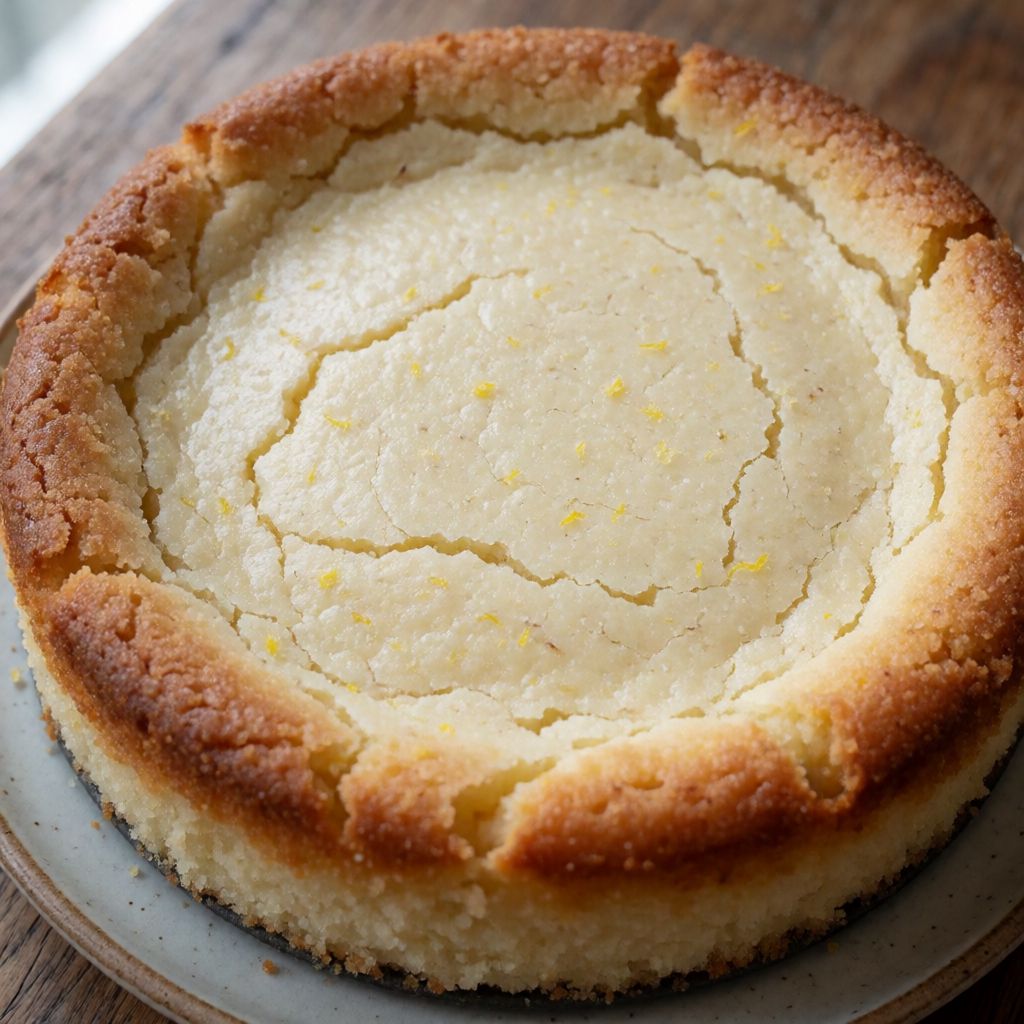
Flourless Almond and Ricotta Cake
A light, flourless almond and ricotta cake, finished with almond flakes and a dusting of icing sugar.
Labels are worked out automatically from the ingredients and can be wrong. Check the packaging if it matters to you.
Ingredients
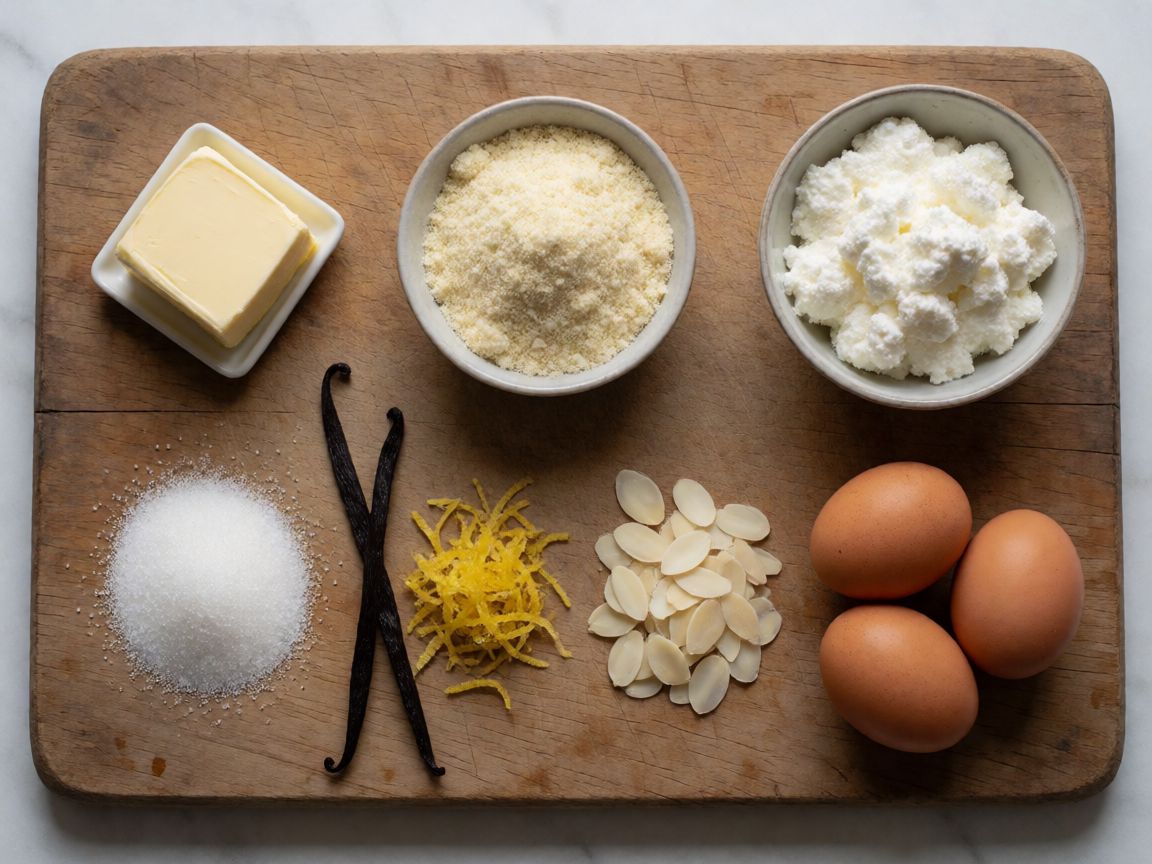
- 120 g Butter
- 240 g Ground almonds
- 250 g Ricotta
- 175 g Caster sugar
- 4 pcs Eggs
- 1 pcs Lemon zest
- 1 pcs Vanilla pod
- Flaked almonds to taste
- Icing sugar to taste









Steps
Preheat the oven to 160°C.
In a bowl, put the butter at room temperature, the vanilla seeds, 100 g of the sugar and the lemon zest. Beat with a mixer until light and fluffy.
Add the egg yolks one at a time, then fold in the ground almonds.
Add the ricotta and mix the batter energetically.
In another bowl, beat the egg whites to stiff peaks, gradually adding the remaining sugar.
Gently fold the beaten egg whites into the batter.
Take a round tin 20 cm in diameter and line it with baking paper.
Pour the batter into the tin and level the surface with a spatula.
Sprinkle the surface of the cake with flaked almonds.
Bake the cake in a static oven at 160°C for 40–50 minutes, until golden.
45 minLet the cake rest in the tin for a few minutes, then let it cool.
Turn out the cake, dust with icing sugar and serve.
This is a cake with no wheat in it at all — ground almonds and ricotta do the job flour usually does, one for structure, one for moisture. That's the whole trick and the whole risk. No gluten means no safety net: there's no stretchy web to trap air and hold the cake up, so the lift has to come from somewhere else, and that somewhere else is egg white, beaten and folded in like you're carrying a bowl of soap bubbles across the kitchen.
What decides whether it works is restraint in two places. First, the butter-sugar-yolk mix: beaten light so it holds air, but you're not chasing the pale, tripled-in-volume fluff of a Victoria sponge — ground almonds are heavy and ricotta is wet, so an overworked base just collapses under its own ambition. Second, the fold: egg whites go in last because they're the only leavening you have. Stir them in like you're mixing cement and you've knocked the air straight back out, and the cake will be dense and low rather than cracked-golden-top-with-a-damp-middle, which is what you want.
Some say almond cakes are naturally dense and that's just their nature — no. Dense is what happens when the whites get deflated or the ricotta is too wet and waterlogs the crumb. A proper one is moist, yes, but it still rises, still has a bit of lightness under that nutty crust.
160°C in a static oven, not fan — fan ovens push hot air hard and will catch the flaked almonds on top before the centre's had its 40 minutes to set. If yours only does fan, knock it down by about 20°C and keep an eye on the top from the 30-minute mark rather than trusting the dial. There's no flour here to tell you anything by touch-and-spring; the real tell is colour — a deep gold, not pale, not scorched — and a skewer coming out with moist crumbs, not wet batter, not bone dry. Forty-five minutes is where to start checking, not where to stop the clock blind.
Butter at room temperature isn't fussiness — cold butter won't hold air when you beat it, it just gets smeared through the sugar instead of aerated, and that's lift you've lost before you've even started. Ground almonds carry the fat and the flavour that flour would otherwise carry — buy them fine and pale, not the coarse flapjack-topping kind, or your crumb turns gritty instead of soft. If you're grinding your own, don't over-pulse: past a point the oils release and you get almond paste, not almond flour.
Ricotta is doing the job that milk or soured cream might do in another cake — moisture without extra gluten-forming liquid dragging the structure down — but it has to be proper ricotta, drained and curdy, not the smooth spreadable tub stuff that's closer to cream cheese. If it's sitting in a lot of whey, tip that off first or the batter goes slack and the bake runs long and soggy in the middle. No ricotta in the cupboard — mascarpone works, thinned slightly, though you lose a little of that faint sheep's-milk tang; cottage cheese blitzed smooth is the next-best stand-in.
The egg whites are non-negotiable as a technique even if you think you can skip the faff: beat to stiff peaks — the point where the bowl can go upside down and nothing moves — and add the sugar gradually, not all at once, so it dissolves into the foam instead of weighing it down wet and grainy. Fold them through in two or three additions, cutting and turning rather than stirring, and accept losing a bit of volume as the price of mixing at all — losing it all is the actual failure.
Lemon zest and vanilla aren't decoration, they're there because almond and ricotta together are rich but flat-tasting without a sharp or aromatic edge cutting through — leave them out and the cake tastes like it's missing something rather than tasting plain. A 20cm tin is what the quantities are built for; go wider and the cake bakes thin and dry before the middle sets properly, go narrower and the middle never catches up with the edges. Icing sugar at the end is just cosmetic, but a cake with no flour, no decoration beyond a dusting and flaked almonds, lives or dies on what's under the sugar — so that part is where the patience actually has to go, not into any step you can rush through for the sake of getting to tea.