
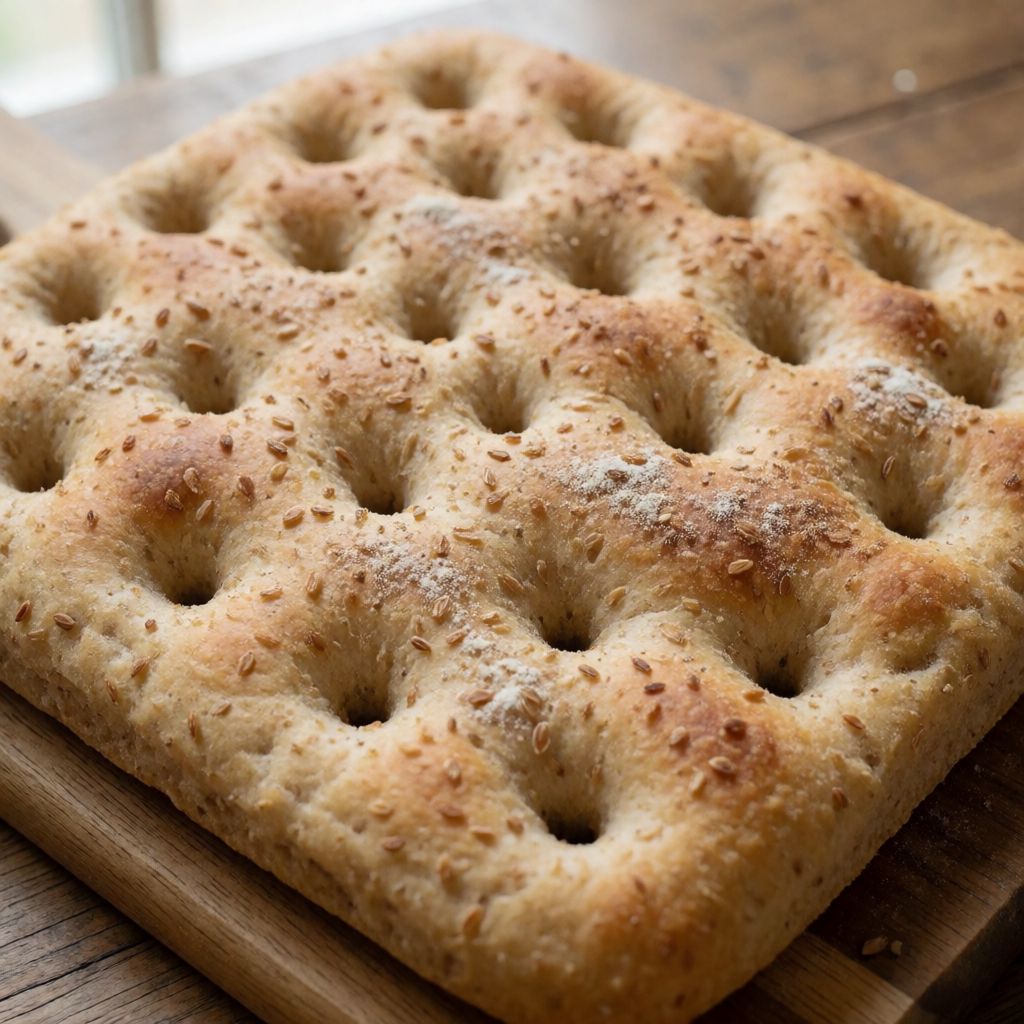
 AI photo
Wholemeal Focaccia
A simple wholemeal focaccia, enriched with a touch of red rice flour for colour and crunch.
Labels are worked out automatically from the ingredients and can be wrong. Check the packaging if it matters to you.
Ingredients
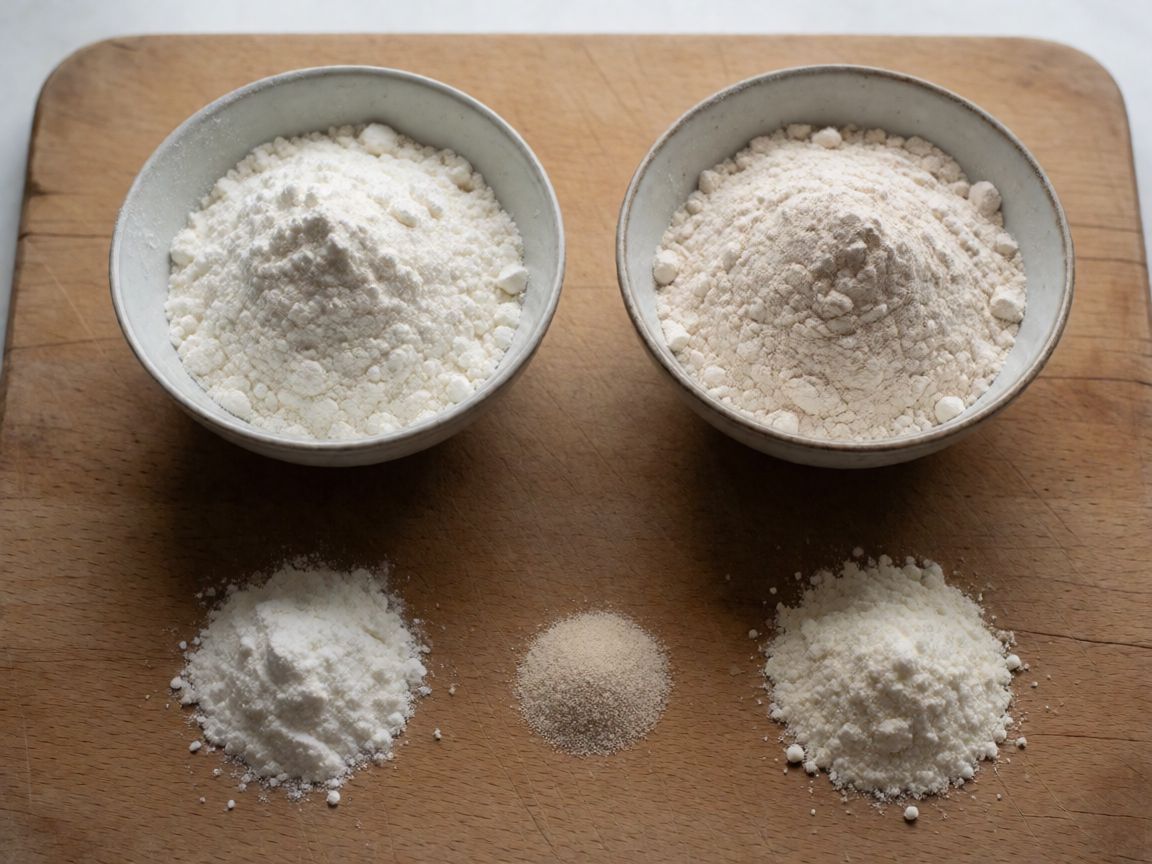
- 200 g Plain flour (type 1)
- 115 g Wholemeal flour
- 35 g Red rice flour
- 240 ml Water
- 3 g Yeast
- 4 g Salt
- Durum flour to taste, for dusting
- 30 ml Water
- 30 ml Olive oil
- Salt to taste








Steps
In a bowl, combine the plain flour, wholemeal flour and red rice flour, and mix well.
Add the yeast and gradually pour in the water, mixing as you go. Add the salt, pour in the rest of the water and stir with a spoon, then knead by hand for a few minutes.
Shape the dough into a ball, cover the bowl and leave to rise at room temperature.
30 minDo a set of strengthening folds: fold the dough over itself and pull it towards you. Repeat a few times, cover and leave to rise.
20 minRepeat the folding and 20-minute rise twice more.
After the final fold, leave the dough to rise.
180 minDust the work surface with durum flour, place the dough on it and stretch it out with your fingers.
Transfer the dough to an oiled 30x40 cm tin, spreading it out gently.
Pour the mixed water, salt and olive oil over the surface, spread evenly and dimple with your fingers.
Bake in a fan oven preheated to 240°C for about 15-20 minutes.
18 minWhen the focaccia is golden and slightly crisp on top, remove from the oven and serve warm.
This isn't a soft white focaccia with air holes the size of your thumb. Three flours — plain, wholemeal, red rice — mean less gluten overall, so the crumb stays tighter, denser, closer to the bread you'd actually want with soup rather than the stuff that photographs well. The red rice flour isn't there for colour, it's there because it has almost no gluten at all, which pulls the whole dough towards a shorter bite. That's the trade you're making: flavour and fibre against the big, glossy holes.
What decides whether this works isn't the oven, it's the four hours before the oven. Three sets of folds, twenty minutes apart, then a long three-hour rise — that's the actual recipe. The folding isn't kneading twice over; it's a different job. Kneading develops gluten by friction. Folding, done cold and gentle like this, just realigns the strands the rise has already stretched, giving the dough structure without knocking out the gas the yeast is quietly building. Skip the folds and you get a focaccia that spreads thin and dense, because there's nothing holding the gas pockets up.
The wet dough — 240 ml water to 350 g flour — is why you knead by hand and not with a rolling pin anywhere near it. This is a slack, sticky dough on purpose. Dry, tight dough gives you a tight crumb; wet dough gives you the open, uneven texture focaccia is supposed to have, even a denser one. Some say you need a stand mixer for wet dough like this — you don't, you just need patience and slightly oiled hands so it stops sticking to you instead of to the bowl.
Plain flour (type 1) is your backbone — it's the one flour here with enough gluten to actually hold the loaf up. If you can't get "type 1" specifically, any strong white bread flour does the same job; it's about protein content, not the number on the bag. Wholemeal flour brings bran and germ back in — more flavour, more fibre, but bran edges cut gluten strands as the dough stretches, which is part of why this loaf is denser than a plain white one, and why you want those folds doing structural work the flour can't do alone. Red rice flour is the flourish: a nutty, slightly sweet, faintly pink note, and because rice has no gluten, it's the flour that softens the whole crumb. No red rice flour at home? Any rice flour will do a version of the same job, just without the colour and the particular toastiness — don't go reaching for cornflour, it behaves nothing like it in a dough.
Water at 240 ml plus the 30 ml for the topping is deliberately generous. A focaccia dough should feel more like a thick batter than bread dough — if yours feels kneadable like pizza dough, it's too dry and will bake tight rather than open. Trust the stickiness; it loosens with every fold.
Yeast at 3 g for 350 g of flour is a slow, small amount on purpose — this is a long, cool rise recipe, not a fast one. Small yeast quantities give the dough time to develop flavour through fermentation rather than just filling with gas quickly. If you only have dried active yeast rather than instant, dissolve it in a little of the water first; if you've only got fresh yeast, use roughly three times the weight.
Salt at 4 g in the dough is low — focaccia gets its second hit of salt on top, in the water-oil mixture, and that's the one you taste first when you bite in. Don't add it all at once at the start either way: salt tightens gluten structure, so dumping it in before the flours have hydrated properly makes early kneading harder than it needs to be.
Durum flour for dusting is there because its coarser, harder grain doesn't absorb into a wet dough as fast as a soft flour would — it sits on the surface and does its job of stopping stick, rather than becoming part of the dough and changing its hydration. Any coarse semolina-style flour substitutes fine; ordinary plain flour works in a pinch but go easy, it does get absorbed faster.
Olive oil — 30 ml over the top, plus whatever you use to oil the tin — is non-negotiable for flavour here, it's doing something a neutral oil can't: carrying its own fruitiness into the crust as it fries slightly in contact with the hot tin. If you want a substitution, pick any oil that can take 240°C without smoking and has enough character to be noticed — but understand you're trading away the actual point of the olive oil, not just its name.
On a British fan oven, 240°C is genuinely hot — hotter than most people run their oven for anything short of a pizza stone session. That heat is what gives you the crisp, slightly blistered top in under twenty minutes; anything cooler and the crust sets before it browns, leaving you with a pale, soft top instead of the contrast you want. Go by colour and the faint crackle sound when you tap it, not by the clock — ovens lie, colour doesn't. A 30x40 cm tin is a fairly standard roasting-tin size in most UK kitchens, so you likely already own the right vessel; if yours runs smaller, spread the dough thinner rather than piling it deeper, or the middle won't catch up with the edges in time.