
 AI photo
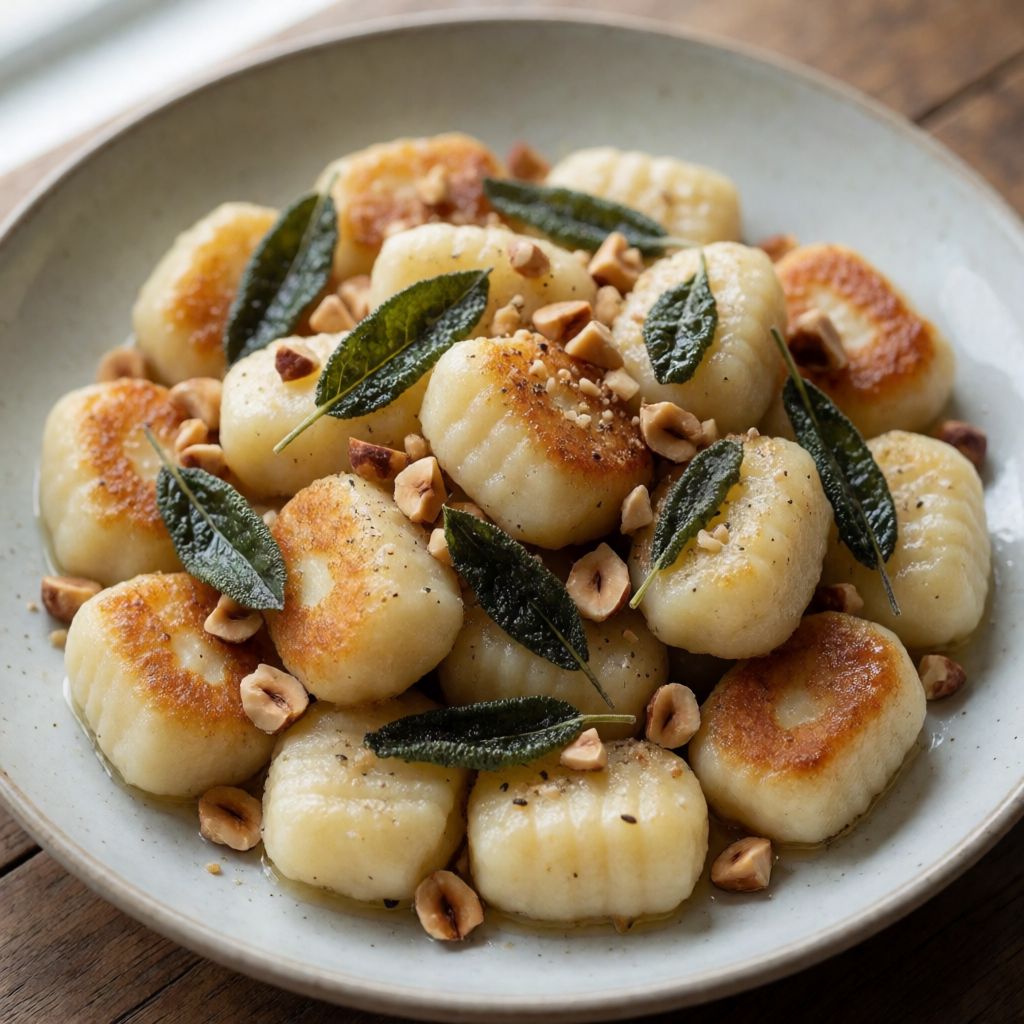
Pan-fried gnocchi with sage and hazelnuts
Soft potato gnocchi pan-fried until lightly crisp, tossed in brown butter with sage and hazelnuts, finished with rocket and parmesan.
Labels are worked out automatically from the ingredients and can be wrong. Check the packaging if it matters to you.
Ingredients
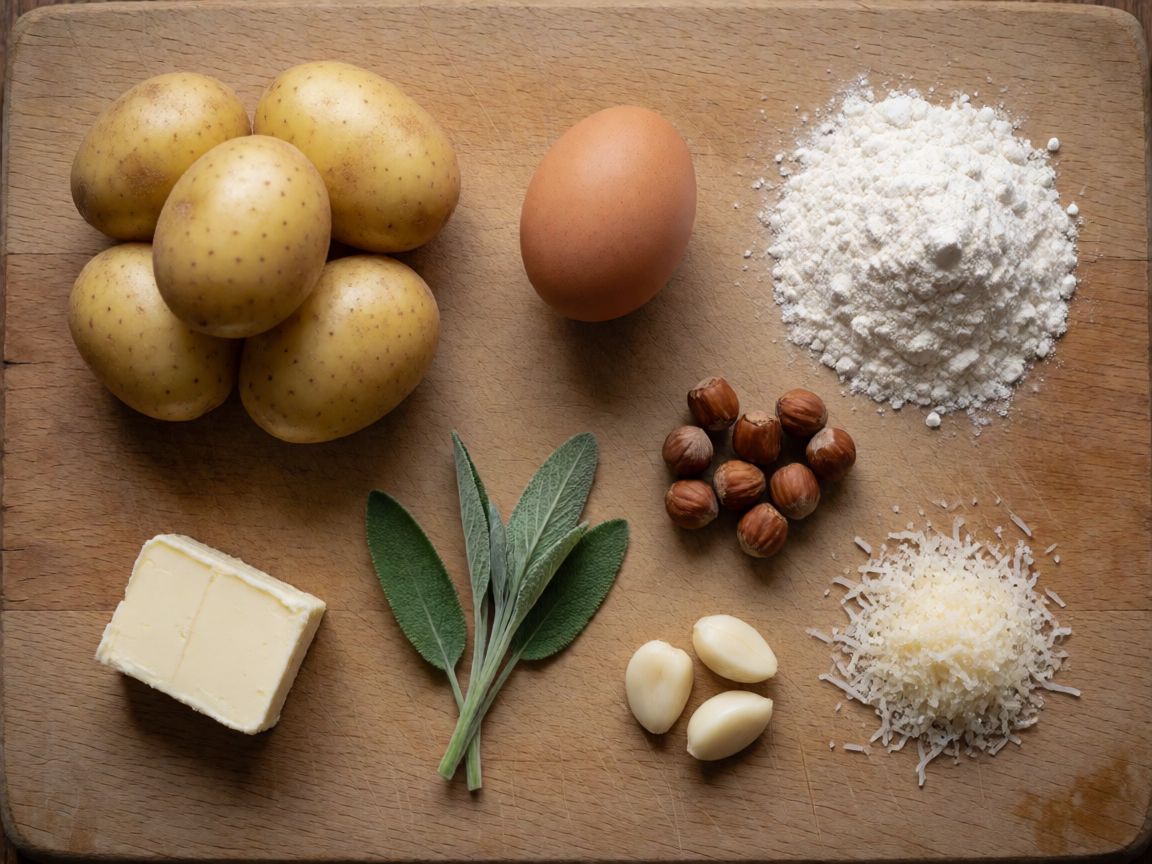
- 1 kg Potato
- 1 pcs Egg
- 275 g Durum flour
- 1 tsp Salt
- 4 tbsp Olive oil for frying the gnocchi
- 75 g Hazelnut
- 75 g Butter
- 5 pcs Sage sprigs, fresh, leaves picked
- 2 clove Garlic finely grated
- 75 g Parmesan freshly grated
- 75 g Rocket
- Black pepper to taste, freshly ground





Steps
Boil the unpeeled potatoes in unsalted water until tender, then peel them while still hot.
Mash the potatoes with a fork, add the egg, salt and durum flour, and bring together gently without overworking.
The dough will be very soft — don't add extra flour, just gather it into a ball without kneading.
Dust the work surface with flour and roll the dough into ropes about as thick as a finger.
Cut the ropes into 1 cm pieces and roll each over the tines of a fork to create ridges.
Lay the gnocchi on a clean cloth so they don't touch each other or overlap.
Let the gnocchi dry in the air for 15 minutes.
Cook the gnocchi in a large pot of lightly salted water.
Lift the gnocchi out with a slotted spoon once they float to the surface, and let them drain on a clean cloth.
Sage and hazelnut sauce: toast the hazelnuts in a dry pan until the skins crack slightly, wrap in a clean cloth, rub off the skins and chop finely.
Melt the butter in a small saucepan over medium heat.
Let the butter brown, stirring occasionally so it doesn't burn.
Add the sage leaves to the browned butter.
Add the hazelnuts and finely grated garlic to the browned butter and turn off the heat.
Heat the olive oil in a clean pan.
Pan-fry the cooked gnocchi until lightly crisp, then toss them with the sage brown butter sauce.
Serve with rocket, parmesan, flaked salt and freshly ground pepper.
Gnocchi gets a bad reputation from two places: the vacuum-packed bullets you buy in a supermarket bag, and home cooks who panic at a soft dough and bury it in flour. This recipe only works if you resist both. The whole dish rests on one mechanical fact — potato starch, when the potato is hot, behaves completely differently from potato starch gone cold and gluey. You're racing that change, not the clock.
Boil the potatoes in their skins. Peeling before boiling lets water into the flesh through the cut surface, and that water has nowhere to go — it sits in the potato and turns your dough into wet sand that needs flour to compensate, which is exactly how you end up with gnocchi that chew like rubber. Skin on, the potato steams in its own moisture and stays dry inside.
Then you mash it while it's still hot enough to make you swear. This isn't about speed for its own sake — it's that hot starch granules are still swollen and loose, happy to bind with egg and flour on minimal contact. Let the potato cool first and the starch tightens up, locks together, and will only yield to more kneading — which is the single fastest way to develop gluten you didn't want and get gnocchi with the bite of chewing gum. So: hot potato, gentle hand, soft dough. Some say you should add flour until the dough "feels right" and stops sticking. No — if it feels right by that measure, you've already added too much, and you'll taste cardboard dumpling instead of potato.
The resting on the cloth, uncovered, for those fifteen minutes — that's not fussiness either. A skin forms on the surface of the gnocchi as it dries slightly in the air, and that skin is what keeps the dumpling from dissolving into the cooking water and what lets it hold a crisp edge later in the pan. Skip it and you boil cloudy water and soft-edged gnocchi that fall apart the moment hot oil touches them.
The float test replaces a timer entirely, and this is the one place where watching beats counting: the gnocchi sink because they're dense, and rise the second the inside has steamed through enough to lighten them. There's no clock reading that tells you that — a pot that's slightly too hot or gnocchi slightly too large change the number every time, but the float is always true.
Hazelnut and brown butter is a pairing built on chemistry, not whimsy — both get their flavour from the same Maillard reaction, sugars and proteins browning under dry heat, so toasting the nuts and browning the butter separately and then combining them doubles down on one flavour rather than mixing two unrelated ones. Browning butter means cooking off its water content until the milk solids left behind toast to a nutty brown — watch for the foam subsiding and a smell like baked biscuit, not a clock figure, because every pan and every stove gets there at a different speed and burnt butter smells bitter and acrid, unmistakably wrong, so pull it a shade early rather than late. The sage leaves go in once the butter's already dark because their job is to crisp and release oil into the fat, not to simmer and turn bitter and limp.
On ingredients: use a potato that's floury rather than waxy — in Britain that's King Edward or Maris Piper, the same ones that go into a Sunday roast for the same reason, because they break down dry and fluffy rather than holding together wet and dense. A waxy potato like a new potato will fight you on every point above. Durum flour, rather than a standard plain flour, gives you a firmer, more toothsome bite and a pale gold colour, but if you only have plain flour in the cupboard, use it — you'll just want to be slightly more careful not to overwork it, since plain flour develops gluten more readily. The egg is there purely as a binder for a potato dough that otherwise has no structure of its own; there's no substitute that does the same job without changing the dumpling's character, so don't look for one here. For the oil you fry the gnocchi in, criterion is simple: anything with a high smoke point and no flavour of its own, so a neutral vegetable or sunflower oil works exactly as well as olive oil and won't fight the butter and sage. Hazelnuts can be swapped for any nut that browns and crisps rather than burns in a dry pan — walnuts or almonds, roughly — but skip pre-roasted or flavoured ones, since the point is toasting them yourself and controlling how far they go. Rocket adds the bitterness and pepperiness the butter and starch otherwise lack entirely; watercress does a similar job if that's what's in the fridge.
One more thing worth saying honestly: a domestic hob doesn't hold heat the way a professional stove does, so when you brown butter in a small saucepan, don't walk away — on a thin-bottomed pan the difference between "nutty" and "acrid" can be thirty seconds. And making the gnocchi itself, from boiling to shaping to resting, isn't a fifteen-minute job whatever packet-gnocchi might have taught you to expect. Patience here isn't virtue for its own sake — it's the only thing standing between a light dumpling and a dense one.