
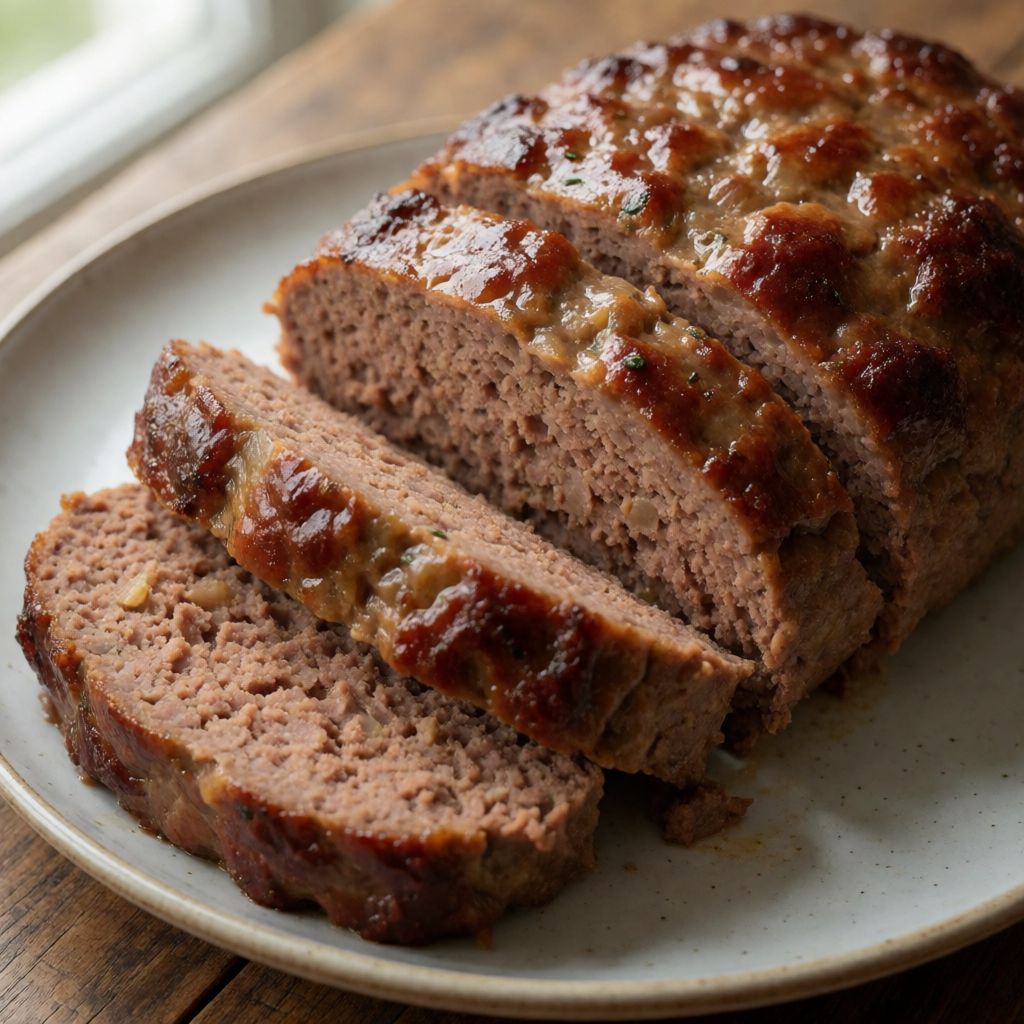
 AI photo
Greek-style Lamb Meatloaf
A Greek-inspired lamb meatloaf with feta, olives and sun-dried tomatoes, baked with potato wedges.
Labels are worked out automatically from the ingredients and can be wrong. Check the packaging if it matters to you.
Ingredients
- 500 g Minced lamb
- 2 pcs Onion finely chopped
- 2 clove Garlic finely chopped
- 100 ml Milk
- 50 ml Double cream
- 2 pcs Eggs
- 100 ml Porridge oats
- 2 tbsp Thyme finely chopped, fresh
- 1 tbsp Rosemary finely chopped, fresh
- 3 tbsp Sun-dried tomatoes finely chopped
- 10 pcs Pitted black olives halved
- 75 g Feta
- 800 g Potatoes peeled and cut into quarters
- 1 tbsp Olive oil
- 1 tbsp Butter for the dish
- Salt
- Black pepper fresh
- 1 bunch Thyme for sprinkling, fresh
















Steps
Put all the ingredients for the meatloaf mixture – except the olives and feta – into a large bowl and beat with a mixer for 1-2 minutes. Add the crumbled feta and the halved olives.
2 minGrease a heatproof baking dish with butter. Shape the mixture into an oblong loaf and place it in the middle of the dish.
Mix the potatoes with the oil and salt and arrange them around the sides of the dish.
Bake the loaf in a preheated oven at 180°C (fan) for about 45 minutes. Turn the potatoes over a few times.
45 min
This is a meatloaf that's trying to be two things at once — a Sunday roast and a Greek taverna dish — and it works because lamb fat, oven heat and feta's salt all pull in the same direction. You get a loaf with the roast potatoes baked right alongside it in the same dish, which is less "recipe idea" and more "one less pan to wash", a very domestic kind of cleverness.
What decides whether it holds together, literally, is the oats. Porridge oats here aren't flavour, they're a sponge: lamb mince releases a fair bit of fat and juice as it cooks, and if that liquid has nowhere to go, you get a loaf that slumps and weeps grease onto the potatoes. Oats and the egg-milk-cream mixture bind that liquid into the meat instead of letting it run. Skip the oats and you're not making a lighter loaf — you're making a wetter, collapsing one.
The second thing that decides it is restraint with the olives and feta: fold them in at the very end, after the mixer, not before. Beat them in with everything else and the mixer shreds the feta to paste and the olives to flecks — you lose the bite of salt-cured olive against soft meat, which is the whole point of calling this "Greek-style" rather than just "lamb meatloaf with Mediterranean seasoning". Some say feta and olives can go in with everything else to save a step — no, because the mixer doesn't know the difference between "mix" and "destroy", and feta in particular turns to wet sand if you let it.
Lamb mince is the one ingredient you can't really substitute and still call this the same dish — beef gives you a heavier, flatter flavour, and the herbs (thyme, rosemary) were chosen because lamb fat carries resinous, piney flavours well; beef fat doesn't carry them the same way, it just sits under them. If lamb isn't available or isn't to taste, go to pork shoulder mince before beef — pork has enough fat to stay moist and a milder flavour that won't fight the herbs.
Onion and garlic go in raw and finely chopped, not pre-softened in a pan — this only works because the loaf bakes for 45 minutes, long enough for raw onion to properly cook through and lose its bite without a frying step first. That's the whole justification for skipping the saucepan: time in the oven does the softening instead, which saves you a pan and a hob burner, both useful things in a flat kitchen.
Milk, cream and egg are doing the same job from different angles: moisture, richness, and — critically for egg — setting. Egg is what turns a loose meat-and-oat paste into something you can slice rather than something that falls apart on the plate. Double cream is optional luxury on top of that; if you don't have it, use a little more milk and accept a slightly leaner loaf — it won't fail, it'll just be less rich.
Sun-dried tomatoes do a job dried concentrates always do: they bring a hit of sweet-sour-savoury that fresh tomato can't, because fresh tomato is mostly water and would loosen the mixture rather than season it. Don't swap in fresh tomato thinking it's "the same but better" — it isn't, it's wetter, and wet is the enemy here.
Feta and olives are non-negotiable for the dish's identity, but they're flexible in brand: any firm, salty, crumbly white cheese stands in for feta if you're out — a Greek feta specifically is cured in brine, which is why it's so assertively salty, so taste your mixture before you add more salt separately, because feta and olives both are already carrying a lot of it. That's also why there's comparatively little added salt in the ingredient list — the feta and olives are doing that work for you.
Potatoes in the same dish, cut to quarters and turned a few times during baking, aren't just convenience — quartered potato has enough surface area to pick up fat rendering off the loaf and roast properly in it, rather than steaming in their own moisture the way a whole potato would in 45 minutes at this heat. Turning them stops the undersides, sitting in rendered fat, from going soft and pale while the tops dry out — an ordinary domestic oven doesn't heat evenly from every side, so you compensate by moving the food instead of expecting the oven to behave like a professional one. A fork through the fattest potato quarter, not a clock, tells you they're actually done — if it slides in without resistance, you're there; if it meets any fight, give them longer regardless of what the 45 minutes says.