
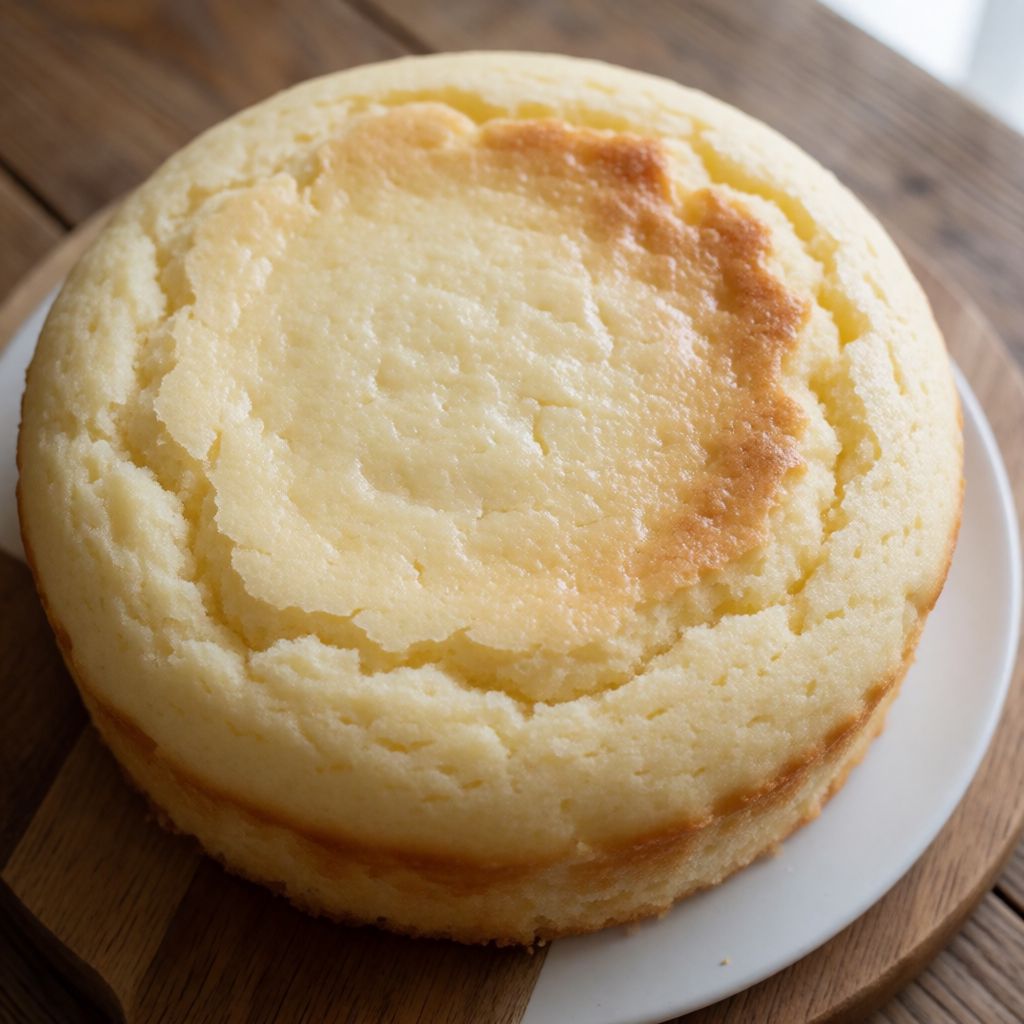
 AI photo
Greek Yogurt Cake
A light, moist cake flavoured with Greek yogurt and vanilla, finished with a dusting of icing sugar.
Labels are worked out automatically from the ingredients and can be wrong. Check the packaging if it matters to you.
Ingredients
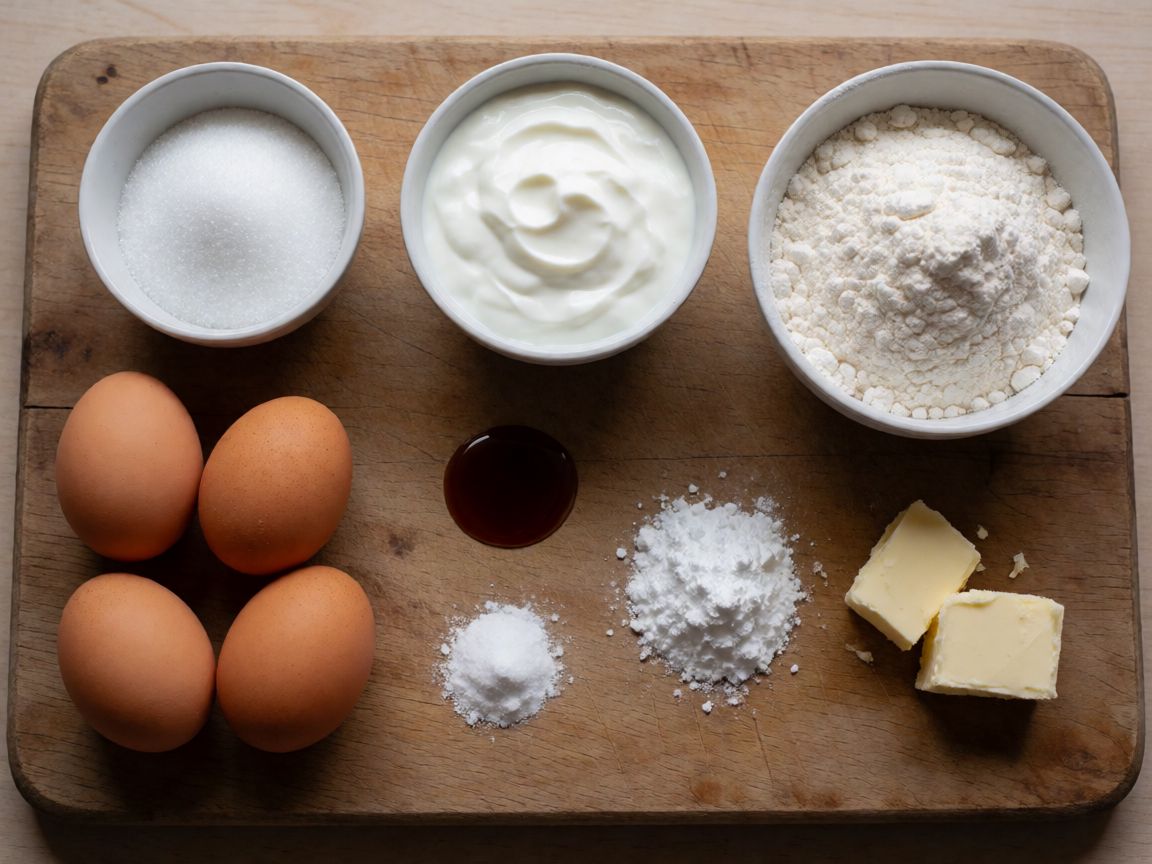
- 4 pcs Eggs
- 200 g Sugar
- 180 g Greek Yogurt
- 1 tsp Vanilla Extract
- pinch Salt
- 60 ml Vegetable Oil
- 190 g Plain Flour
- 30 g Potato Starch
- 16 g Baking Powder
- 15 g Butter for greasing
- 10 g Icing Sugar for dusting










Steps
Crack the eggs into a large bowl, add the sugar, vanilla extract and salt. Whisk quickly until combined.
Add the Greek yogurt and vegetable oil, and mix well.
Sift the flour, potato starch and baking powder into the batter, and fold gently until smooth.
Grease a baking tin with butter and dust with flour, then pour in the batter.
Bake the cake at 180°C in the oven for 45 minutes, checking it is cooked through.
45 minRemove the cake from the oven, let it cool, transfer to a plate and dust with icing sugar.
This is not a sponge. There's no creaming of butter and sugar, no beating eggs to ribbons for twenty minutes until your arm aches — the lift here comes almost entirely from the baking powder working against the acid in the yogurt. That's why you whisk the eggs and sugar "quickly" and not to a pale foam: you're not building an air structure to protect, you're just dissolving sugar and breaking yolks. The cake rises later, in the oven, by chemistry, not by trapped air.
What decides whether it works is mostly what you do between the wet bowl and the dry one. Sift the flour, starch and baking powder together before they meet the batter — not for ceremony, but because loose baking powder clumps, and a clump under the crust gives you a bitter, metallic bite in one forkful and nothing in the next. Fold, don't beat, once they're combined. Flour develops gluten the moment it gets wet and worked; beat it like a sponge and you've built chains that fight the rise instead of helping it — you'll get a cake that's dense and a bit rubbery at the base, and you'll blame the oven for something the spoon did.
Eggs here are structure and a little lift, nothing more dramatic. Four eggs against 190g flour gives you enough protein to hold the crumb together once the starch has thinned the gluten out — don't expect them to whip into a meringue-like foam, that's not their job in this batter, so don't overwork them trying to get one.
Sugar at 200g is doing two jobs besides sweetness: it keeps the crumb tender by competing with flour for the water in the batter (less water free to feed gluten development means a softer bite), and it caramelises slightly at the crust for colour and a faint depth of flavour. Cut it back and the cake will be paler and a touch tougher, not just less sweet.
The Greek yogurt is the heart of the thing — 180g of it brings fat, protein, and enough acidity to react with the baking powder for extra lift, alongside straightforward moisture. You want it thick, the kind that holds its shape on a spoon, not a runny natural yogurt — a watery yogurt adds liquid without adding the structure that comes with the strained kind, and your batter will be looser than it should be. No Greek yogurt in the fridge? Full-fat sour cream does the same fat-plus-acid job, with a slightly different tang. Potato starch does a quiet but real job: it dilutes the flour's gluten, the way cornflour does in a shortbread, so the crumb stays tender rather than chewy. If you don't have potato starch, cornflour (cornstarch) is the direct swap — same mechanism, same quantity.
Baking powder at 16g against 190g flour is a generous amount, because there's no egg foam doing the heavy lifting here — this cake relies on it almost entirely. Old baking powder, sitting at the back of the cupboard since last Christmas's mince pies, loses its fizz over time; if you're not sure of yours, drop a pinch in warm water and watch for bubbles before you commit a whole batter to it.
Oil, 60ml, should be any oil with no smell of its own — sunflower, rapeseed, a plain vegetable oil — not olive oil, which will sit on top of the vanilla and yogurt and argue with them. Butter, by contrast, earns its place only at the edges: 15g to grease the tin, because it has milk solids that grip the flour you dust on top of it and give you a clean release, something a pure oil won't do nearly as well.
The icing sugar at the end is dusted after the cake has cooled, not before — on a warm surface it melts into a wet sheen instead of sitting as a soft white layer, and you'll lose the contrast that makes a plain-looking cake look finished. And the patience that matters most in this whole recipe isn't the 45 minutes baking — it's the wait after, letting the cake sit and cool before you cut it, which is when the crumb settles and stops being slightly gummy at the centre, the part a hot knife through a hot cake never shows you until it's too late.