
 AI photo
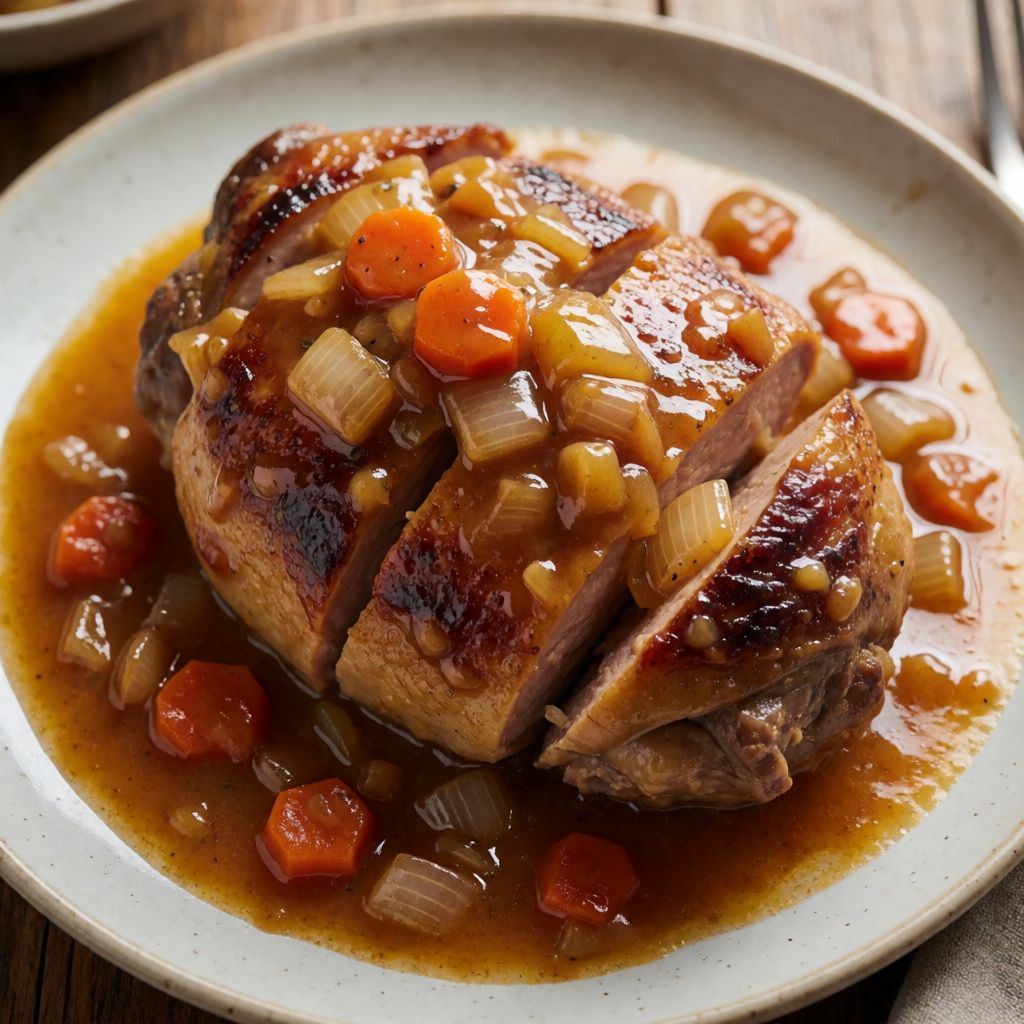
Guinea Fowl in Orange Sauce
A guinea fowl braised in a rich orange and brandy sauce, finished with fragrant citrus zest.
Labels are worked out automatically from the ingredients and can be wrong. Check the packaging if it matters to you.
Ingredients








Steps
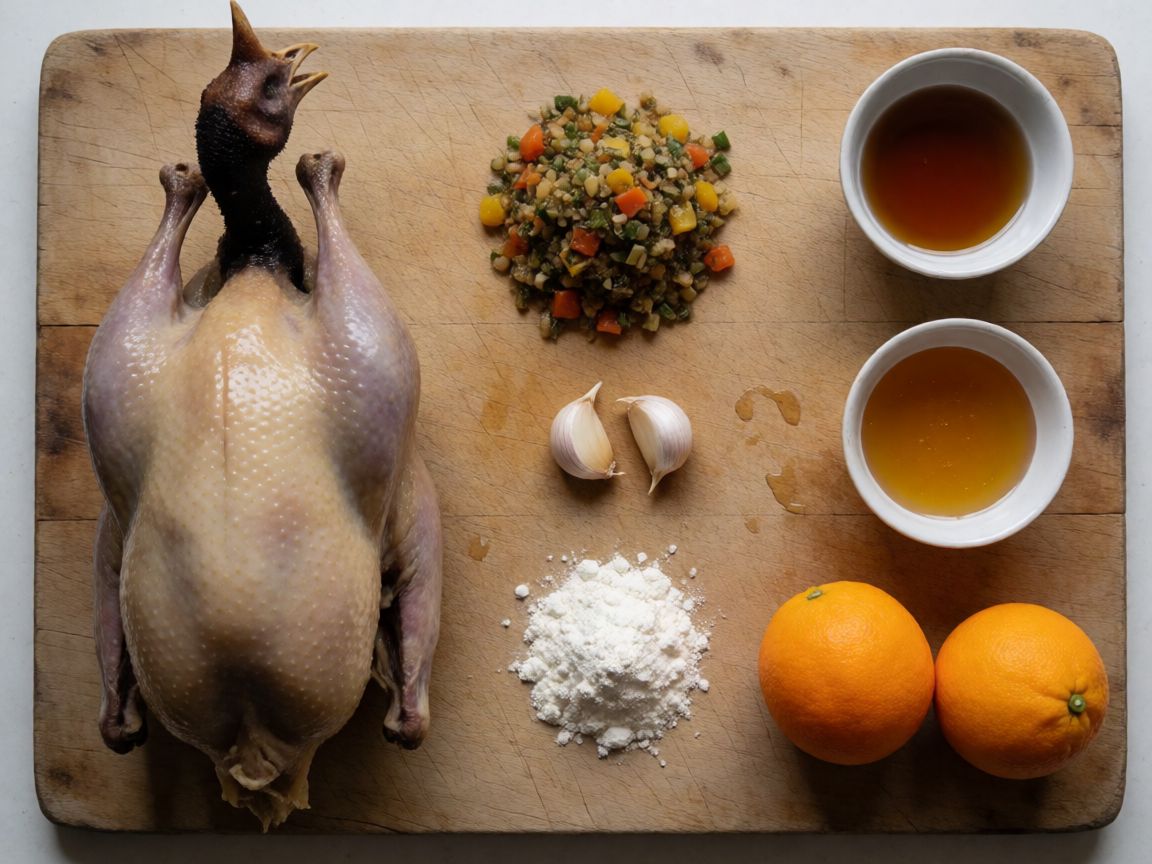
Dredge the guinea fowl pieces in a thin layer of flour.
In a large pan, heat the olive oil and fry the garlic until golden, then remove it.
Add the soffritto vegetable mix and cook for a few minutes.
Add the guinea fowl pieces, brown on all sides, and season with salt and pepper to taste.
Pour in the brandy, flambé over high heat and let the alcohol evaporate completely.
Reduce the heat, cover the pan and cook, gradually adding orange juice and orange zest.
50 minCook the guinea fowl until fully done.
Forget the Sunday roast instinct this title might trigger - this isn't a roast at all. It's a braise: fowl pieces, browned, then covered and simmered in their own juices plus brandy and orange, lid on, heat low enough that nothing boils hard. The oven never enters into it; the pan does all the work.
What decides whether this comes out right is simple and unforgiving: guinea fowl is lean. Almost no fat cushion under that skin, unlike a fatty duck or a well-marbled chicken thigh. Treat it like chicken on a hot dry heat and it turns to string before it's cooked through. That's exactly why the method here is covered and gradual - the lid traps steam, the orange juice goes in bit by bit rather than all at once, so the pan never drops out of a gentle simmer into a dry sear or a hard boil. Patience here isn't a virtue, it's an ingredient: rush the liquid in and you get a flooded braise that never reduces; starve it and the meat seizes.
Some say browning the pieces first "seals in the juices." No - it doesn't seal anything, meat isn't a bag. Browning does one job: the Maillard reaction, that brown crust and deep smell, flavour and colour, nothing to do with moisture. You brown before the long simmer because that crust won't form once the pan is wet and covered - last chance to get it.
The flour dredge is doing two jobs, not one. First, it lets the pieces take colour evenly in the oil rather than sweating grey. Second - and this is the part people miss - some of that starch dissolves into the braising liquid later and quietly thickens your sauce, so you never need a separate roux or cornflour slurry at the end. Rice flour does the same starch job and gives a slightly crisper edge if that's what you have in the cupboard, or if gluten is a problem.
Soffritto - onion, carrot, celery, however your 50g pack is cut - goes in after the garlic for a reason: those vegetables need a few minutes in hot oil to let their sugars start caramelising, laying a sweet, savoury floor under everything that follows. The garlic is fried first and then pulled back out, not left to simmer for fifty minutes with everything else - garlic left that long in a wet braise turns bitter and grey; fried briefly it just perfumes the oil and steps aside.
Brandy, set alight: the flambé isn't theatre, whatever it looks like. Burning off the raw ethanol removes the harsh, nail-polish edge of straight spirit and leaves behind the gentler aromatic compounds it forms on the way out. In an ordinary UK kitchen, that means switching off the extractor fan before you light it and standing back - a flame following fumes up into ductwork is not an experience you want. If brandy isn't to hand, the criterion is: something orange-flavoured, sweet, and alcoholic enough to flame - Grand Marnier, Cointreau, even plain brandy stirred with a spoonful of marmalade will get you there.
Orange gives two different things and that's why it goes in as zest and juice separately rather than one squeeze. Zest carries the oil-soluble perfume - the actual citrus smell lives in that oil, not in the juice. Juice carries the acid and the sugar that cut through a rich braise. Added gradually, rather than dumped in, for the same reason as above: keep the pan at a steady simmer, not a sudden cold flood that stops cooking dead. The honey at the end isn't there for sweetness alone - it's there to round off the sharper edges of citrus acid and any bitterness that creeps in from pith caught in the zest.
Orange sauce with poultry is older than it looks on a modern table. Citrus was once an imported, seasonal luxury in northern Europe - oranges turning up on a plate meant money and occasion, which is exactly why rich sauces built around them attached themselves to feast-day birds rather than everyday ones. Guinea fowl carries a little of that same history: once a wild gamebird, now farmed and ordinary enough to sit in a supermarket chiller, but still pricier than chicken and still carrying a faint whiff of "special occasion" - which is probably why it ends up on the kind of table a roast would otherwise claim, just cooked by a method that actually suits its leanness.
For the pan itself, no kazan is needed and none is missed - a wide pan with a lid that actually seals is the right tool, closer to a pot roast than anything grander. If your lid doesn't sit tight, a layer of foil underneath it will hold the steam the whole method depends on, and that's worth more than any fancy equipment you don't have.