
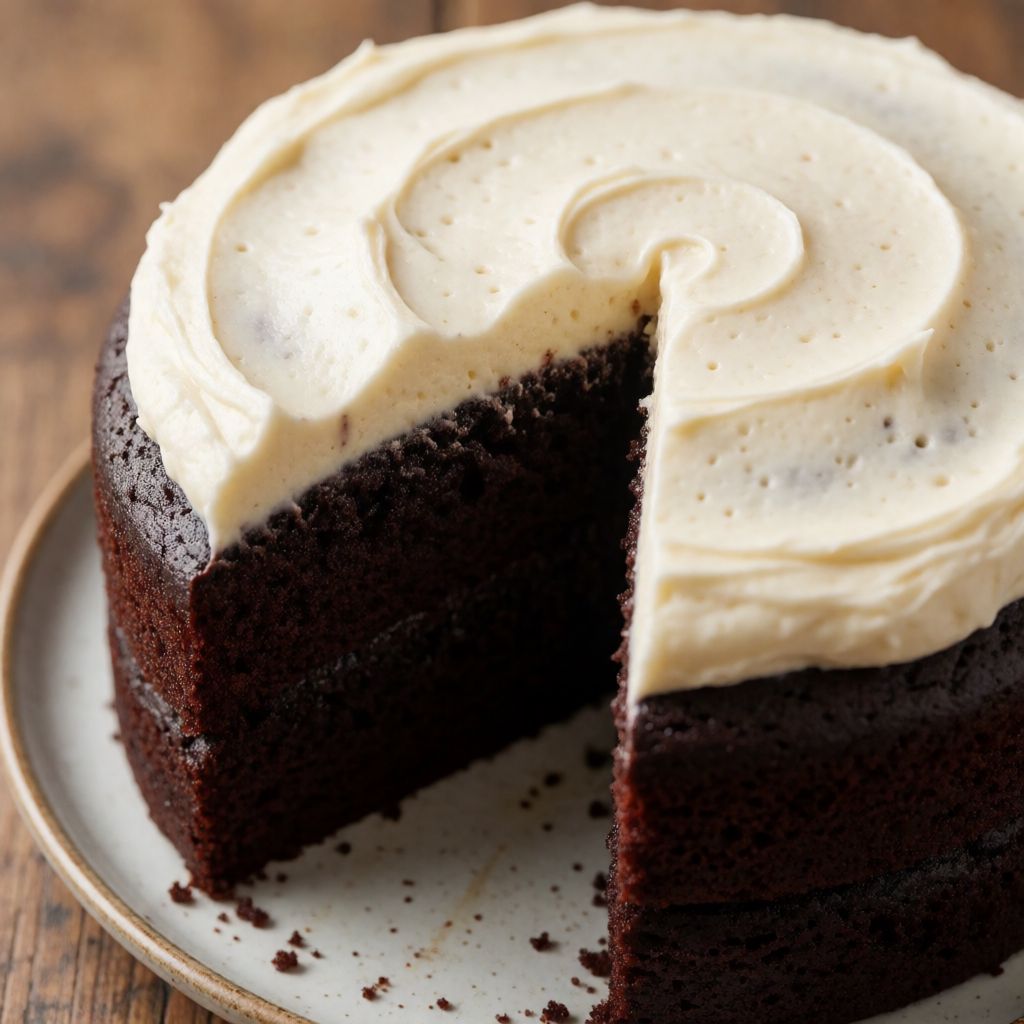
 AI photo
Guinness Chocolate Cake
A rich chocolate stout cake topped with a creamy mascarpone and cream cheese frosting.
Labels are worked out automatically from the ingredients and can be wrong. Check the packaging if it matters to you.
Ingredients
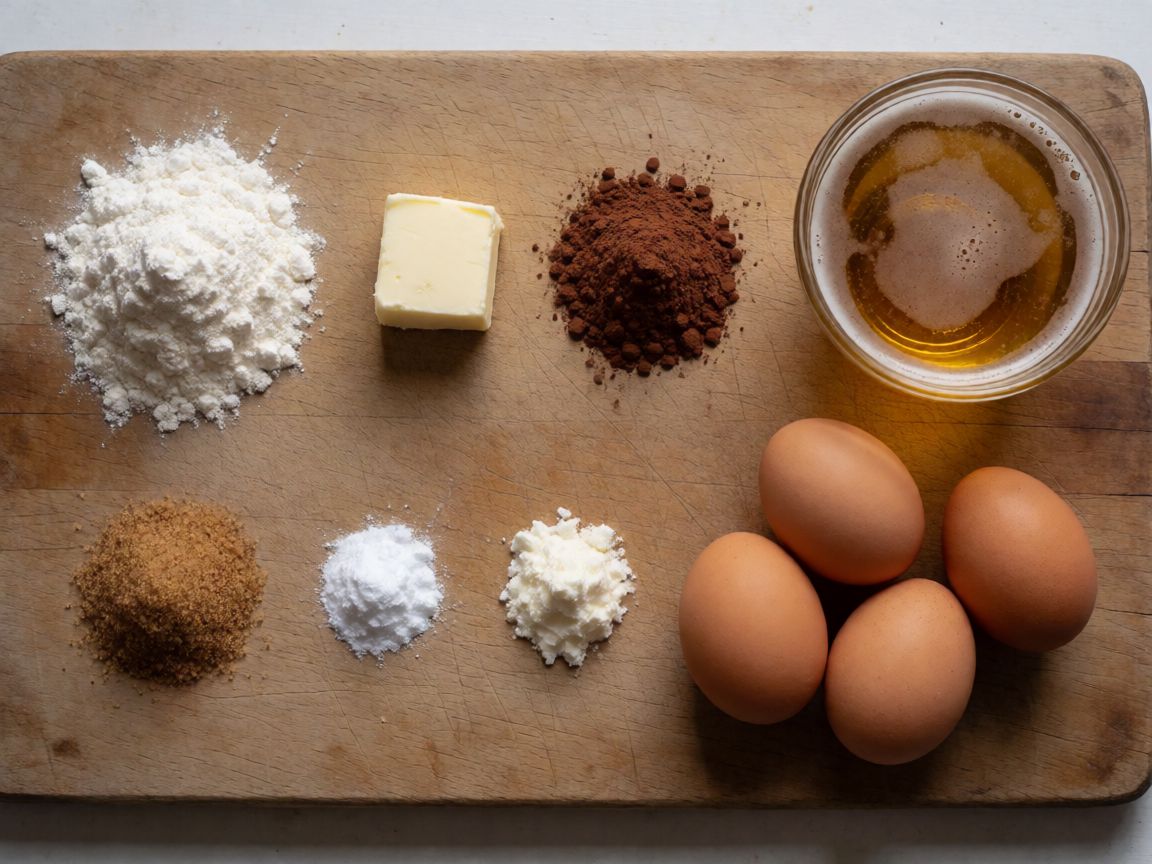
- 225 g Plain flour
- 225 g Butter
- 100 g Cocoa powder
- 400 ml Guinness
- 350 g Brown sugar
- 4 pcs Eggs
- 16 g Baking powder
- 250 g Mascarpone
- 150 g Cream cheese
- 250 g Icing sugar
- 2 tbsp Whiskey










Steps
Cut the butter into cubes, put it into a large bowl and beat with a mixer together with the sugar until smooth and even.
Add the eggs one at a time, beating continuously.
Sift in the cocoa powder, then the sifted flour together with the baking powder.
Still mixing, pour in the Guinness until the batter becomes smooth and velvety.
Pour the batter into a 22-24 cm tin lined with baking paper and bake in an oven preheated to 180°C for about 1 hour.
60 minTake the cake out of the oven and let it cool completely while you make the frosting.
In a bowl, beat the mascarpone and cream cheese with the icing sugar and whiskey until velvety.
Spread the cream cheese frosting over the cooled cake, not too evenly, leaving it rough and billowy.
This is the black-and-white cake everyone remembers from an Irish pub that also sells cake: a dense, almost bitter dark sponge under a pale, loose cap of frosting, built to look like a pint of stout settling. The joke is on purpose. The stout isn't there for the alcohol — most of it cooks off at 180°C — it's there for the roasted malt, which does to chocolate cake what a good stout does to a cheese board: adds bitterness and a dry, coffee-ish edge that plain water or milk can't give.
What decides whether this works is restraint in two places. First, the batter: you want it "smooth and velvety" when the Guinness goes in, not stiff — that tells you the egg and butter emulsion hasn't split, because if it splits now, no amount of baking fixes it, you just get a greasy, dense brick instead of a moist dense cake (dense is the goal here, greasy is not). Second, the frosting: it goes on "not too evenly," rough and billowy, because a cream cheese frosting that's been spread dead flat with a palette knife looks like fondant, and that's the wrong cake. Imperfection is the finish, not a shortcut.
Butter and brown sugar beaten first, eggs added one at a time: that order isn't fussiness, it's physics. Butter at room temperature holds tiny air pockets when you beat sugar into it — that's your only leavening besides the baking powder, since there's no whisked-egg-foam step here. Add eggs too fast, especially cold ones, and the mixture curdles, the air pockets collapse, and you've lost your rise before the oven even gets involved. If your butter's too soft (July kitchen, radiator above the hob), chill the bowl ten minutes rather than fighting it with more beating.
Brown sugar specifically, not white: it carries molasses, which is doing the same job as the stout — deepening the bitterness, adding a faint toffee note that plain caster sugar won't. If you only have white sugar, add a spoon of golden syrup or treacle to get back some of that depth; it won't be identical, but it won't be wrong either.
Cocoa powder sifted in before the flour: cocoa clumps fiercely when it meets liquid unsifted, and an unsifted lump in a slice shows up as a bitter, dry pocket — nobody wants to bite into cocoa dust mid-cake. Use a cocoa with "no added sugar" plainly on the tin; Dutch-process (alkalised) gives a smoother, less sharp bitterness than natural cocoa, and either works, but don't mix the two blind if you're chasing a particular flavour, because alkalised cocoa also changes how the baking powder reacts.
The Guinness itself: any stout with real roast character does the job — Murphy's, a supermarket own-brand Irish stout, even a robust porter in a pinch. What you don't want is a sweet milk stout or anything flavoured (chocolate stout included — it sounds logical, it actually mutes the contrast you're after). Flat is fine; in fact better, since you're not after fizz, you're after the liquid and its bitterness, and flat stout pours without a head getting in your measuring jug's way.
Mascarpone and cream cheese together, not just one: cream cheese alone can turn the frosting a bit tangy and thin once whiskey's in it; mascarpone alone can be too rich and slack to hold shape. Together they set up firmer without going stiff like buttercream — which is the texture that lets it sit "rough and billowy" on top instead of sliding. The whiskey is there the same way the stout is: not for the kick, there's barely a trace of it by the time it's folded through two creams and a mountain of icing sugar, but for a dry note that cuts the sweetness. If you'd rather skip the alcohol entirely, a teaspoon of strong black coffee does something similar — bitterness without booze.
On equipment: a 22–24cm springform tin is specified for a reason you'll feel if you ignore it — too small and the middle stays wet while the edges catch; too big and you get a flat, dry disc. If your tin runs a few centimetres off that range, watch the cake rather than the clock: it's done when a skewer comes out with moist crumbs clinging, not wet batter, and the top springs back under a light press rather than leaving a dent. The hour given is where to start checking, not where to stop the oven.