
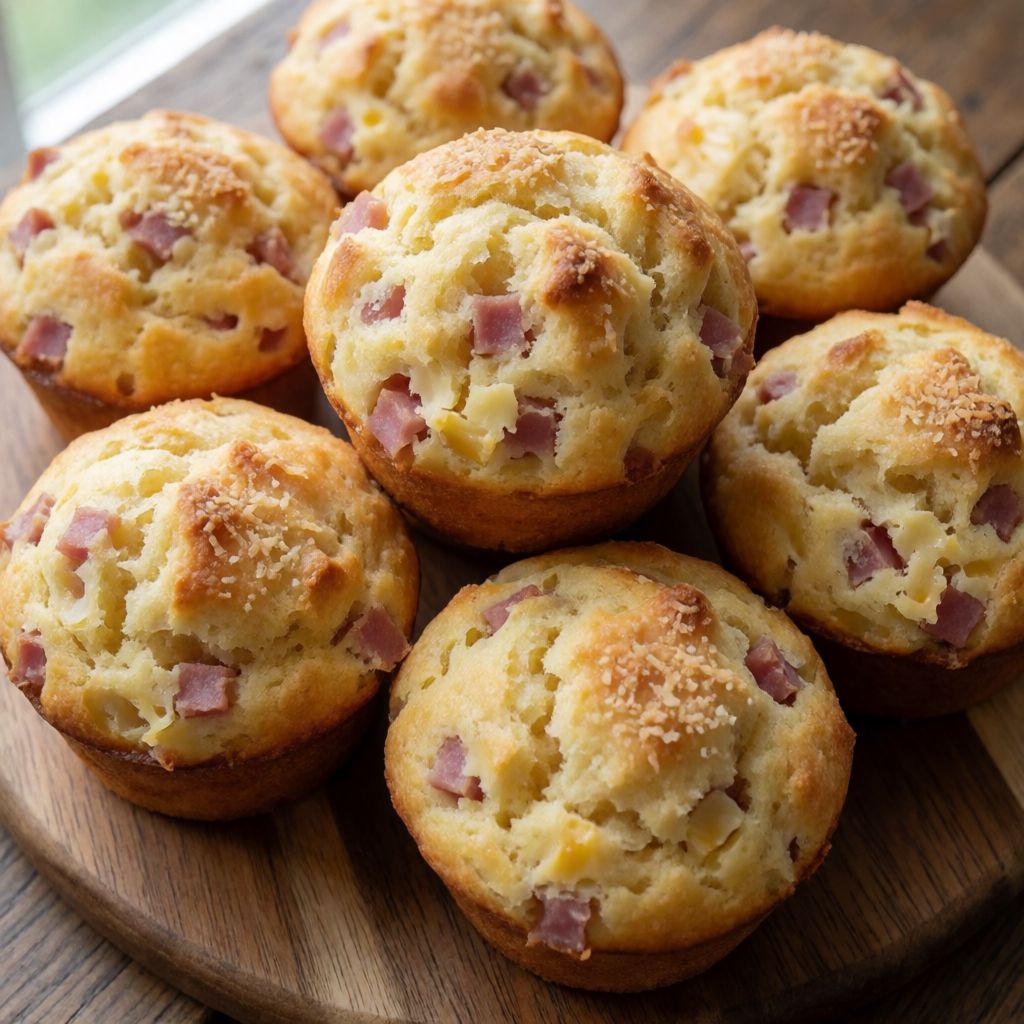
 AI photo
Ham and Provolone Muffins
Savoury muffins with ham and provolone cheese, quick to mix and bake for a light lunch or snack.
Labels are worked out automatically from the ingredients and can be wrong. Check the packaging if it matters to you.
Ingredients
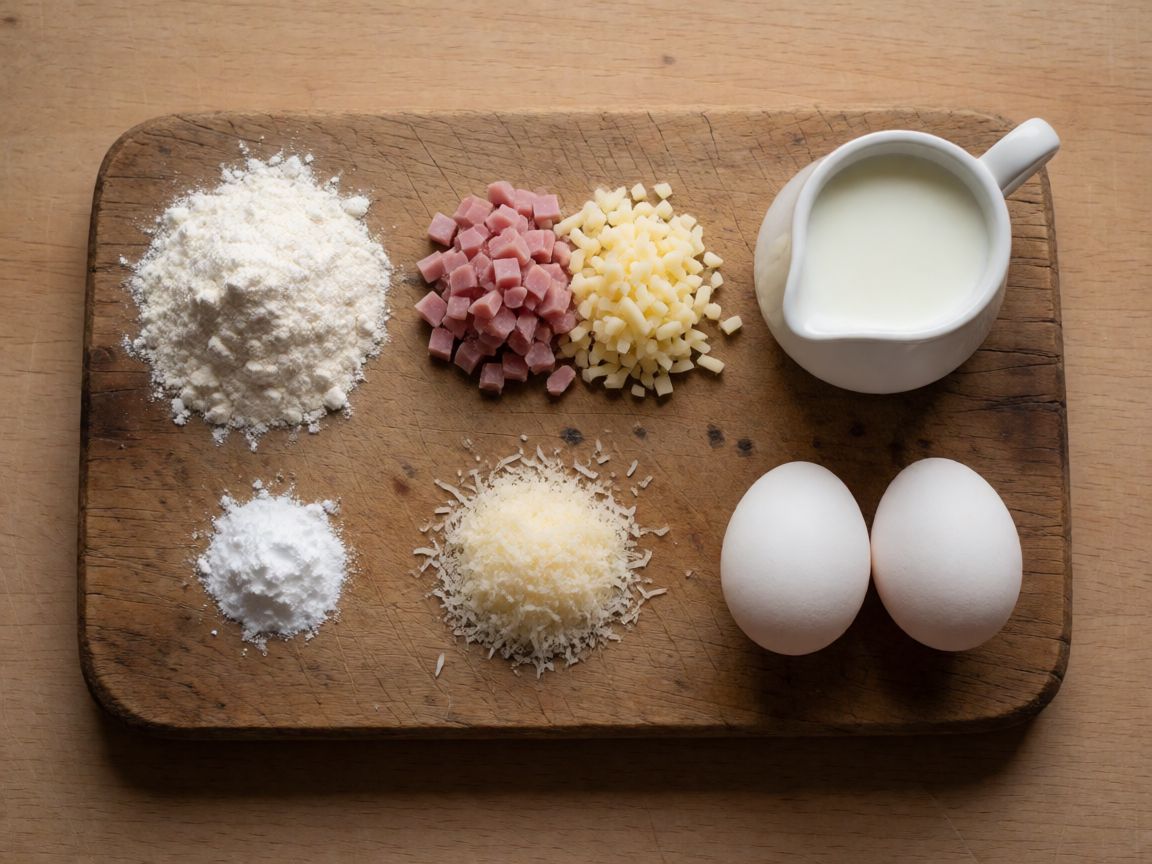
- 170 g Plain flour
- 100 g Ham
- 100 g Provolone
- 75 ml Milk
- 75 ml Vegetable oil
- 30 g Parmesan
- 2 pcs Eggs
- 10 g Baking powder
- 1 pinch Salt to taste








Steps
Cut the provolone and ham into small cubes.
Break the eggs into a large bowl and whisk them briskly with a fork.
Add the milk to the eggs and keep whisking the mixture.
Gradually add the Parmesan, vegetable oil and sifted flour.
Mix the batter well with a spatula until smooth and free of lumps.
Add a pinch of salt and the baking powder.
Add the cubed provolone and ham, and stir everything in with a spoon.
Preheat the oven to 180°C and line a muffin tin with paper cases.
Bake the muffins for about 20 minutes.
20 minCheck they are done with a wooden skewer — it should come out dry.
Take the muffins out of the oven and place them on a rack to cool.
What was changed
A prep time was added, as the original gave none.
A savoury muffin is just a cake that's forgotten it's sweet — same ratio of flour, fat and egg, same rise, but the sugar's job of carrying flavour has been handed to ham and two cheeses instead. That's the whole mechanism, and once you see it, the recipe stops being a list and becomes a formula: liquid fat and egg hold the structure together, baking powder lifts it, and the solids — cubed ham, cubed provolone, grated parmesan — sit suspended in it like fruit in a fruitcake, except here it's savoury fruit.
What decides whether it works is almost entirely about the cubes, not the batter. Cut the ham and provolone too big and they sink to the bottom while the batter's still loose, because a soft batter can't hold up a heavy lump before the structure sets — you'll get a muffin with a dense cheesy puddle at the base and dry crumb on top. Small, even cubes — pea-sized, no bigger — distribute their own weight and get caught by the batter as it firms, which is also why you fold them in last, once the baking powder's already working: give it time before it fights gravity.
Some say you need to grease the tin heavily or the muffins will stick. No — paper cases exist precisely so you don't have to think about that; the oil in the batter does the releasing, the paper just gives you clean edges and saves you scrubbing a tin on a Sunday morning. The case is doing a job, not decoration.
Flour here is just scaffolding, so don't go hunting for something special — plain flour, sifted so it doesn't clump when it meets the wet mixture. Sifting isn't ritual, it's insurance against little flour knots that never fully hydrate and turn up as a dry patch when you bite in.
The two eggs are the glue: they set the protein structure that holds the crumb up once the heat hits. Whisk them before anything else touches the bowl because egg mixed cold into milk emulsifies evenly, and a mixture whisked in stages rather than dumped all at once gives you fewer streaks to fight out later with the spatula.
Vegetable oil rather than butter is partly economics and partly chemistry — oil stays liquid at room temperature, so it keeps the crumb moist for longer than butter, which solidifies as the muffin cools and can leave the crumb feeling drier by the time it's on the rack. Any oil with no smell of its own does the job: sunflower, rapeseed, a light groundnut oil. Olive oil works but its own flavour will sit alongside the ham, not behind it, so use a mild one if that's all you've got.
Milk brings the liquid ratio down to something pourable and also feeds a little moisture into the baking powder's reaction, since baking powder needs both heat and liquid to release its gas evenly rather than all at once. Any milk works here; this isn't a custard where fat content matters, it's a carrier.
Ham and provolone are the flavour, and here you choose on texture as much as taste. Provolone melts cleanly without turning to oil in the oven, which is why it's chosen over something greasier — a drier melting cheese like a mild cheddar or a young gouda would substitute fine; a very wet mozzarella would weep liquid into the crumb as it melts and leave a soggy halo around itself. The ham wants to be cut, not shredded — shredded ham disperses into threads through the batter and you lose the bite; cubed, it stays a distinct pocket you find with each bite, which is the whole point of a savoury muffin over a savoury loaf: distinct hits rather than an even flavour throughout.
Parmesan goes into the batter itself, not scattered on top, and that's deliberate — it melts low and slow through the whole structure, seasoning the crumb from inside rather than sitting as a crust. If you haven't got parmesan, any hard, dry grating cheese with real salt in it does the same job — pecorino, a mature grana, even a well-aged cheddar grated fine. A soft cheese won't do this; it needs the dryness to disperse rather than clump.
Baking powder at 10g against 170g flour is a fairly generous ratio for a home batch, and that's because these are heavy with solids — ham and cheese weigh a muffin down, so the rise needs more lift to carry that weight than a plain sponge would. Don't be tempted to cut it back for a "lighter" result; you'll get a denser, flatter muffin, not a gentler one.
Patience here isn't about long waiting — twenty minutes isn't long — but about resisting the oven door. Opening it early to check lets a cold draught in exactly when the structure is still setting, and a muffin that's just found its shape can sink in the middle from that shock alone. Let it alone until the time's up, then test with the skewer, not your eyes — a golden top tells you nothing about what the crumb underneath is doing.