
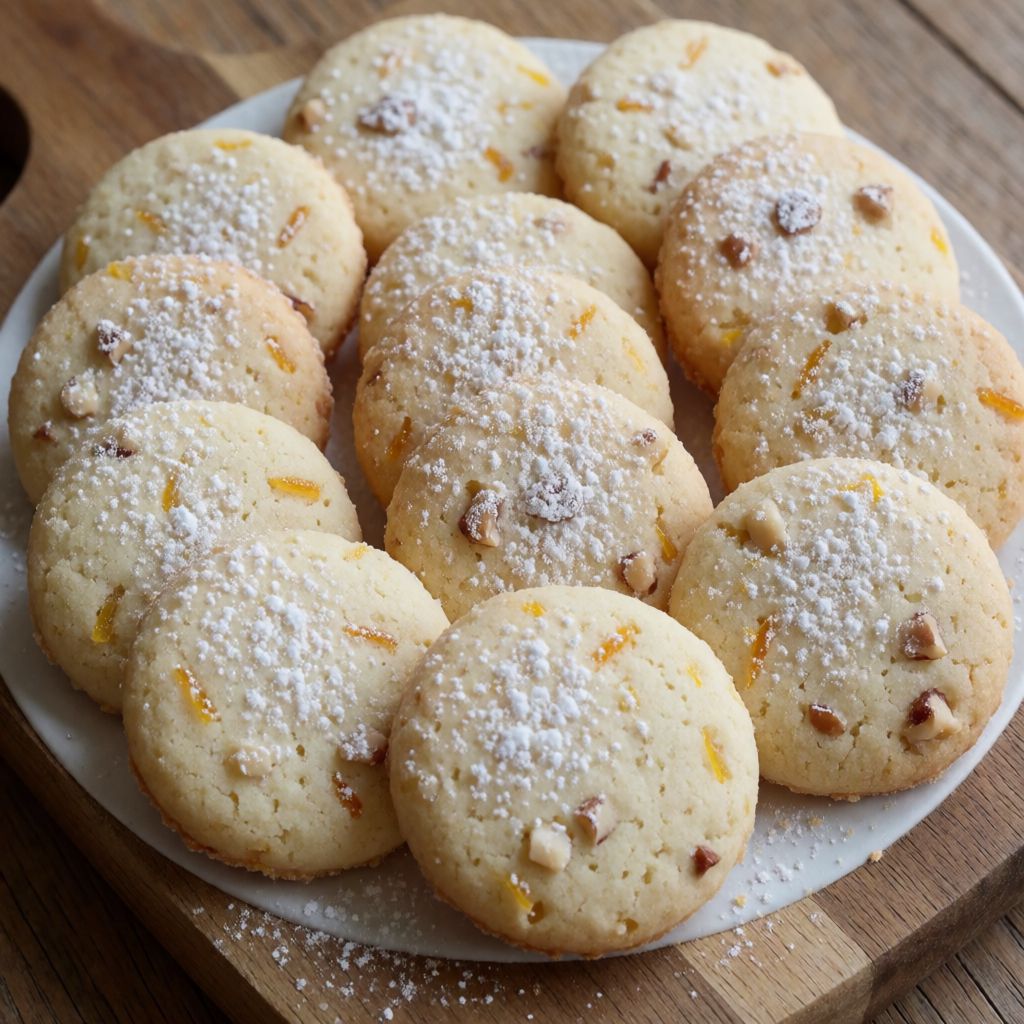
 AI photo
Hausfreunde Biscuits
A traditional German-style biscuit packed with hazelnuts, raisins, candied orange peel and dark chocolate.
Labels are worked out automatically from the ingredients and can be wrong. Check the packaging if it matters to you.
Ingredients
- 4 pcs eggs
- 190 g icing sugar
- 180 g plain flour
- 0.5 pcs lemon zest from half a lemon, finely grated
- 80 g candied orange peel
- 100 g hazelnuts
- 200 g raisins
- 100 g dark chocolate chopped






Steps
In a large bowl, crack the eggs and start whisking with an electric mixer, gradually adding the icing sugar.
Sift the plain flour and fold it into the egg mixture.
Flavour the batter with the zest of half a lemon.
Add the [c1] and hazelnuts: leave some nuts whole and chop the rest.
Fold in the raisins and chopped dark chocolate. Mix everything well.
Pour the batter into a rectangular tin lined with baking paper and smooth the surface.
Bake in a preheated oven: with fan assistance at 170°C for 30–35 minutes, or in a conventional oven at 180°C for 35–40 minutes.
35 minLeave the biscuit slab to cool, remove it from the tin and cut into pieces with a serrated knife.
What was changed
Updated the catalog match for the citrus peel to candied orange peel, which UK shoppers can find easily.
This is not a biscuit in the British sense — it's a "Biskuit", a sponge, the old continental word for what gets its lift from eggs alone, no butter and no baking powder anywhere in the bowl. What you're actually baking is an egg foam asked to carry a shelf's worth of raisins, hazelnuts, candied peel and chopped chocolate, then cut into bars once it's cold and set. The name — Hausfreunde, "friends of the house" — tells you what it was for: something you kept in a tin to put out when someone dropped in, made from whatever dried fruit and nut ends you already had, not from anything bought specially.
What decides whether it works is step one, and it's the only step that matters more than it looks. You whisk eggs and icing sugar until the mixture is pale, thick, and holds its own shape for a second when the whisk lifts out — a ribbon, not a splash. That foam is the only structure this cake has. Skip past it too fast and the batter stays thin and wet; pour in raisins, nuts and chocolate chunks and they will not float in a thin batter, they will sink straight to the bottom of the tin while it bakes. You'll cut it open and find a soggy, fruit-packed strip at the base and a dry pale cake sitting on top of it, like two different bakes that never met.
Eggs are the entire rising mechanism, so give them a fair run with the mixer rather than a token few seconds — four eggs have to be whisked with the sugar until they've roughly tripled in volume, not just gone frothy. Icing sugar rather than caster is the right choice here because it dissolves into the foam almost immediately; caster sugar works too, it just makes you whisk longer before the grains stop feeling grainy against your tongue.
The flour is there to give the fruit and nuts something to cling to once baked, nothing more — sift it so no lump sits undissolved and collapses a patch of foam when you fold it through. Lemon zest, not juice: juice is water, and water is the enemy of a foam you've just spent effort building. Zest brings the oil and the smell without thinning anything.
Candied orange peel should smell of orange, not just taste of sugar syrup with a vague citrus note — cheap peel is often just wax-dipped sugar, and you'll know it by the lack of bitterness under the sweetness, which the real stuff always carries. If you can't get decent peel, finely diced dried apricot with a touch more zest does a similar job: chew, colour, a fruit note that isn't raisin.
Hazelnuts split two ways on purpose — some left whole, some chopped — because whole nuts give you bite and a visible cross-section when you cut the slab, chopped ones bind the crumb and spread the flavour evenly instead of leaving long gaps between nut and nut. Almonds or walnuts substitute fine; the only real criterion is enough oil in the nut that it doesn't taste chalky once baked dry inside a cake.
Raisins go in as they are, but if yours are old and hard, a brief soak in warm water (or something stronger, if that's your habit) plumps them back up so they don't bake into little stones. Tossing them lightly in a spoonful of flour before folding in helps them hang suspended in the batter rather than slide down through it before the structure sets — the same logic as the foam itself, just applied one ingredient later. Chocolate stays chopped, not melted, because you want pockets of it that stay distinct once baked, not a flavour smeared evenly through the crumb; something in the 50–70% range gives you that pocket without the whole bar tasting of nothing but sugar.
Let the slab cool completely in the tin before you touch it with a knife — this is the patience step, and skipping it is the usual reason people get crumbling, smeared slices instead of clean bars. Warm, the crumb is still loose and the chocolate still soft; cold, everything has set enough to hold a cut. Use a serrated blade rather than a straight one: nuts and chocolate chunks don't yield to a flat edge, they get crushed and dragged, and a serrated edge saws through them instead of fighting them. It keeps nicely in a tin for several days — in fact it improves the next day, once the moisture from the fruit has had time to even out through the crumb, which is reason enough to make it the day before you need it rather than the morning of.