
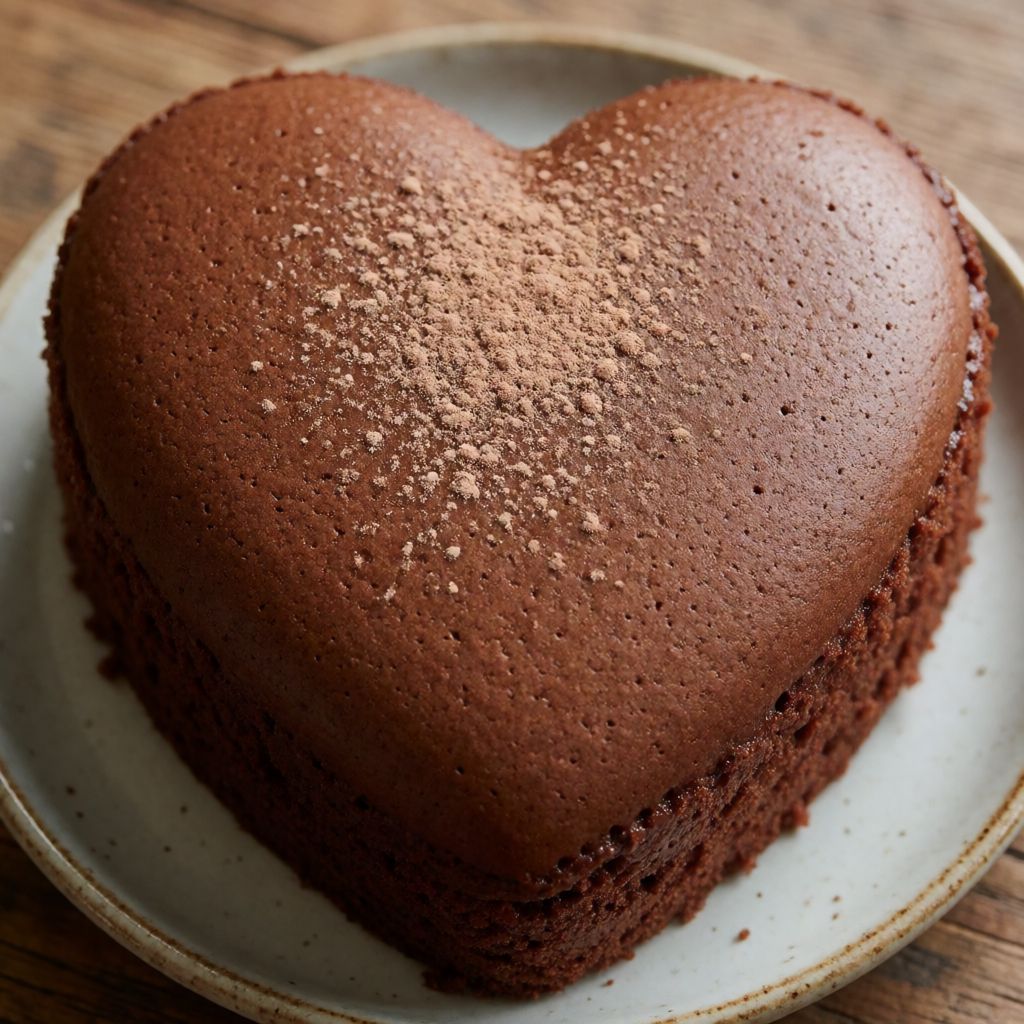
 AI photo
Heart-Shaped Cake
A fluffy chocolate sponge baked in a heart shape and layered with coloured whipped cream for a special occasion.
Labels are worked out automatically from the ingredients and can be wrong. Check the packaging if it matters to you.
Ingredients
- 5 pcs Eggs
- 150 g Caster sugar
- 100 g Plain flour
- 30 g Cocoa powder
- 40 g Potato starch
- 1 tsp Vanilla extract
- 800 ml Double cream
- 100 g Caster sugar
- Food colouring to taste






Steps
In a bowl, combine the eggs with the sugar and beat with a mixer for about 15 minutes, until the mixture has increased in volume and become pale and creamy. Add the vanilla extract.
15 minSeparately combine the dry ingredients: flour, cocoa powder and potato starch. Sift and fold them into the egg mixture in parts.
Gently fold with a spatula, using careful bottom-to-top movements so the mixture stays light.
Pour the batter into a heart-shaped tin measuring 23x24x7 cm, greased with butter and dusted with flour.
Bake in a preheated oven at 180°C for 25-30 minutes (fan oven) or extend the time by 5-6 minutes (conventional oven).
28 minAllow the sponge to cool completely.
Whip the cold cream with the sugar for 2-3 minutes, then divide the mixture into three (or more) portions.
3 minAdd a few drops or half a teaspoon of food colouring to each portion until you get the desired shade, then whip the cream further until thick.
Place each colour of cream into a separate piping bag fitted with a nozzle of your choice.
Level the sponge on top if it is too domed, and cut it with a serrated knife into three layers.
Place the first layer on a serving plate, brush with milk and decorate with cream as you like.
Cover with the next sponge layer and repeat these steps, finishing by decorating the top of the cake with coloured cream rosettes.
Keep the cake in the fridge until serving.
This is a whisked sponge, not a creamed-butter cake, and that difference decides everything about how it turns out. No baking powder in that ingredient list, and no butter in the sponge itself — the lift comes entirely from the air you beat into eggs and sugar for a solid 15 minutes. That's not a typo, and it's not a step to rush through while you check your phone. Egg proteins need time to stretch and trap air, sugar needs time to dissolve into the foam rather than sit as grit. You're looking for the ribbon stage: lift the beater, and the batter falls back onto itself in a slow, folding trail that holds its shape for a second or two before sinking in. Pale, thick, nearly tripled — that's the cue, not a clock.
The flour-cocoa-starch mix goes in afterwards, folded, not stirred, because this is where most sponges die. Stirring knocks the air straight back out — all that 15 minutes of work undone in thirty seconds of enthusiasm with a spoon. Fold bottom to top, slowly, and stop the moment you no longer see streaks of dry flour. Potato starch earns its place here too: it has no gluten to toughen the crumb, so the cake stays tender and a little closer to melting on the tongue than a plain flour sponge would.
Eggs are the actual leavening agent in this cake, so size matters more than the recipe lets on — five medium eggs and five large eggs are not the same amount of lifting power. If your eggs run small, you're short on air and the sponge will sit flatter and denser than it should. Room-temperature eggs whip faster and hold more air than cold ones straight from the fridge; some people insist this doesn't matter, but try beating a cold egg mixture for 15 minutes and a room-temperature one, and you'll see the volume difference with your own eyes before the timer's even halfway through.
Caster sugar, not granulated, because the finer crystal dissolves into the egg foam rather than sitting there scratching at the structure like sand. If all you have is granulated, give it a spin in a food processor first — it won't take long, and it saves you a grainy bite in the finished sponge. The second batch of caster sugar, in the cream, does a different job: sweetening, yes, but also slightly stabilising the whip, giving you a few more seconds of margin before cream turns into butter.
Cocoa powder here is for flavour and colour, not structure, so use whichever unsweetened cocoa you'd be happy drinking as a hot chocolate — the better the cocoa, the better the sponge tastes, there's no trick to it. Potato starch is the quiet workhorse: it replaces some of the flour's gluten-forming protein with pure starch, which is why the crumb stays soft rather than bready. No potato starch in the cupboard? Cornflour does the same structural job — same principle, interchangeable in this role, don't treat it as a compromise.
Vanilla extract, not essence — extract is made from the actual bean, essence is usually a synthetic approximation, and in a sponge this plain (no spices, no citrus) that difference in flavour is one of the few places you'll actually taste it clearly.
Double cream is non-negotiable in the sense that the fat content is what lets it whip into something stiff enough to pipe — anything lower in fat (single cream, for instance) simply won't hold a rosette shape no matter how long you beat it; it'll stay a sauce. This is standard in a UK kitchen where double cream sits in every supermarket fridge next to the milk you put in your tea, so no substitution hunting needed here.
Food colouring — go with gel or paste rather than the liquid drops from an old-fashioned kit if you can; liquid colouring adds water to the cream and can loosen a stiff whip right when you need it to hold. A few drops of gel goes further and keeps the cream's texture exactly where you whipped it.
Last thing, and it's not really an ingredient but it decides whether the cake looks assembled or just stacked: patience while the sponge cools and while you slice it. Cut too soon and the layers crumble under the knife; wait, and a serrated blade goes through clean. The cake also wants its fridge time before serving — the cream firms further against the cold sponge, and the layers settle into each other rather than sliding when you cut the first slice at the table.