
 AI photo
Heart-Shaped Biscuits
Buttery heart-shaped biscuits filled with jam, perfect for a sweet afternoon treat.
Labels are worked out automatically from the ingredients and can be wrong. Check the packaging if it matters to you.
Ingredients
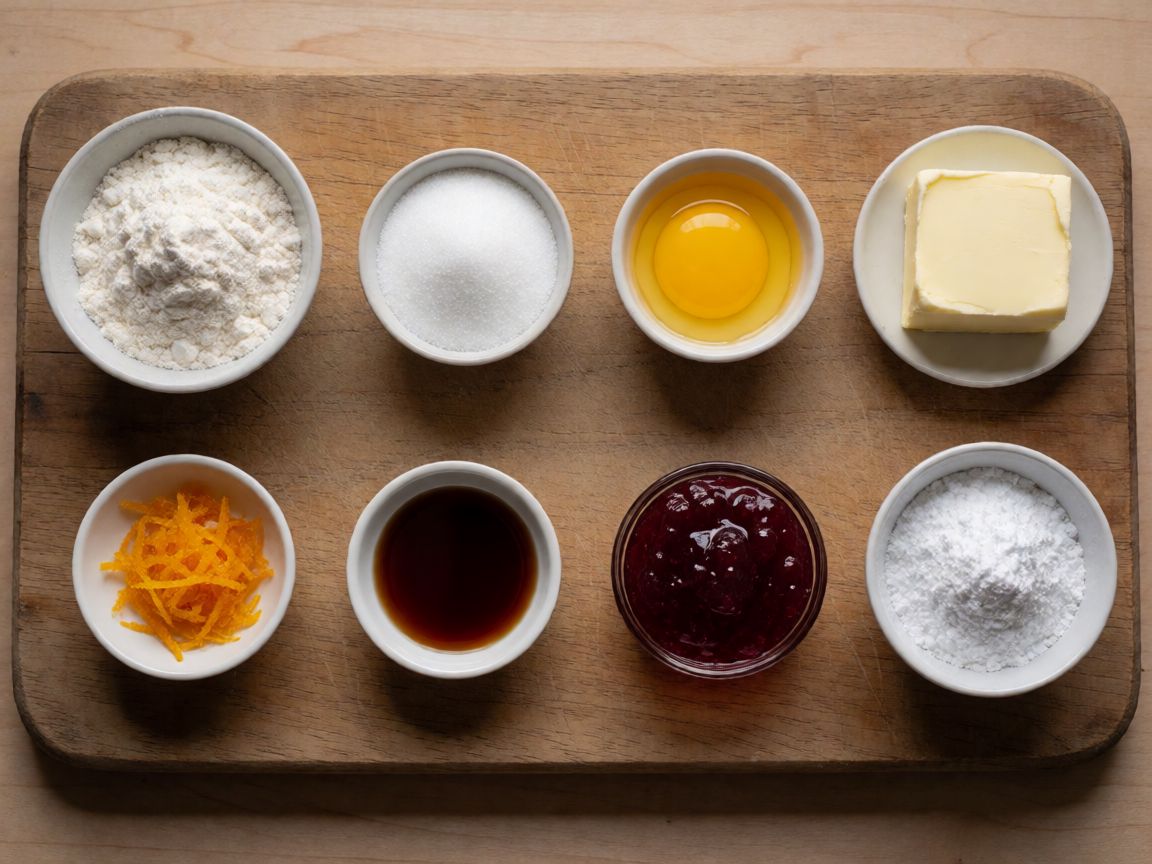
- 300 g Plain flour
- 150 g Caster sugar
- 180 g Butter diced
- 4 pcs Egg yolks
- 0.5 pcs Orange zest zest of half an orange
- 1 tsp Vanilla extract
- Jam to taste
- Icing sugar to taste








Steps
Mound the flour on the worktop and make a well in the centre; add the diced butter, sugar and egg yolks into the well.
Add the vanilla extract and orange zest, mix with your fingertips, then knead by hand into a smooth ball.
Wrap the dough in cling film and chill in the fridge.
30 minDust the worktop with flour and roll out the dough to a thickness of 4–5 mm.
Using a heart-shaped cutter, cut out an even number of biscuits; cut a small hole in the centre of half of them.
Place on a baking tray lined with parchment paper and bake in a fan oven at 175°C for 10–15 minutes, or in a conventional oven at 180°C for about 15 minutes.
15 minLeave the biscuits to cool completely before decorating.
If you like, dust the tops with icing sugar, spread jam on the bottoms and sandwich the halves together.
This is a shortbread-type biscuit sandwich, built on egg yolks and raw butter rather than a raising agent — in Britain you already know its industrial grandchild, the jam sandwich biscuit sold in packets. The homemade version is richer and crumblier, because nobody at a factory can afford all-yolk pastry; they use water and cheap fat, you use butter and four yolks, and the difference is in your mouth, not on the label.
What decides whether it works is the dough staying short — meaning crumbly, breaking rather than bending. That happens because there's almost no free water in it: no whole eggs, no milk, just yolks, which are mostly fat. Fat coats the flour and keeps gluten strands short and few. Water is what builds gluten; yolks barely touch it. That's also why you work the butter into the flour with fingertips first and only then pull in a ball — you're coating particles, not wetting them.
Some say kneading pastry smooth makes it better. No — the more you knead, the more gluten forms, and gluten is what makes bread chewy and biscuits tough. Here you want the opposite: mix only until it holds together as a ball, stop, and let the fridge do the rest.
Doneness isn't a timer, it's a look. Pull the tray when the rim of each heart has only just started to turn from pale butter-yellow toward amber and the centre is still pale — a biscuit this thin keeps cooking on the hot tray after it leaves the oven, so a fully golden centre in the oven means a burnt rim on the plate five minutes later.
Flour here is plain, deliberately — there's no raising agent anywhere in this dough, because you don't want air, you want shortness. A raised biscuit would puff and lose the crisp heart shape you cut; this one holds its line because nothing pushes against it.
Butter has to be cold and diced, not soft. Cold cubes stay separate chunks long enough for you to work them into the flour evenly; soft butter smears into a few big greasy patches and leaves the rest of the flour dry, so parts of your dough turn tough while others turn oily. Any firm fat that's solid at room temperature and doesn't carry a smell of its own could stand in — a block margarine will hold the shape — but butter is traditional here for a plain reason: it's the fat that tastes like something, and in a biscuit this simple, the fat is most of the flavour.
Caster sugar dissolves into the fat and yolks without leaving grit; icing sugar would vanish too fast and granulated would sit as hard specks in a dough this fine. Keep icing sugar for the top, where its job is purely to sit as a dry white dust — it does nothing structural, it's decoration, and decoration can be skipped without the biscuit suffering.
Egg yolks only, no whites, is the whole trick of the texture. Whites are mostly water; put them in and you're back to building gluten, and the biscuit turns from short to merely crisp-and-hard, closer to a plain sweet cracker. Four yolks for 300 g of flour is a rich ratio — this is a tea-time biscuit meant to feed about six people over a pot, not a daily bake.
Orange zest and vanilla are aromatics, nothing more — lemon zest does the same job if that's what's in the fruit bowl, and the point is a fragrant oil, not the specific fruit. The jam matters more than people think: it has to be a firm-set preserve, not a runny one, because a loose jam seeps into the crumb and the biscuit goes soft and sad within the hour instead of staying short where it isn't filled.
The chill in the fridge isn't about flavour settling, it's about the butter going solid again after your hands warmed it. Solid fat resists spreading in the oven, so the heart keeps its shape and its edges instead of slumping into a blob with a vaguely heart-shaped memory. Skipping this step is the single most common reason a cut biscuit comes out round-ish and sad. Roll it to 4–5 mm for the same reason doneness is tricky here: thinner, and the edges scorch before the middle sets; thicker, and the middle stays pastry-raw while the edges are already done.
The oven numbers given — 175°C fan, 180°C conventional — reflect that a fan moves hot air evenly and a still oven doesn't; in a still oven the back or one corner usually runs hotter, and only your own oven will tell you which, so watch the first tray rather than trust the clock blindly. And once they're out: let them go properly cold before you dare put jam between two halves. Warm biscuit is still soft at the core — the fat hasn't gone firm again — and it'll crack in your hand or turn the jam straight through it. Patience here isn't an extra virtue, it's the last ingredient the recipe doesn't list.