
 AI photo
Ice Cream Biscuit Sandwiches
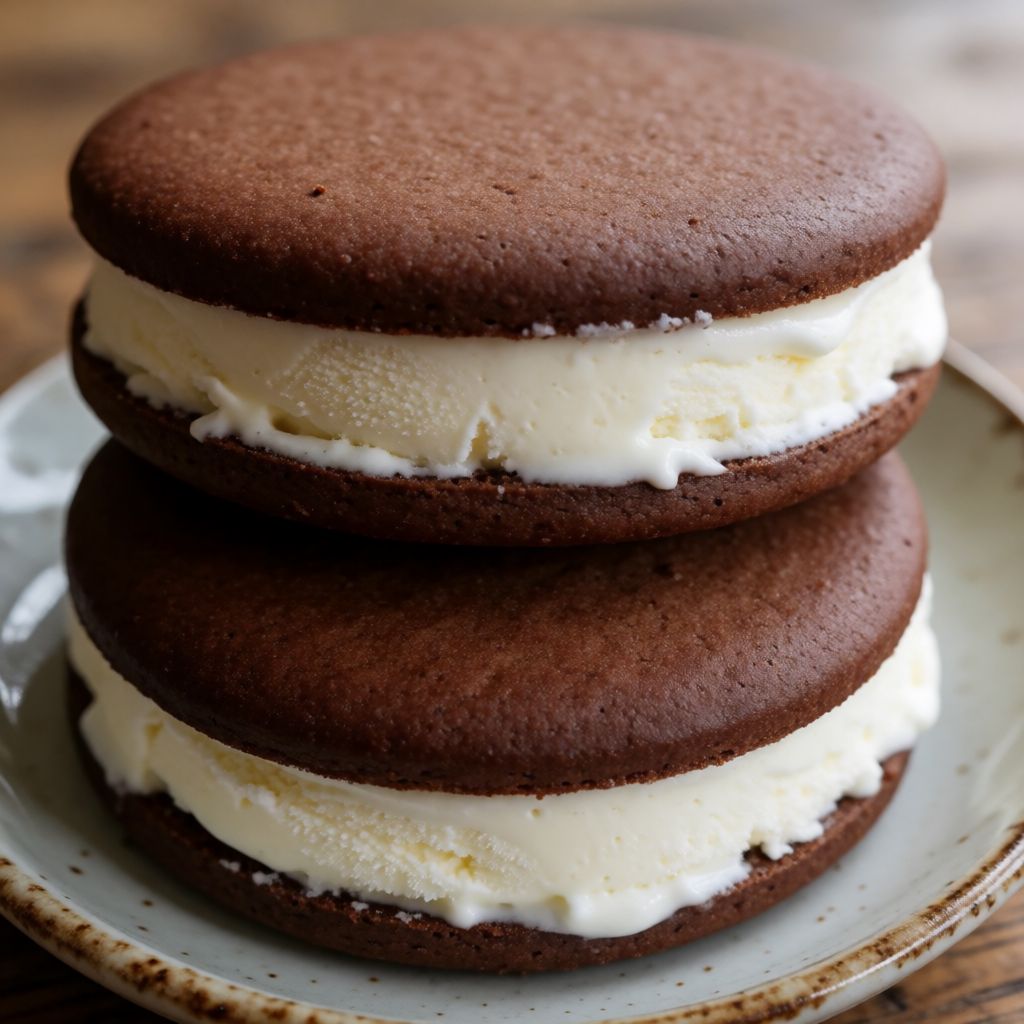
Chocolate biscuit rounds filled with a simple condensed-milk ice cream, assembled into sandwich-style treats.
Labels are worked out automatically from the ingredients and can be wrong. Check the packaging if it matters to you.
Ingredients
- 200 g Plain flour
- 80 g Butter
- 70 g Caster sugar
- 5 g Cocoa powder
- 1 pcs Egg
- 200 g Condensed milk
- 250 ml Double cream
- Chocolate chips to taste








Steps
In a blender, blitz the flour together with the butter, then tip into a bowl and add the sugar and cocoa powder.
Add the beaten egg and mix until you have a smooth dough. Wrap it in cling film.
Leave the dough in the fridge for at least 30 minutes.
30 minWhip the double cream to stiff peaks, add the condensed milk and fold in from the bottom up.
Add the chocolate chips, mix in, then put in the freezer for at least 8 hours.
480 minRoll out the dough to about half a centimetre thick and cut out rounds with a cutter.
Place the rounds on baking parchment and bake at 180°C for 18-20 minutes.
19 minFill the same cutters used for the biscuits with the ice cream.
Put the ice cream in the freezer to firm up further.
Assemble the dessert: one biscuit, the ice cream filling, and a second biscuit on top.
Two cocoa shortbread discs, a disc of no-churn ice cream between them. That's the whole idea — this is an engineering problem dressed as a dessert, and the engineering is: can you get a biscuit crisp enough to snap and an ice cream soft enough to bite, meeting at the same moment, without either one losing structural integrity on the way to your mouth.
What decides it is fat. The biscuit dough is flour and butter blitzed cold, so the butter stays in small solid flecks rather than melting into the flour — that's what gives you a short, sandy bite instead of a tough one. The ice cream is cream whipped to stiff peaks, loosened with condensed milk instead of a custard base. No eggs, no cooking, no churning: the sugar and fat in the condensed milk lower the freezing point just enough and keep ice crystals small as it freezes slowly and undisturbed. That's the actual trick behind every "no-churn" ice cream, not a myth, just chemistry doing the job a machine usually does.
Some say you can't make real ice cream without an ice cream maker. No — you can't make churned ice cream, which has air beaten in continuously as it freezes. This is a different thing, closer to a frozen mousse, and it's honestly suited to a flat with no appliance for it. It sets by sitting still in a freezer, which is the one piece of equipment every kitchen already has.
Flour is just structure here — nothing fancy, plain flour, because you want gluten development low and the biscuit tender, not elastic. Butter must be cold going into the blender; if it's soft it smears into the flour and you lose the crumbly texture that makes these snap rather than bend. Caster sugar over granulated because the finer crystal dissolves into the dough rather than leaving grit, and cocoa powder is there for colour and bitterness to balance the sweetness of the filling, not for deep chocolate flavour — if you want that, use a cocoa with a higher fat content, but don't expect miracles from powder in a biscuit.
The egg binds the crumbs into a dough you can roll — without it you'd have shortbread that's lovely crumbled but won't hold a round shape when cut. That's why the dough needs the fridge rest: cold butter stays solid through rolling and baking, so the biscuit holds its disc shape in the oven instead of spreading into a vague blob. Skip the chill and you'll see it — edges slump, rounds turn oval.
For the filling, double cream is non-negotiable in the sense that it needs enough fat (at least 36%) to whip to stiff peaks and hold them once you fold in the condensed milk. Lower-fat cream won't aerate properly and the filling sets icy and dense instead of light. Condensed milk is sugar, milk solids and fat cooked down — it's doing the job that egg yolks and sugar syrup do in a proper custard-based ice cream, but without the stove. If you've only got evaporated milk, that's a different product — unsweetened — so you'd need to add sugar yourself and accept a less silky set. Chocolate chips are there for bite and contrast against the smooth cream, not for flavour load — use whatever chips won't go rock hard in the freezer; a chip with high cocoa butter content stays cuttable.
On the oven: 18 to 20 minutes at 180°C is your lower bound, not your alarm clock. What you're watching for is the edges — they should look set and matte, not shiny and wet, and firm to a light touch rather than soft. Pull them too early and they'll never crisp once cooled; cocoa dough is darker to begin with, so you can't rely on colour the way you would with plain shortbread — touch and edge-set are your real cues.
The 8-hour freeze is the one step you can't rush, and I'd call it the most important ingredient in the whole recipe. Cream and condensed milk need that long, undisturbed, to form small enough ice crystals that the texture is smooth rather than grainy. Open the freezer every twenty minutes to check and you're introducing temperature swings that do the opposite of what you want — this is a dish that rewards being left alone.
Assembly is the last decision, not an afterthought: do it cold, do it fast, and if your kitchen is warm, work with one sandwich at a time straight from freezer to plate — the biscuit will hold, but the ice cream disc won't forgive dawdling once it's out of the cold.