
 AI photo
Jerusalem Artichoke Risotto
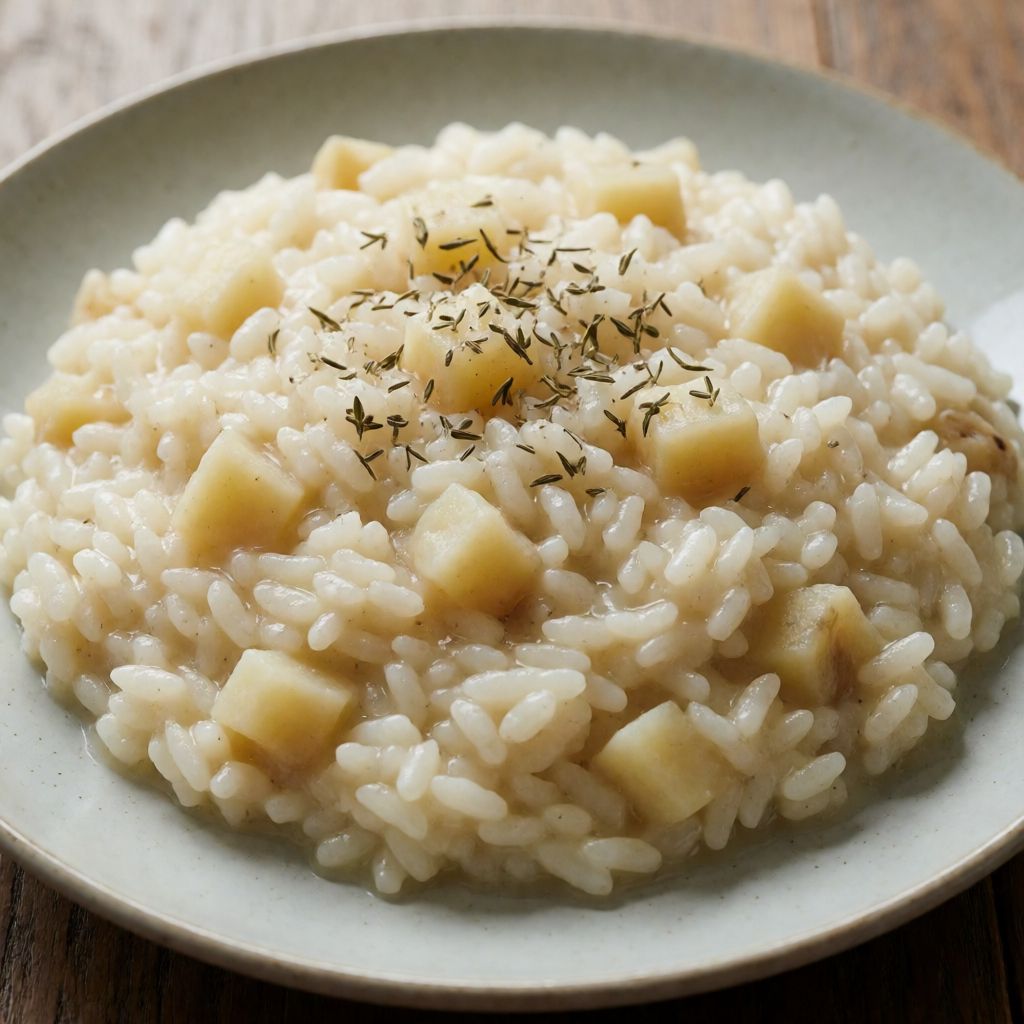
A creamy Jerusalem artichoke risotto finished with lemon and Parmesan, topped with Jerusalem artichoke crisps.
Labels are worked out automatically from the ingredients and can be wrong. Check the packaging if it matters to you.
Ingredients
- 400 g Jerusalem artichoke cut into very small cubes
- 1 pcs Onion finely chopped
- 2 clove Garlic finely grated
- 1 tsp Dried thyme
- 350 g Risotto rice
- 100 ml Wine
- 1.2 l Stock
- 75 g Parmesan or another hard cheese, finely grated
- 1 pcs Lemon finely grated zest and a little juice
- 2 tbsp Olive oil
- Salt
- Black pepper freshly ground
- 150 g Jerusalem artichoke for the crisps
- 300 ml Vegetable oil
- Salt
- ½ bunch Thyme fresh
- 50 g Parmesan or another hard cheese, freshly grated












Steps
Peel the Jerusalem artichokes and slice them thinly on a mandoline
Heat the frying oil to 180°C in a pan
Fry the Jerusalem artichoke in small batches until crisp and golden
Remove with a slotted spoon and drain on kitchen paper
Sprinkle with flaky salt
Sauté the Jerusalem artichoke, onion, garlic and thyme in a pan with oil over medium-low heat for 5–6 minutes
They should not brown
Add the rice and stir well
Pour in the white wine and stir until the rice has absorbed it
Gradually add the vegetable stock until the rice is just cooked and the risotto is pleasantly creamy
Stir in the freshly grated Parmesan and season to taste with lemon zest, lemon juice, salt and freshly ground black pepper
Serve with the Jerusalem artichoke crisps, freshly grated Parmesan and thyme
Risotto is not a rice dish, it's a starch-release dish. Every rule in it exists to coax sticky amylopectin out of a short, fat grain without letting the grain collapse into mush. Jerusalem artichoke fits here because it does the same trick as the rice at a different speed — it breaks down soft and sweet, almost nutty, earthy in a way that reminds people of artichoke though it's actually a sunflower root, nothing botanical to do with the globe artichoke at all. Half of it melts into the risotto's body, the other half gets sliced thin and fried hard, so you eat the same vegetable twice in two different states: dissolved and shattered.
What decides whether this works is not timing, it's attention. You cannot walk away from a pan of risotto to watch television, because the stock has to go in gradually, a ladle at a time, and the rice has to keep a bare simmer, not a boil. Add stock too fast and the grain outside cooks before the inside softens — you get hard little pearls in a starchy soup, which people then blame on "bad rice" when it was impatience. Add it too slow, letting the pan go dry between ladles, and the grain catches and glues to the metal, which is the actual cause of that scorched-bitter taste people call "risotto doesn't agree with me."
Jerusalem artichoke itself needs a word, because the name causes more confusion than the dish. It's neither from Jerusalem nor an artichoke — a tuber from a sunflower relative, brought to Europe from North America centuries ago, grown because it survives poor soil and hard winters when little else will. Choose ones that are firm with no soft spots, and don't bother peeling perfectly — they're knobbly and some skin left on does no harm once cooked. If you can't find any, a waxy potato with a splash of lemon won't replicate the sweetness but will hold the texture; it's a fallback, not a swap you should feel good about.
The rice matters more than any other ingredient here, because the whole method depends on its starch structure — short, round grains like arborio or carnaroli hold a firm core while releasing starch from the outside. Long-grain rice has the wrong architecture entirely; it won't creep toward creamy, it'll just go to porridge or stay separate grains. There's no real substitute for risotto rice in a risotto — if you only have basmati in the cupboard, make something else tonight.
Wine goes in before the stock for a reason beyond flavour: its acidity is added early because acid toughens the outer layer of a grain slightly, which actually helps control how fast it breaks down later. Pour it straight onto hot rice coated in fat and let it disappear — you're not making a wine sauce, you're seasoning the starch from the inside.
Parmesan, stirred in only at the end and off harsh heat, is there for salt, fat and that gluey savoury pull that finishes the creaminess the rice started — cook it too hard and it seizes into grains instead of melting in. Any hard, well-aged grating cheese does the job; the only real requirement is that it's dry enough to grate fine and sharp enough to carry flavour, which is why a soft young cheese won't do the same work.
Lemon zest and a little juice at the end isn't decoration, it's a correction — risotto, built on stock and cheese, tends toward flat richness, and the acid wakes it back up without you needing more salt.
Patience is the real ingredient in both halves of this dish — the slow sweat of the onion and artichoke that must not brown (browning here means bitterness creeping into a dish that's meant to stay round and gentle), and the standing-at-the-stove stretch of adding stock ladle by ladle. There's no shortcut version that tastes the same; what you save in time you lose in texture, and texture is the entire argument for making risotto instead of just boiling rice with vegetables in it.