
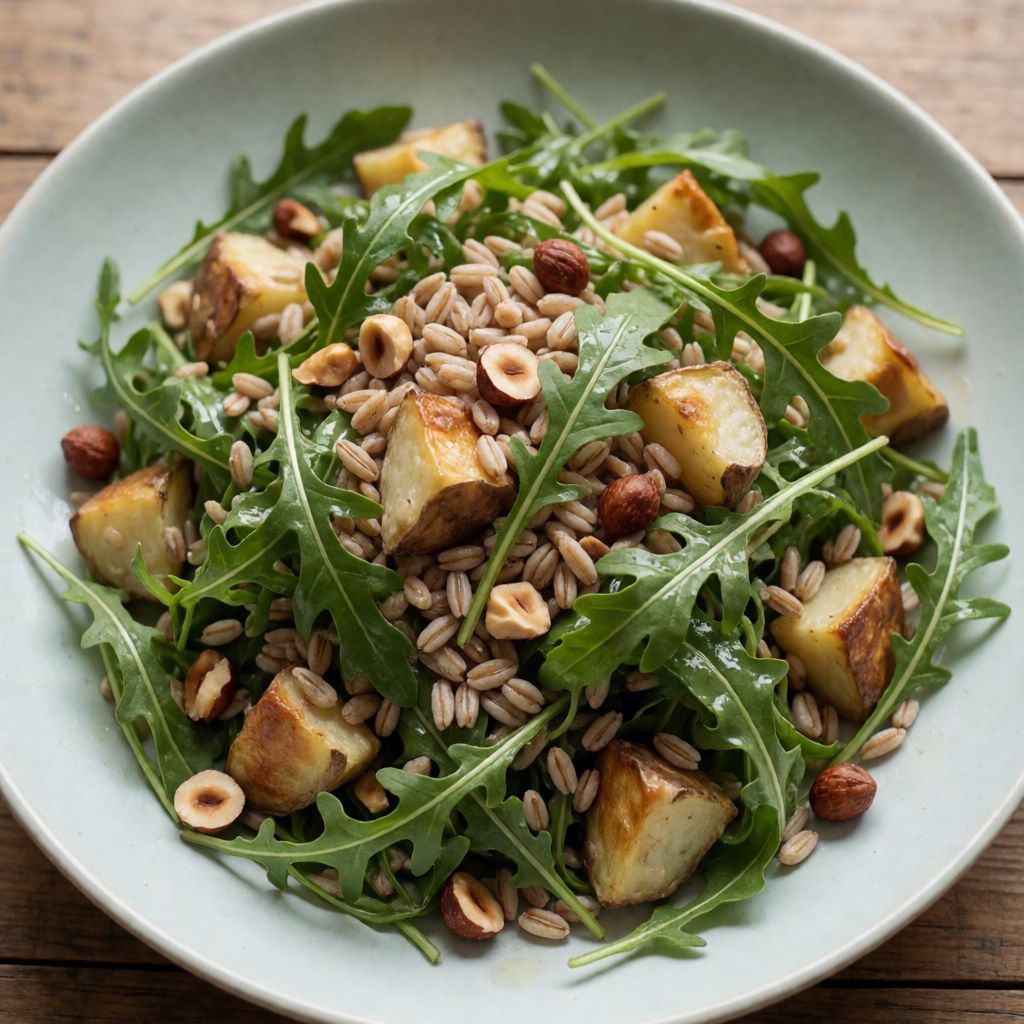
 AI photo
Jerusalem Artichoke and Cracked Rye Salad
A warming salad of roasted Jerusalem artichoke, cracked rye and peppery rocket, finished with a toasted hazelnut dressing.
Labels are worked out automatically from the ingredients and can be wrong. Check the packaging if it matters to you.
Ingredients
- 200 ml Cracked rye cracked grains
- 400 g Jerusalem artichoke sliced
- 100 g Hazelnuts
- 1 tbsp Maple syrup
- 125 g Rocket
- 2-3 tbsp Olive oil
- Salt
- Black pepper freshly ground
- 2 tbsp Hazelnut butter
- 1 clove Garlic crushed
- 0.5 pcs Lemon juice and finely grated zest
- 50 ml Water











Steps
Cook the cracked rye according to the pack instructions, then leave to cool.
40 minToss the Jerusalem artichoke with the oil, salt and pepper. Spread on a lined baking tray and roast in a preheated oven at 175°C (fan) for 20-25 minutes, until soft and golden.
23 minToast the hazelnuts in a dry, hot pan, stirring, until the skins start to lift.
4 minTip the nuts out of the pan and rub off the skins with a clean cloth. Return the nuts to the pan, warm through, add the maple syrup and mix well.
2 minSpread the nuts on baking paper, leave to cool, then roughly chop.
8 minMake the hazelnut dressing: mix the hazelnut butter, garlic, lemon juice, salt and pepper. Adjust the consistency with cold water to a thick dressing and leave to stand so the flavours develop.
5 minOn a serving dish, combine the rocket, cooled cracked rye and roasted Jerusalem artichoke. Spoon over the hazelnut dressing and scatter with the chopped hazelnuts.
2 min
Here's a salad built on a trick: almost every element gets cooked before it's "raw" again on the plate. Cracked rye is boiled and cooled, Jerusalem artichoke is roasted, hazelnuts are toasted and candied. Only the rocket and the dressing stay as they are. What you're eating is three separate textures — chewy grain, soft-sweet root, crunchy nut — held together by a dressing that's really just garlicky nut butter loosened with water.
What decides whether it works is roasting the Jerusalem artichoke properly, not timidly. This is a knobbly, awkward tuber, closer in behaviour to a potato than to an artichoke — the name is a historical accident, nothing to do with Jerusalem or true artichokes, just English mangling the Italian "girasole", sunflower, because the plant is a sunflower relative. Sliced and roasted at 175°C fan until it goes soft and genuinely golden, it turns sweet and a bit nutty. Pull it too early and you get a starchy, slightly bitter disc that fights the rest of the bowl instead of joining it. Bend test, not clock: a slice should give, not resist, under a fork.
The second decision point is the hazelnuts. Toasting loosens the bitter skins — that's the whole reason for the dry hot pan and the rubbing with a cloth, not decoration, removal of tannin. Skip that step and the maple syrup just coats bitterness in sugar. Watch for the skins starting to lift and blister; that's your cue, not a stopwatch.
Everything else is assembly and patience — the dressing needs to sit so the garlic and lemon settle into the nut butter rather than sitting on top of it raw and sharp.
Cracked rye is just rye berries broken into pieces so they cook faster than the whole grain — think bulgur logic applied to rye instead of wheat. Cook it per the packet, then let it cool properly before it goes anywhere near the rocket; warm grain wilts leaves and turns a salad into a bowl of sad greens. If you can't get cracked rye, bulgur wheat or pearled spelt will behave the same way — any cracked or part-pearled grain that holds its shape after cooking does the job. Whole rye grains work too, just budge your prep time up, since whole grains take far longer than cracked ones.
Jerusalem artichoke itself needs no fancy sourcing — most UK greengrocers and supermarkets carry it in autumn and winter, knobbly and a bit dirty, which is fine; scrub rather than peel if the skin's thin, since most of the flavour sits just under it. If you genuinely can't find it, parsnip roasted the same way gets you closer than anything else — same sweetness when caramelised, similar bite raw.
The hazelnuts do two jobs: crunch on top, and the base of the dressing underneath. For toasting and chopping, any hazelnut will do. For the hazelnut butter in the dressing, buy it rather than try to make a smooth version at home in a domestic blender — most machines won't get it silky, they'll give you grit. If hazelnut butter isn't on your shelf, almond butter or tahini will carry the dressing fine; you lose the specific hazelnut echo with the toasted nuts on top, but the mechanism — fat plus garlic plus acid, loosened with water to coating consistency — stays intact.
Maple syrup on the nuts isn't about sweetness so much as lacquer — it clings to the warm nuts and sets slightly as they cool on the baking paper, giving you a thin candied shell rather than sticky syrup pooling at the bottom of the bowl. Runny honey will do the same work if that's what's in the cupboard.
The dressing is where people either rush or don't. Hazelnut butter, crushed garlic, lemon juice and zest, salt, pepper, then water added gradually until it's thick enough to sit on a leaf rather than run off it. Letting it stand those five minutes matters more than it sounds — raw garlic straight into a dressing tastes sharp and one-note; given a few minutes in the lemon juice and fat, it mellows and spreads through the whole mix instead of hitting you in one spot.
Olive oil for roasting the Jerusalem artichoke should be any oil with no strong flavour of its own — you want it to crisp and carry heat, not compete with the roots. A basic olive oil or a flavourless vegetable oil both work; save anything peppery and grassy for drizzling raw, where you'd actually taste it.
This feeds four as a proper course, or more as part of a spread — think of it sitting alongside a Sunday roast's vegetable dishes rather than instead of them, since the grain and roasted root both have the heft to stand next to meat without disappearing.