
 AI photo
Kiwi Cheesecake
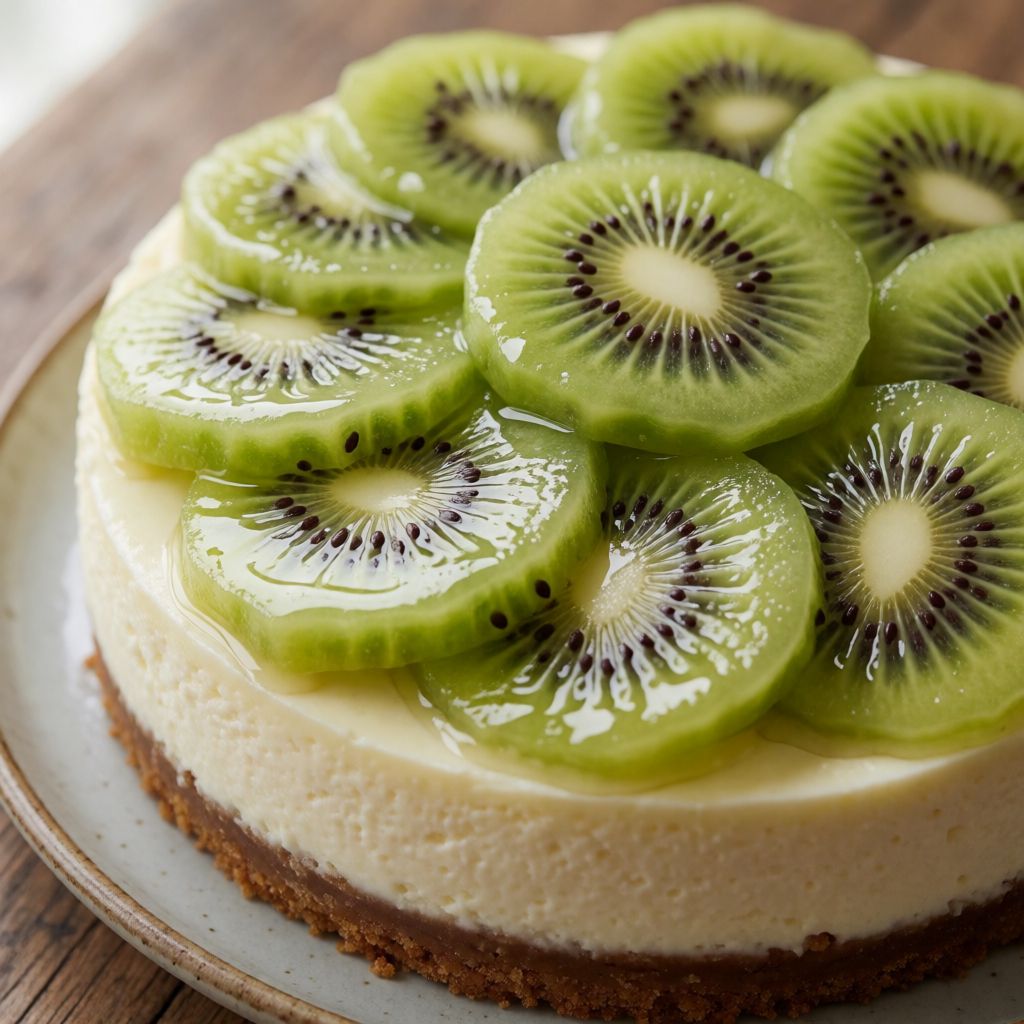
A creamy no-bake ricotta cheesecake on a biscuit base, topped with a glossy kiwi topping and fresh kiwi slices.
Labels are worked out automatically from the ingredients and can be wrong. Check the packaging if it matters to you.
Ingredients
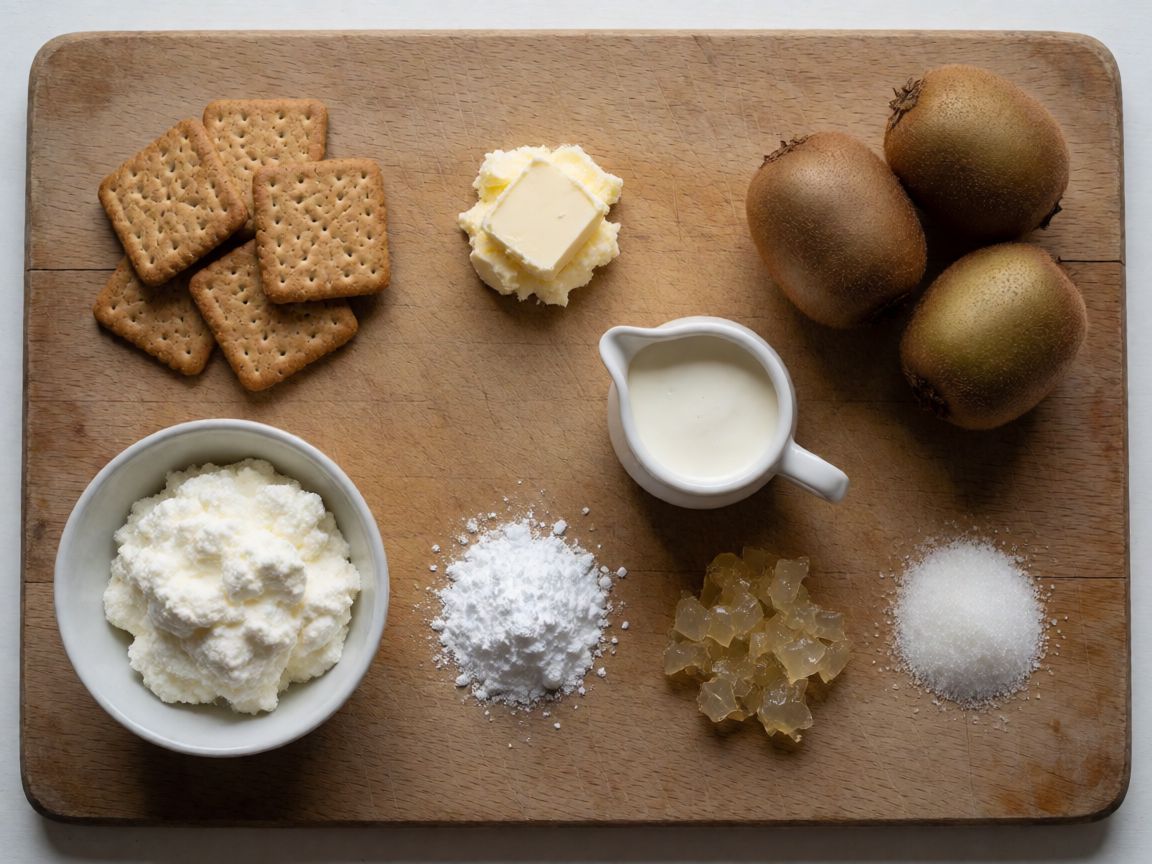
- 320 g Digestive biscuits
- 150 g Butter
- 250 g Ricotta
- 100 g Icing sugar
- 450 ml Double cream
- 12 g Gelatine
- 3 pcs Kiwi for decoration
- 100 g Caster sugar
- 320 ml Water
- 30 g Cornflour









Steps
Break the biscuits into pieces by hand, transfer to a blender and grind into fine crumbs.
5 minTransfer the crushed biscuits to a bowl, add the melted butter and mix well.
5 minPress the mixture into a 24 cm springform tin lined with baking paper, level it and put it in the fridge.
2 minIn a saucepan combine the water and sugar, dissolve over low heat, add the cornflour and 3 chopped kiwis, and stir until thickened.
10 minPour the topping into a separate container and leave to cool completely.
20 minSoak the gelatine in cold water until softened, dissolve in 50 ml of warm cream and leave to cool.
10 minWhip the ricotta with a mixer, add the icing sugar and mix to a smooth cream.
5 minWhip the remaining cream separately and gently fold it into the ricotta cream, mixing from bottom to top.
5 minPour the dissolved gelatine into the cream and mix until smooth.
2 minSlice the extra kiwis, cut in half and arrange around the edge of the tin.
5 minSpread the cream over the base, smooth with a spatula and put in the fridge.
2 minSpread the cooled kiwi topping over the cake and smooth with a spoon.
5 minChill the cheesecake before serving.
This is a no-bake cheesecake, which really means: a cold-set mousse on a biscuit base, held together by gelatine instead of eggs and oven heat. Nothing here is cooked except a thin kiwi syrup you thicken on the hob. Everything else is temperature management — melted butter, cooled cream, softened gelatine — and patience while the fridge does the actual "baking".
What decides whether it works isn't skill, it's sequencing. Gelatine has one narrow window: warm enough to dissolve, cool enough not to curdle the cream the second it hits it. Pour it in too hot and you get little rubbery threads running through your cream instead of a silky set — not a disaster you can fix by stirring harder, a disaster you prevent by waiting.
Some say cheesecake needs an oven to "set properly" — no, because what's setting here isn't egg protein firming with heat, it's gelatine chains locking up as they cool. That's exactly why this is called no-bake: the structure comes from temperature dropping, not rising. A Digestive biscuit base behaves the same way — it's not baked crumb, it's butter solidifying back into a biscuit-shaped brick once it's cold. Which is why step 3 sends it straight to the fridge: warm butter is liquid glue, cold butter is the thing holding your base together.
The kiwi layer on top is doing something slightly different again — cornflour thickening a sugar syrup the way you'd thicken a sauce, nothing to do with gelatine at all. It just needs to cool before it goes anywhere near the cream, or it'll sit and slump rather than sit and shine.
Start with the tin. A 24 cm springform is specified because this cake never gets turned out onto a board — it has no structural strength to survive that until it's fully chilled, and even then a hinge-release is kinder to it than tipping. If you don't own one, a deep loose-bottomed tin works at a pinch; a solid cake tin doesn't, because you'll be fighting the sides to get it out intact.
Digestive biscuits are doing a specific job: enough sugar to bind, enough bran to hold shape when crushed fine, and a mild flavour that won't argue with kiwi. Any biscuit that's dry, plain, and takes well to crushing will do the same work — shortbread, ginger nuts if you want a spice note underneath the fruit. What you want to avoid is anything too soft or too sweet on its own; it'll go soggy under the weight of the cream rather than staying crisp-ish at the base.
Butter here isn't flavour, it's glue — melted fat coating crumb so that once it cools and resolidifies in the fridge, the crumbs are locked to each other rather than loose. This is also why you press and chill before building anything on top: a warm, soft base will just mix into the cream layer instead of staying a base.
Ricotta and double cream are two different textures doing two different jobs. Ricotta gives body and a slight tang, but on its own it's too dense and a bit grainy for a cheesecake mousse — hence folding in whipped cream, which carries air into the mixture and is what actually makes the filling light rather than claggy. Fold gently, bottom to top, because stirring hard knocks that air straight back out and you end up with something closer to a dense cream cheese spread than a mousse. If you have no ricotta, mascarpone or a well-drained cream cheese will stand in, though mascarpone will push the result richer and less tangy.
Gelatine is the one ingredient with zero tolerance for impatience. Soak it in cold water first — not hot — because gelatine granules swell and soften gradually; drop them straight into hot liquid and the outside dissolves while the inside stays a hard little bead, and you'll be fishing out undissolved lumps later. Dissolving it in warm (not hot) cream and then letting it cool before adding it to the main mixture isn't fussiness, it's the only way to stop it setting in strings the instant it meets cold cream. If you need a vegetarian version, agar-agar will set it, but it behaves stiffer and sets faster, so you'd need to move quicker once it's in.
The kiwi topping is simple sauce-making logic transplanted onto fruit: sugar and water dissolved first so you're not cooking undissolved crystals, cornflour added to thicken by heat rather than by time, chopped kiwi stirred through at the end so it keeps some texture rather than turning to pure purée. It must be fully cool before it goes on the cream layer, or it will simply melt into it rather than sit as a distinct, glossy top — the two layers need to meet cold to stay separate. Kiwi is also chosen because it's sharp enough to cut through all that cream and ricotta; a fruit that's purely sweet would leave the whole cake one-note.