
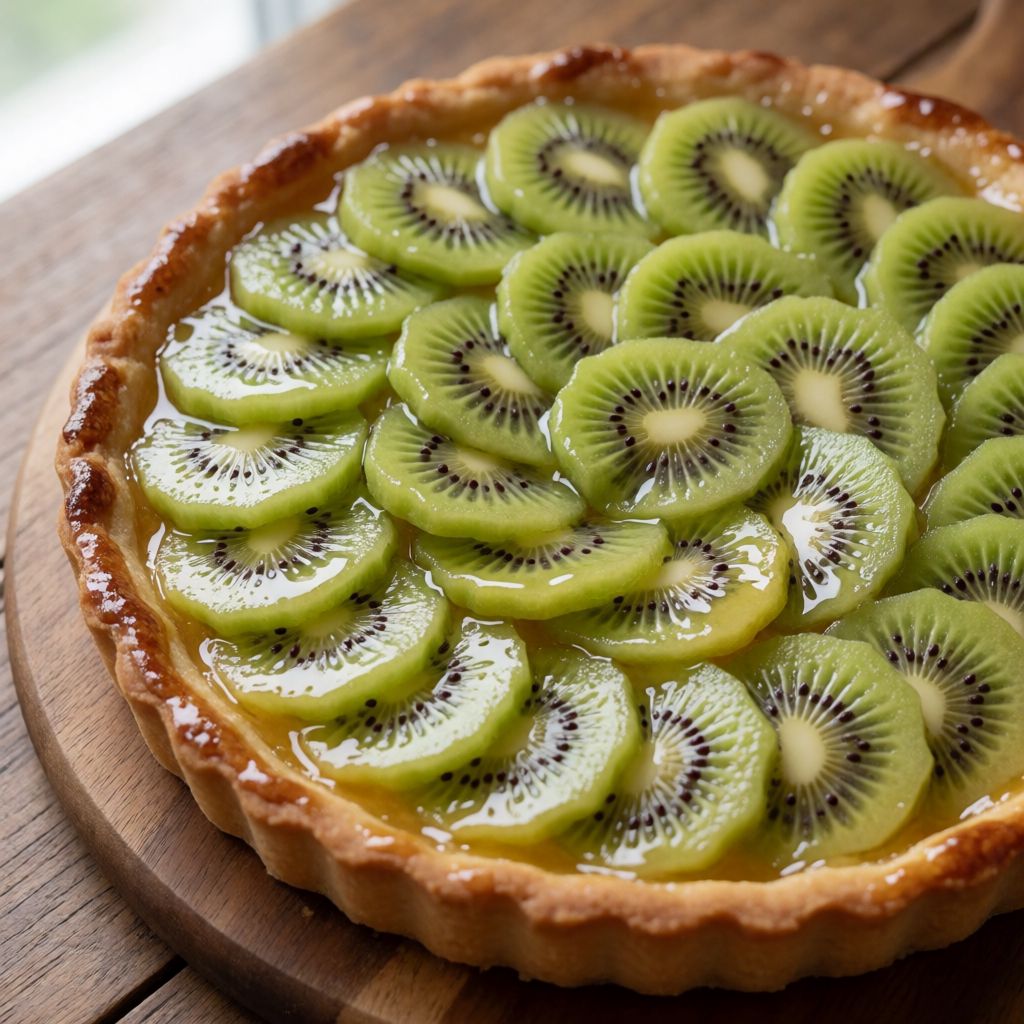
 AI photo
Kiwi Tart
A classic French-style tart with a buttery pastry base, apricot jam and thin slices of kiwi.
Labels are worked out automatically from the ingredients and can be wrong. Check the packaging if it matters to you.
Ingredients
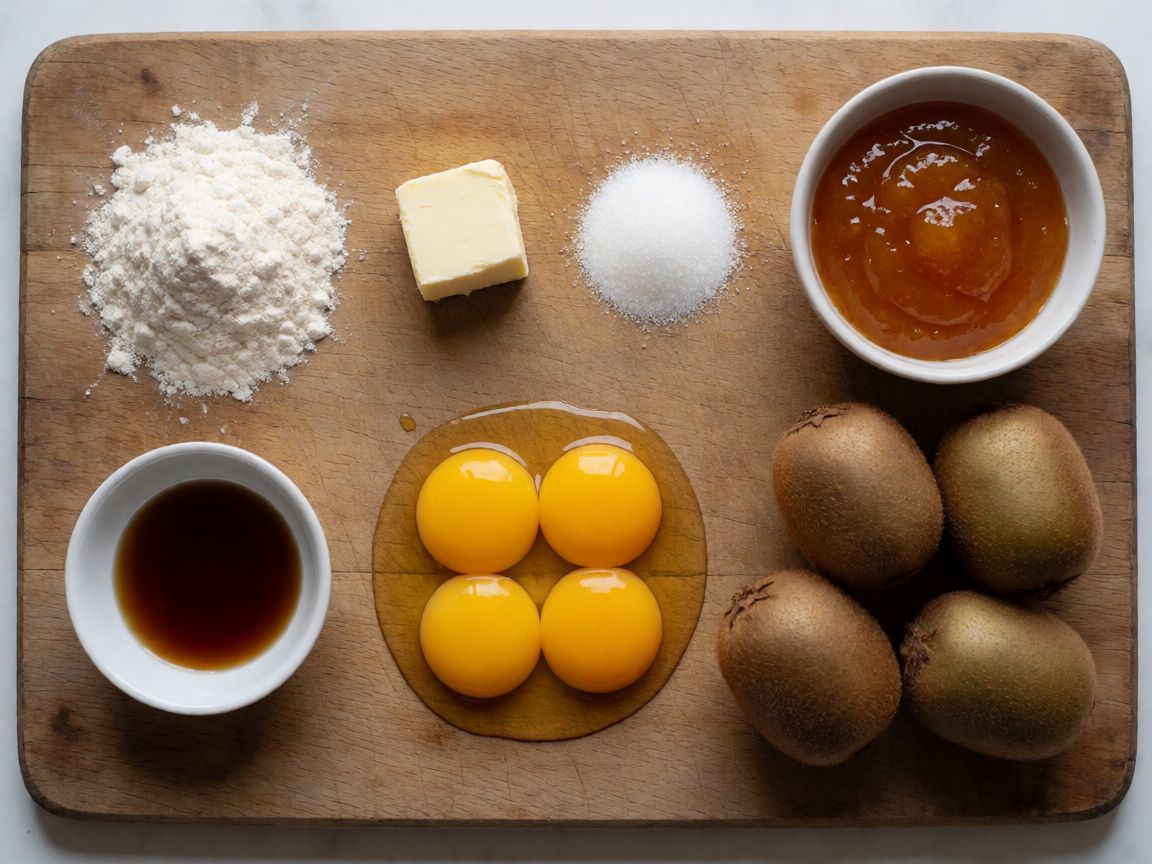
- 300 g Plain flour
- 180 g Butter
- 150 g Caster sugar
- 1 tsp Vanilla extract
- 4 pcs Egg yolk
- 300 g Apricot jam
- 4-5 pcs Kiwi





Steps
Tip the flour onto the worktop in a mound, make a well in the centre and add the butter and sugar.
Flavour with vanilla extract and add the egg yolks.
Quickly work the dough with your hands until it forms a soft, smooth ball.
Wrap the dough in cling film and leave it in the fridge.
30 minRoll out the dough with a rolling pin to a thickness of 7-8 mm.
Roll the dough onto the rolling pin and lay it into a greased tart tin.
Press the dough into the sides of the tin with your fingers, trim off the excess and prick with a fork.
Put the tin in the fridge for 20 minutes.
20 minBake the pastry in a preheated oven at 175°C (fan) for 20 minutes or at 180°C (conventional) for 20-25 minutes.
22 minRemove from the oven and let it cool completely.
Cover the base with apricot jam and decorate with thinly sliced kiwi.
Brush the kiwi slices with a thin layer of warmed apricot jam or honey for shine.
This is a pâte sablée shell — a sweet, sandy-crumbed French tart case — filled cold with apricot jam and dressed with kiwi. Nothing here is cooked after baking: you're building a plain pastry disc into something that reads as dessert through colour, shine and contrast, not through further heat. What decides whether it works is the dough staying short rather than turning elastic, and the base staying crisp rather than going soggy under the fruit.
Sablée means "sandy" for a reason — it's held together by butter coating flour particles, not by gluten strands. That's why the method starts on the worktop with a well, not in a bowl with a spoon: you want butter and sugar creamed loosely into the yolks before flour ever meets them properly, so you can bring it together fast and stop. The moment you knead this dough like bread dough, you develop gluten, and gluten is exactly what turns a biscuit base into a tough, chewy one. Some say a tart crust needs "kneading until smooth" — no, because smooth here means uniform, not elastic; the second the ball holds together, your hands come off it.
The fridge rest (30 minutes, then another 20 after shaping) isn't optional waiting — it's the butter re-solidifying after your warm hands softened it, and the gluten that did form relaxing back out. Skip it and the pastry shrinks violently in the oven, or slumps down the tin's sides, because warm dough has no structure to hold its shape while the butter melts before the starch sets.
Flour is just the scaffold here — plain flour, not strong bread flour, because you don't want the proteins that make chew. 300g gives you enough to roll at 7-8mm and still line a standard tin without tearing. Butter at 180g is just under two-thirds the flour's weight, which is high enough to make the crumb genuinely short; go lower and you edge toward a drier, more biscuit-like snap instead of sand. Use it cold from the fridge, cut small, not softened — soft butter blends into the flour as a paste and seals it, which is the opposite of the fine coating you actually want.
Caster sugar, not icing sugar, not granulated: caster dissolves fast enough into the egg yolks and butter to disappear before baking, but it's not so fine it clumps or so coarse it leaves grit. Vanilla extract is there for the smell more than the taste — if you only have a pod, scrape the seeds in; vanilla sugar as a swap works if you cut the caster sugar slightly to compensate.
Egg yolks, not whole eggs, are the binder and the reason this dough is called "sablée" rather than a plain shortcrust. Yolks bring fat and richness without the extra water whites carry — water is what encourages gluten to form, which is exactly what you spent the kneading step avoiding. Four yolks for 300g flour is a rich ratio; if a yolk breaks weak or small, add a teaspoon of cold water rather than a fifth yolk, or the dough turns greasy instead of just rich.
Apricot jam does two jobs and that's why it appears twice. On the base, it's a moisture barrier as much as a flavour — a thin layer between crisp pastry and juicy kiwi stops the fruit's water soaking straight into the crumb before anyone's cut a slice. Warmed and brushed over the kiwi at the end, it's a glaze: heat thins it enough to brush without tearing the fruit, and it sets back to a shine as it cools, which is what stops the kiwi oxidising dull and grey in the air. Any pale, smooth jam with no big chunks will do this job — apricot is traditional because it's mild and doesn't fight the kiwi's tartness, but a strained apricot or peach jam works the same way; a very dark or seedy jam will just show through the fruit and look wrong rather than fail structurally. Honey is the stated alternative for the glaze specifically — it's thinner and sets glossier, but it won't work as the base layer since it has nothing to stop it soaking straight through.
Kiwi: pick fruit that gives slightly to thumb pressure, not hard ones — hard kiwi slices ragged rather than clean, and a tart lives or dies on the slices sitting flat and even. 4-5 pieces is the amount for a standard single tin feeding six people as a dessert slice, not a main course portion — this is the end of a Sunday roast course, not a rival to it.
On the tin itself: in an ordinary flat kitchen you likely don't have a proper fluted tart tin with a removable base, and that's fine — a sandwich cake tin greased well works, you just lose the crimped edge and need to ease the pastry out more carefully once cool, since it won't have a floor to push up. A loose-based tin, if you own one, saves you that step entirely. Patience is the real ingredient missing from most failed versions of this: both fridge rests matter, the cooling before jam and fruit matters — warm pastry under jam just makes the jam weep and the base go soft before it's even served.