
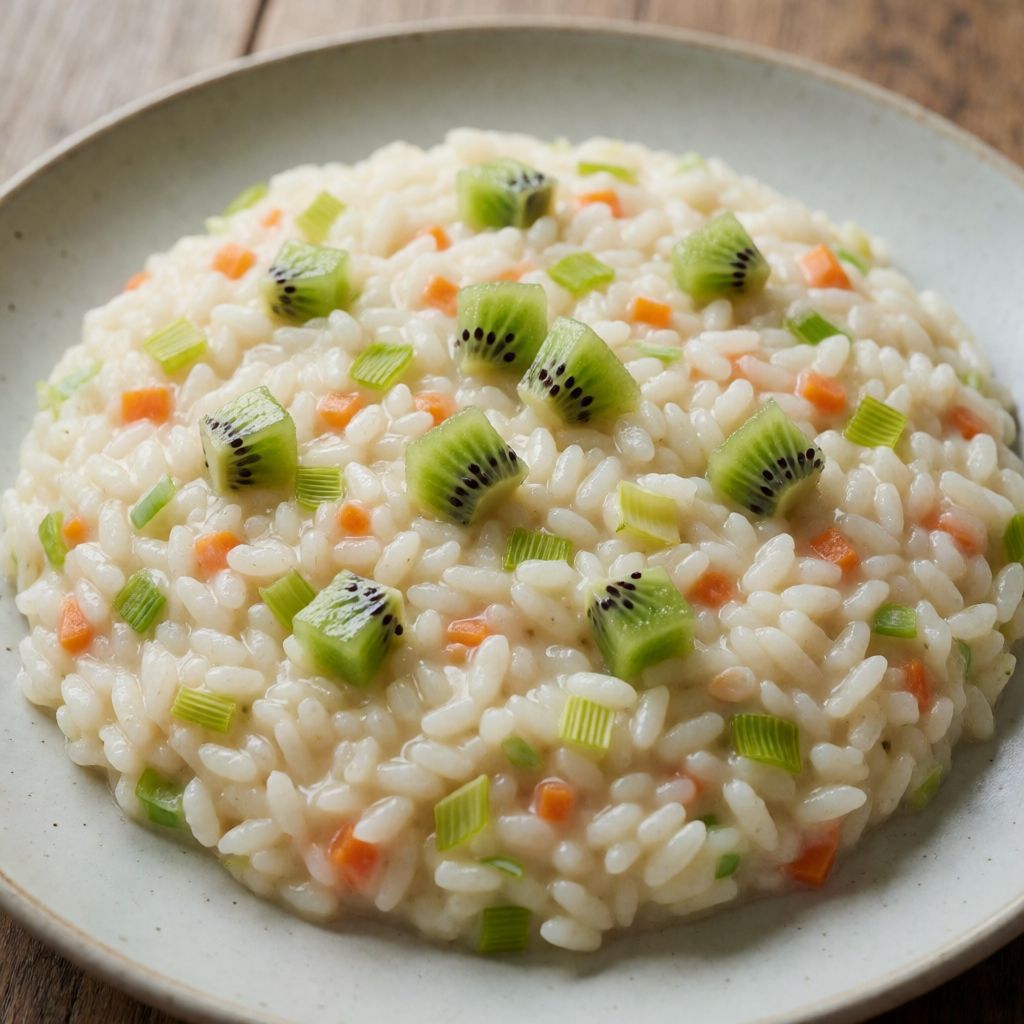
 AI photo
Kiwi Risotto
A creamy risotto brightened with fresh kiwi, finished with butter and Parmesan.
Labels are worked out automatically from the ingredients and can be wrong. Check the packaging if it matters to you.
Ingredients
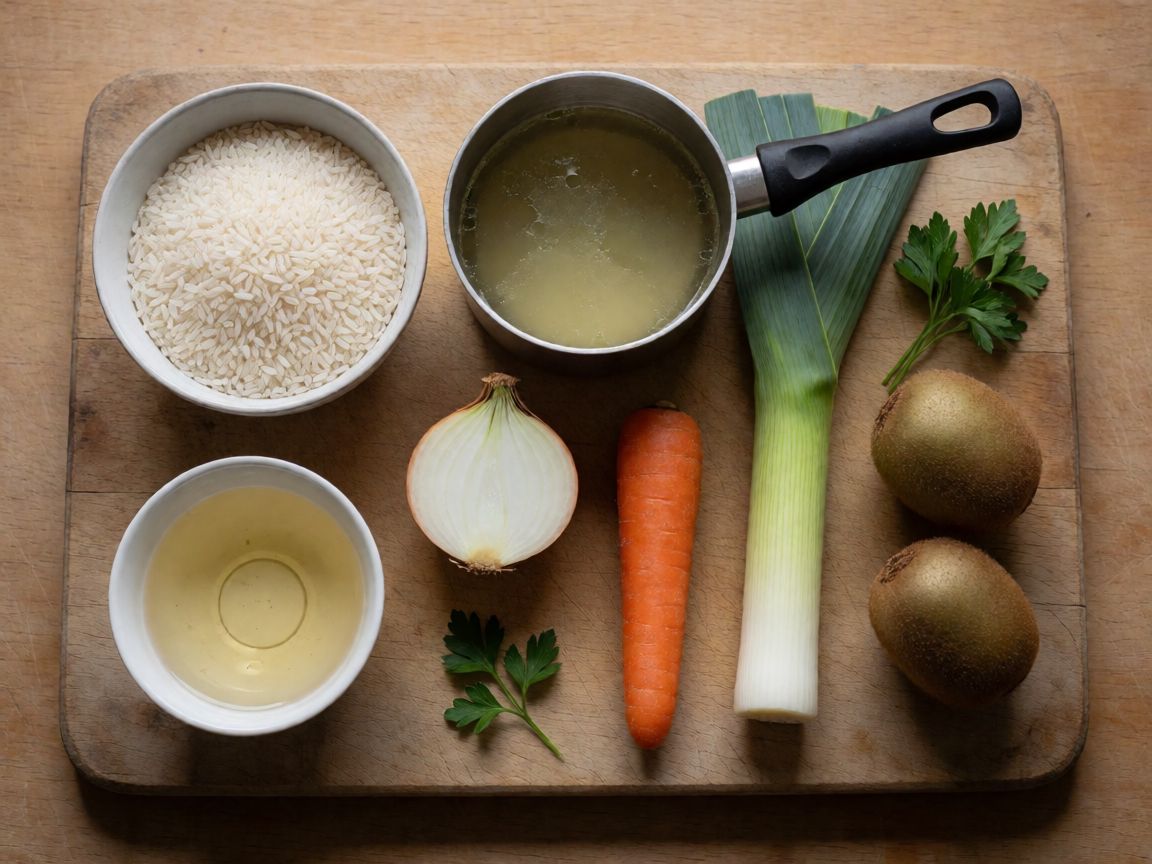
- 320 g Rice Carnaroli
- vegetable stock as needed
- 0.5 pcs Onion
- 1 pcs Carrot
- 1 pcs Leek
- 2 pcs Kiwi
- 125 ml white wine
- Olive oil to taste
- Salt to taste
- Black pepper to taste
- Parsley to taste
- 1 pcs Butter
- Parmesan to taste












Steps
Prepare the vegetable stock, which will be needed while cooking the rice.
10 minPeel the kiwis and cut the flesh into cubes, leaving a few slices aside for garnish.
5 minIn a pan, make a base of finely chopped onion, carrot and leek in olive oil.
5 minAdd the rice and toast it for a few minutes.
3 minPour in the white wine and let it evaporate.
2 minCook the rice, gradually adding hot vegetable stock, a ladle at a time.
15 minSeason with salt and pepper, adding the kiwi shortly before the rice is done.
2 minRemove from the heat and stir in the butter and Parmesan until creamy.
2 minDivide among plates and serve hot, garnished with kiwi slices and parsley.
Risotto is not a rice dish, it's a starch-release dish — the whole method exists to pull sugars out of Carnaroli grains slowly enough that they turn into a sauce around themselves, rather than just sitting in a pan being rice. Kiwi is the unexpected part, and it earns its place here the same way a squeeze of lemon earns its place in a rich sauce: acid and a fruit-sharp sweetness cutting through the butter and Parmesan so the dish doesn't just sit heavy on the tongue. It's a side, but a mischievous one — green against the gold stock, meant to surprise a plate that's usually all cream and cheese.
What decides whether it works is the ladle, not the clock. Some say risotto needs constant violent stirring from first grain to last — no, because what you're doing is encouraging starch to leach out at a controlled rate, and that happens through gentle, repeated contact with hot liquid, not through assault. Add stock a little at a time, let the pan almost dry out before the next ladle, and stir enough to keep grains moving so none of them stick and scorch on the bottom. Rushing it with one big pour of stock just boils the rice instead of coaxing it.
The rice should end up looking like a slow wave caught mid-motion — it should move and settle on the plate, not stand in a mound like pilaf. If it holds a stiff peak, you've undercooked the starch release or added stock too fast. If it's a puddle, you went too far, or the heat was high enough to just cook rice in liquid rather than feed it liquid in stages.
Carnaroli is specified, not "risotto rice" in general, because the grain carries more amylose than Arborio and holds structure longer while still shedding starch — it's the rice equivalent of choosing a roasting joint with the right fat marbling rather than just "some beef." If you can't find Carnaroli in a UK supermarket, Arborio is the honest substitute — same family of behaviour, slightly less forgiving, so stir a touch more carefully near the end. Don't reach for basmati or long-grain; those are bred to stay separate and dry, the opposite of what this dish wants.
The stock is the engine, and "as needed" is not vagueness, it's honesty — you're not pouring a fixed amount, you're feeding the pan until the rice tells you it's ready, which is the whole point of rule two: time is the floor, not the answer. Keep it simmering in a second pot alongside, because cold stock dropped into a working risotto stops the cooking dead and you spend the next five minutes just getting the temperature back.
Onion, carrot and leek are your soffritto — the quiet flavour base that doesn't announce itself on the plate but without which the rice tastes like boiled starch. Chop them fine; the point is that they melt into the oil and surrender their sugars, not that you taste chunks of carrot later. Leek stands in partly for garlic here, giving sweetness without sharpness — if you've only got onion, use a bit more of it and don't mourn the leek too hard.
The wine's job is deglazing and acid, not flavour for its own sake — it lifts anything starting to catch on the pan base after toasting the rice, and the alcohol cooks off while the acidity stays to balance the richness coming later from butter and Parmesan. Any dry white with no sweetness works; don't use something oaky and heavy, it'll fight the kiwi rather than support it.
Butter and Parmesan stirred in off the heat, at the very end, aren't decoration — that step is called mantecare, and it's an emulsion, fat and starch and a little residual liquid binding into a sauce that coats rather than sits separately in the pan. Add them while it's still bubbling hot and you risk the butter just melting into oil instead of binding; take it off heat first.
Kiwi itself: buy it slightly underripe rather than soft, since soft kiwi collapses the moment it hits warm rice and you lose the contrast you wanted. The slices kept back for garnish are there for the same reason a Sunday roast gets a scatter of fresh herbs at the table — raw, bright, a reminder of what the cooked version tastes like before heat softened it.