
 AI photo
Breakfast Croissants
Buttery, flaky homemade croissants, perfect for a leisurely breakfast.
Labels are worked out automatically from the ingredients and can be wrong. Check the packaging if it matters to you.
Ingredients
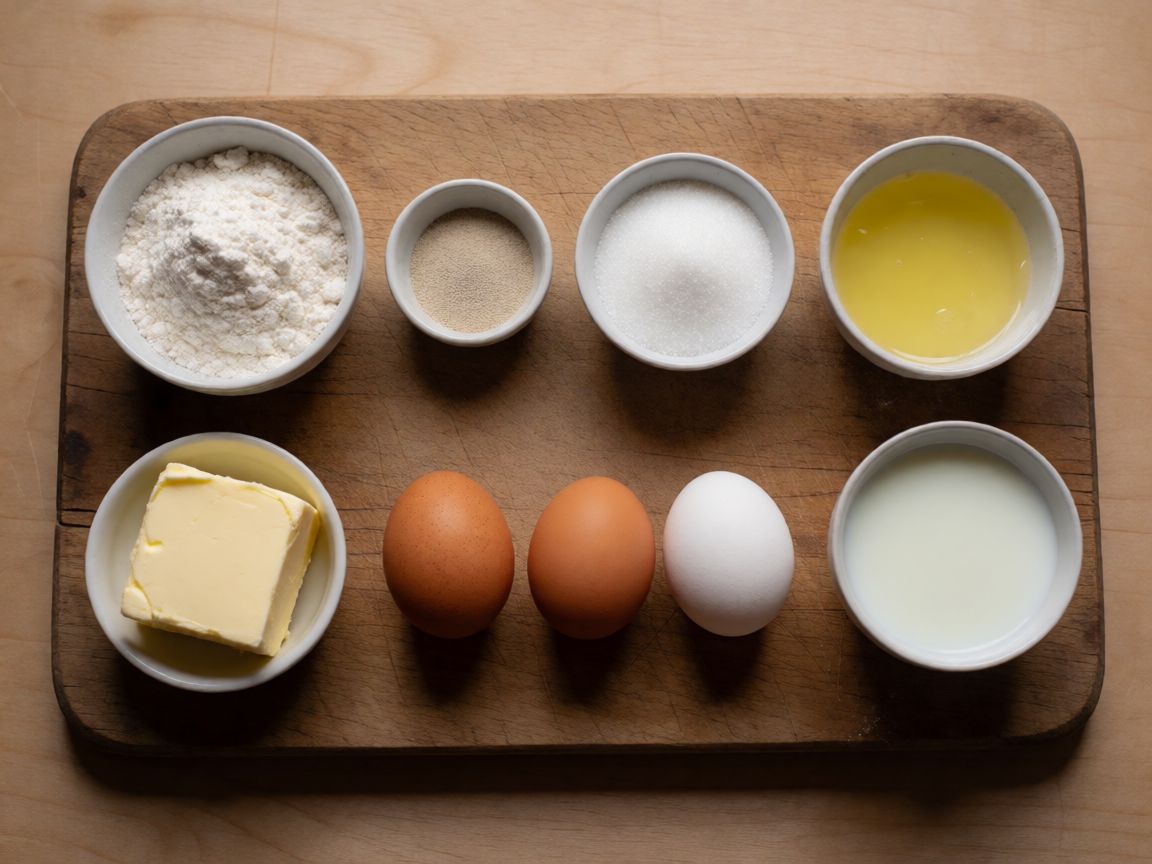
- 170 g Plain flour
- 170 g Strong white flour
- 15 g Yeast or 5 g dried yeast
- 150 g Butter
- 70 g Sugar
- 1 pcs Eggs
- 1 pcs Egg whites
- 75 ml Milk
- Icing sugar to taste
- Salt a pinch








Steps
In a bowl, dissolve the yeast in three tablespoons of warm water. Mix 45 g of plain flour and 45 g of strong white flour, add the yeast and knead until smooth. Shape into a ball, cover with a towel.
Leave the dough to rest for at least 2 hours.
120 minWhile the dough is resting, cut 25 g of butter into small pieces and let it soften at room temperature.
Sift the remaining flours, add the sugar, a pinch of salt, the eggs, the softened butter pieces and the risen dough. Gradually pour in the milk and mix vigorously.
Shape the dough into a ball, cut a cross in the centre, and cover with cling film.
Leave the dough in the fridge overnight.
Mix the remaining softened butter for a few minutes until smooth.
Take out the risen dough and roll it with a rolling pin into a 2 cm thick rectangle. Place the butter in the centre and fold both sides of the dough to the middle. Pinch the edges and roll out.
Put the dough in the fridge for 20–25 minutes.
22 minRepeat the rolling and folding process two more times, alternating the fold direction, then put the dough in the fridge for at least 20 minutes.
20 minRoll the dough out thinly and cut into triangles (about 10×12 cm). Roll each one into a croissant shape.
Place the croissants on a baking tray, cover with a towel and let rise for at least another 2 hours.
120 minBrush the croissants with egg white and sprinkle with icing sugar.
Bake in a preheated fan oven at 180°C for 15 minutes.
15 min
This isn't really a croissant dough, it's two doughs pretending to be one — a small yeast-leavened starter (a "levain" of sorts, though a proper baker would wince at the term) mixed into a second, richer dough the next day. That two-stage build is the whole point: yeast alone, fed just flour and water for two hours, builds structure and a bit of sourness without fighting the fat and sugar that come later. Mix everything at once — butter, sugar, egg, yeast — and the yeast works slower and sulkier, because sugar pulls water away from it and butter coats the gluten strands before they've had a chance to form. So the order isn't fussiness. It's giving the yeast a clear run before you complicate its life.
What decides whether this works isn't the oven, it's the fridge, and your own patience with temperature. The whole middle of this recipe — the lamination — is really one question asked three times: is the butter and the dough at the same firmness? If the butter is colder than the dough, it shatters into shards when you roll, and you get a croissant with holes in the layers, fat leaking out, flat in the oven. If the butter is warmer, it smears into the dough and you just get bread — no layers at all, because butter has merged with flour instead of staying as a separate sheet between layers of dough. "Any lamination fails because you rolled too hard" is the myth — no, it fails because someone let the two components drift apart in temperature while they were out on the counter, usually while you went to put the kettle on.
Two flours, not one, and that's not a show of technique — plain flour (low protein) keeps the crumb tender, strong white flour (high protein) gives the dough enough gluten to stretch thin without ripping during all that rolling. All plain flour and your croissant collapses, soft and bready, because there's nothing holding the layers' shape under their own weight. All strong flour and it fights you at the rolling pin, shrinking back like it's annoyed, and the crumb turns chewy instead of flaky. If you only have one flour in the house, bread flour behaves closer to "strong" than plain does, so lean that way rather than toward cake flour.
Yeast: fresh at 15 g or dried at 5 g — the usual ratio when swapping, since dried yeast is more concentrated. Either way it needs warm water, not hot — hot water kills the cells before they've done anything, which is the actual reason "warm" gets specified and not just habit. The pinch of salt in the second dough isn't for taste alone; salt tightens gluten and slows yeast slightly, which is why it goes into the rich dough stage and not into the yeast-water itself.
Butter is doing two separate jobs here and you'll use two separate portions for them. The 25 g goes into the dough itself, for tenderness and flavour, soft at room temperature so it blends in rather than sitting in lumps. The remaining ~125 g is the lamination butter, the layer that steam will later push apart from the dough in the oven — that's the actual mechanism behind "flaky": water in the dough turns to steam at oven heat, and because a sheet of butter sits between sheets of dough rather than being mixed through it, the steam has nowhere to go but to lift each layer, which is why thin, even, cold butter sheets matter more than any folding ritual. Butter must have no watery weep and no soft give when you press it — in the UK most supermarket block butter is fine for this; European-style "baking" butter with a slightly higher fat percentage behaves a touch more cooperatively if you've had trouble with layers collapsing before, but it's not essential.
Egg in the dough adds richness and a little structure from its protein; egg white brushed on top before baking is there purely for shine and to help the icing sugar catch — a whole beaten egg would do the same job with slightly less gloss, so don't buy a separate carton of whites just for this. Milk is the liquid that brings the second dough together; if you're out, water with a spoon of extra softened butter gets you most of the way, losing only a bit of richness, not structure.
Sugar at 70 g in a dough is less about sweetness and more about yeast's appetite — sugar feeds it and also tenderises the crumb by competing with flour for water, which is part of why this dough, even savoury-ish breakfast croissants, ends up softer than a French-bakery version. Icing sugar at the end is purely decorative and a little self-indulgent — it's the "breakfast" signalling of this version, not a structural ingredient, so adjust it entirely to taste or skip it for a more savoury table.
One honest note on the domestic oven: 180°C fan for 15 minutes assumes your oven's fan setting is accurate, and many home ovens run a little hotter or cooler than the dial claims. Watch the croissant, not the clock on this last stage especially — you want pastry that's gone a deep gold, not pale gold, because pale gold still has a doughy middle; a few extra minutes rarely hurts here, since the layers protect the inside, but pulling it out at pale will leave a gluey centre no amount of waiting on the counter will fix.