
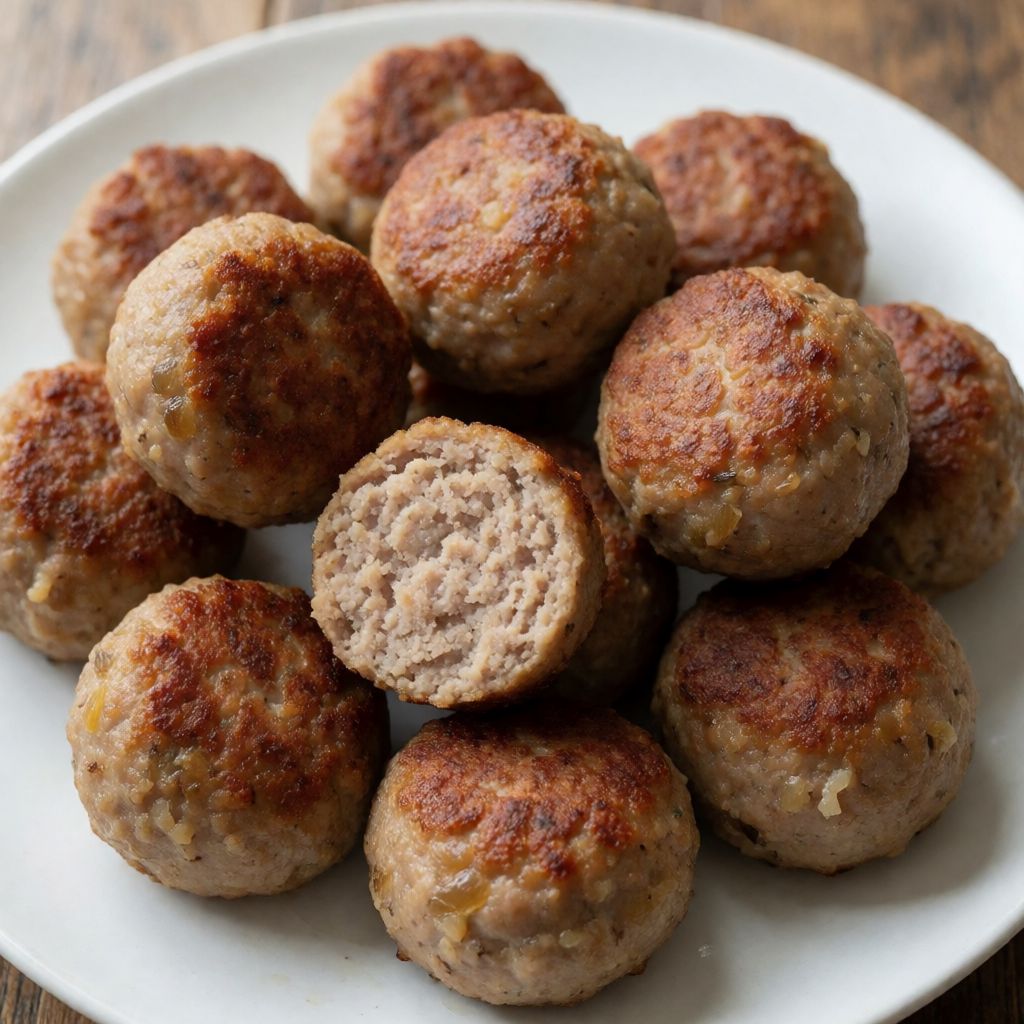
 AI photo
Lamb Meatballs
Juicy lamb meatballs flavoured with fresh mint, garlic and warm spices, pan-fried until golden.
Labels are worked out automatically from the ingredients and can be wrong. Check the packaging if it matters to you.
Ingredients
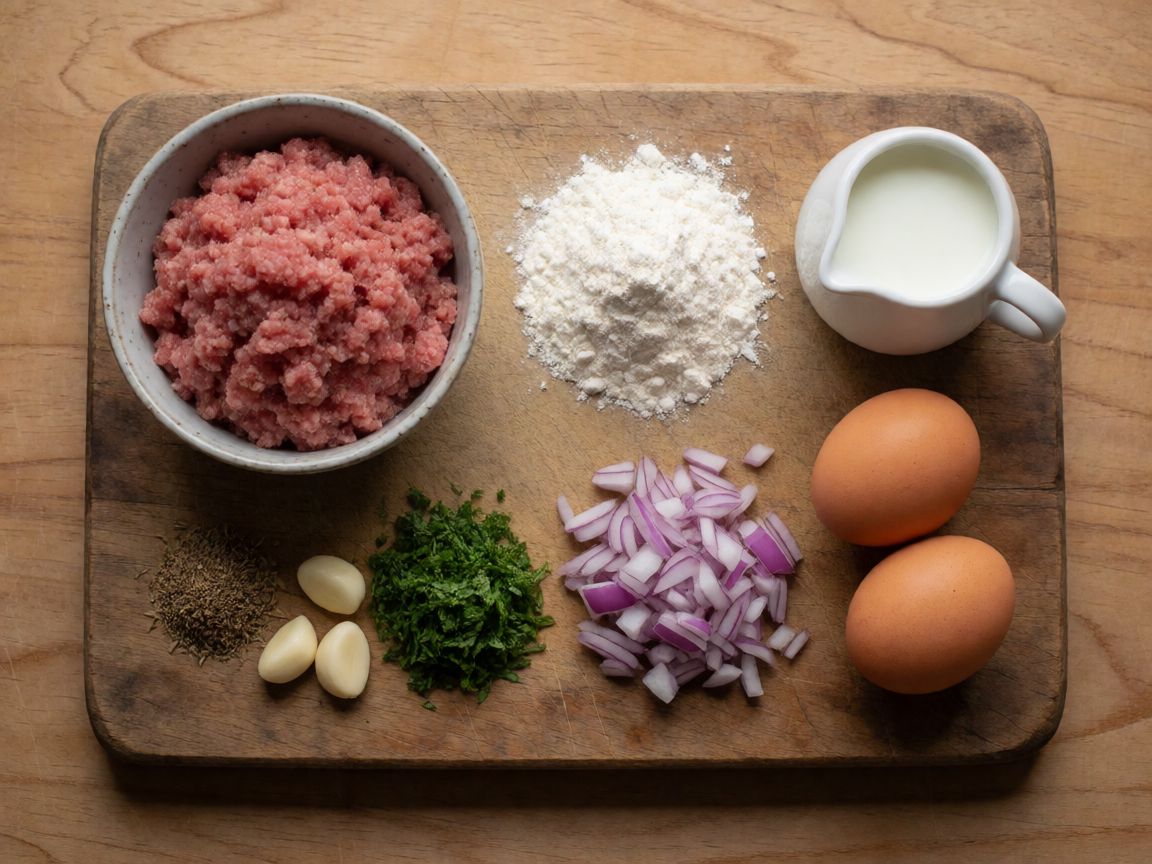
- 400 g Lamb, minced
- 3 tbsp Plain Flour
- 100 ml Milk
- 2 pcs Eggs
- 1 pcs Red Onion finely chopped
- 2 clove Garlic finely chopped
- 1 bunch Mint finely chopped, fresh
- 1 tsp Cumin ground
- 1 tsp Ground Coriander
- 3 tbsp Olive Oil for frying
- 3 tbsp Butter for frying
- Salt to taste
- Black Pepper freshly ground













Steps
Mix all the ingredients together in a bowl.
Preferably, let the mixture rest in the fridge for at least 30 minutes.
30 minFry small lamb meatballs in a hot pan with the olive oil and butter until cooked through, turning them a few times.
10 min
This is a kofta by another name — lamb mince bound with a wet panade instead of bread, and that panade is the whole trick. Flour and milk together behave like an unset béchamel: when the meatball hits the pan, that mixture firms up inside before the outside crust locks shut, so the moisture the lamb would otherwise lose into the fat stays put. Skip the flour-milk pair and swap in just breadcrumbs or nothing at all, and you get a drier, denser ball by the third bite — not because of the meat, but because there's nothing inside holding water where you want it.
What decides whether this works is restraint in two places: mixing, and heat. Mix the lamb with everything else until it's combined, not until it's smooth and tacky — go further than that and you're developing the muscle protein the same way you would in a sausage, and the texture turns springy-rubbery instead of tender. Some cooks knead mince like dough thinking more work means more cohesion. No — more work means more chew, and not the good kind.
The fridge rest earns its place for a reason that has nothing to do with flavour marrying, though that happens too. Lamb fat is soft at room temperature and turns sticky under your palms; chilled thirty minutes, it firms up enough that you can actually roll a ball without it collapsing into your fingers, and the flour has time to properly take up the milk rather than sit in wet streaks through the mixture.
Take the lamb mince first. You want visible fat running through it — somewhere around a fifth of the weight, which is roughly what shoulder mince gives you and leg mince doesn't. Lean mince feels virtuous and fries dry; the fat here isn't excess, it's what bastes the meatball from the inside while the panade handles moisture. If all you can get is very lean mince, work in an extra knob of butter by hand before shaping, not just in the pan.
Flour and milk are doing one job together, so think of them as one ingredient with two parts. Three tablespoons of plain flour against a hundred millilitres of milk is thin enough to mix through raw meat without clumping, thick enough to set once heat hits it. If you're out of plain flour, a spoon of cornflour does the same thickening job with less of its own taste, though you'll lose a little of the structure flour's gluten gives the finished ball. Oat milk or any milk with real fat in it works in place of dairy milk — what you're after is a liquid that will gel a little when hot, not one with a strong flavour of its own, because at this stage you don't want to taste the binder, only its effect.
Eggs are the actual glue — two eggs for 400g of meat is generous, which tells you this recipe wants a meatball that holds its shape through a few turns in the pan rather than one that's deliberately loose and craggy. If a meatball falls apart while frying, before you blame the egg, check whether you chopped the onion too coarsely: big pieces of raw onion release water as they cook and work against everything the flour and egg are trying to hold together. Finely chopped, the onion cooks through in the time the meatball takes and barely adds moisture at all.
Garlic, mint, cumin, and coriander are not there to be noticed as individual notes — they're there so the whole thing doesn't taste like plain fried lamb and milk, which, on its own, is fine but forgettable. Fresh mint matters more than people expect; its aroma is carried by oils that fade fast once dried, so dried mint in a raw mixture gives you a dusty ghost of the real thing — if it's all you have, use half as much and add a scrape of lemon zest to wake it up. Cumin and coriander pre-ground from a jar lose potency within months of grinding; if yours has sat in the cupboard since last Sunday roast's attempt at a curry, you may want a pinch more than the recipe says, and that's a fair adjustment to trust your nose on, not a failure to follow instructions.
For the fat you fry in, olive oil and butter together solve each other's weaknesses — butter browns beautifully and burns early, oil has a higher smoke point and no flavour of its own to add, so together you get butter's colour and nuttiness without the char. Any neutral oil with no smell of its own — sunflower, groundnut — will stand in for the olive oil if that's what's in the cupboard; what you're protecting against either way is the butter's milk solids scorching black before the meatballs are through.
This whole shape of recipe — minced meat stretched and bound with starch and milk rather than left plain — is old economics more than old magic. Meat was expensive, flour and milk were not, and a household meal needed to turn less meat into more food without anyone feeling short-changed. A Sunday roast spends a whole joint on show; a plate of these spends a third of that on the same flavours, dressed differently, on a Tuesday. Neither one needs defending as the 'real' way — they're solving different problems.