
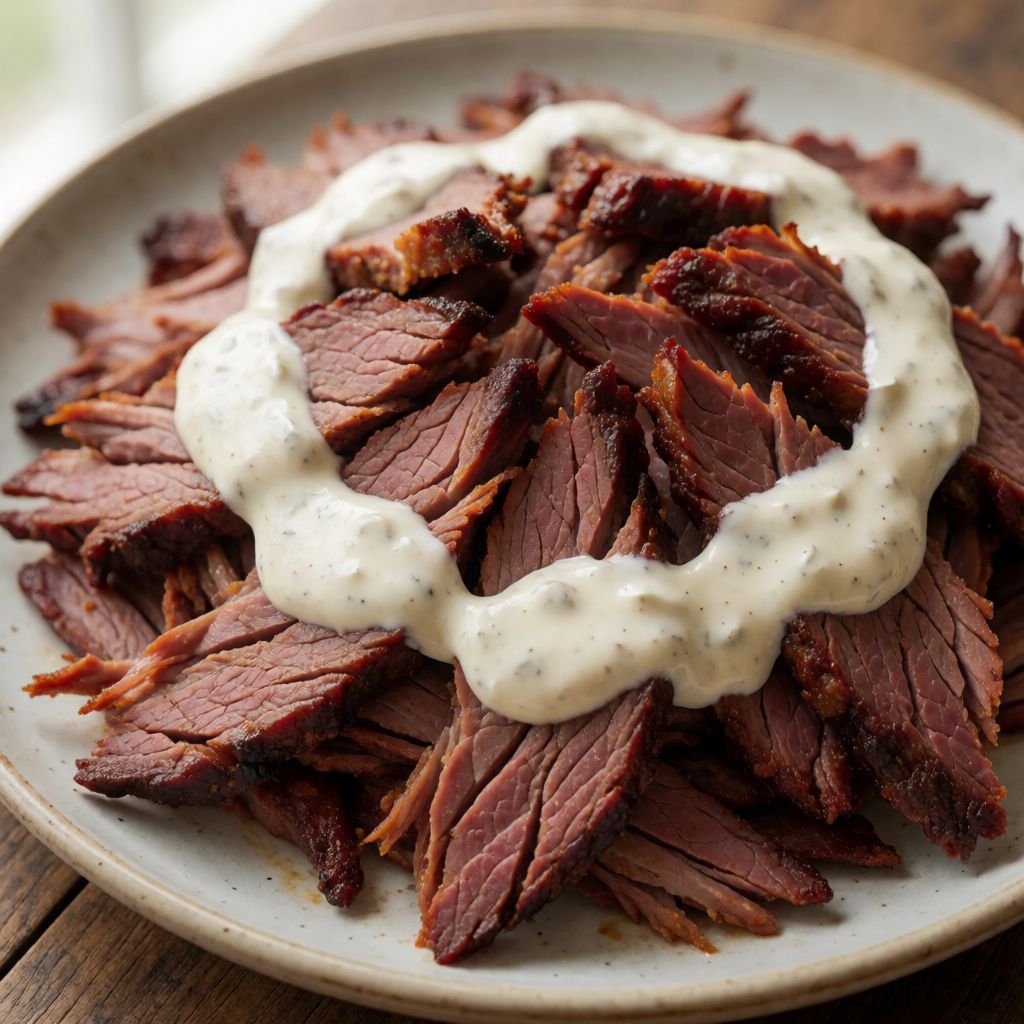
 AI photo
Lamb Shawarma
Tender spiced lamb marinated in yogurt and warm spices, served in pita with fresh salad and herbs.
Labels are worked out automatically from the ingredients and can be wrong. Check the packaging if it matters to you.
Ingredients
- 1 kg Lamb leg
- 600 ml Greek yogurt
- 4 clove Garlic finely chopped
- 2 tsp Cumin
- 1 tsp Allspice
- 1 tsp Paprika
- 1 tsp Chilli flakes
- 1 tsp Ground coriander
- 1 tsp Cardamom
- 0.5 tsp Cloves
- 0.5 tsp Nutmeg
- 1 tsp Cinnamon
- 0.5 tsp Star anise
- 1 pcs Lemon zest and juice
- 2 tsp Salt
- 6 pcs Pitta bread
- 0.5 pcs Cucumber
- 4 pcs Tomato diced
- 1 pcs Red onion thinly sliced into rings
- 1 bunch Mint roughly chopped
- 1 bunch Parsley roughly chopped



















Steps
Cut the lamb into small pieces and strips, bite-sized for eating.
Mix the marinade well in a large bowl and thoroughly coat the meat in it. Cover the bowl and leave the meat to marinate in the fridge for 12–24 hours.
1440 minCover the bowl and leave the meat to marinate in the fridge for 12–24 hours.
1440 minRemove the meat from the marinade with a slotted spoon, discarding the excess marinade.
Heat a little oil in a large frying pan and fry the meat in small batches over medium-high heat until golden. It's important to fry a small amount of meat at a time, otherwise it will release too much liquid and start to stew instead of fry.
15 minAssemble the shawarma with the filling while the meat is still hot and steaming.
Shawarma off a spit is street food, built for a vertical skewer turning in front of a flame so fat bastes the meat as it drips down. You don't have that rig, and nobody at home does — so this version does the same job with a hot pan and patience, and honestly, it gets you 80% of the way there with none of the gear.
What decides whether this works isn't the spice list, it's two things: how long the yogurt sits on the meat, and how little meat you put in the pan at once. The marinade is doing real chemistry — yogurt's acidity and the lemon juice break down muscle fibre so a cut like lamb leg, which is lean and can go chewy, turns tender without needing hours of slow cooking. Twelve hours is the floor, not a suggestion; less than that and you've basically seasoned raw meat rather than changed its structure. Twenty-four is where it's properly loosened up.
The second thing — batch size in the pan — is the difference between shawarma and lamb stew. Meat sitting in a crowded pan sweats; the liquid pools, the temperature drops, and instead of browning you get grey simmered lamb sitting in its own juice. Small batches, hot pan, space between pieces: that's what gets you the seared, slightly charred edge that's the whole point of frying it this way instead of boiling it.
Everything else — the ten-odd spices, the lemon zest, the fresh herbs at the end — is dressing on top of those two mechanics. Get the marinade time and the batch size right and the dish works even if your spice cupboard is missing two things.
Start with the lamb. Leg is a good compromise for a pan version — it's got enough fat running through it to stay juicy when seared hot and fast, unlike something like loin which is too lean and will dry out the second it hits a hot surface. Cut it small and bite-sized, because you're not slicing thin shavings off a rotating spit here; you're frying chunks, and chunks need surface area to brown properly without needing to cook through for ages. If leg isn't what's in the butcher's window, shoulder works too — it's fattier, slightly more forgiving, just trim the worst of the sinew.
The yogurt is the backbone of the marinade, not just a coating. Full-fat Greek yogurt clings to the meat (thin yogurt runs off and does nothing) and its acidity, working alongside the lemon juice, breaks down the proteins over those 12-24 hours. Some say marinating lamb longer than a day makes it mushy — no, because yogurt-based marinades are gentle compared to something like a straight citrus or vinegar cure; they tenderise slowly and you'd need several days before texture actually suffers. Don't rush it to save an evening; this dish is built around waiting.
The spice list looks long but it's really doing two jobs. Cumin, paprika, chilli, coriander, garlic — that's the savoury, forward layer, the one you'd notice if it were missing. Allspice, cardamom, cloves, cinnamon, nutmeg, star anise — that's the warm, almost bakery-adjacent layer that's actually closer to a baharat blend than a single spice. If you're missing two or three of the warm spices, don't panic and don't substitute randomly — just use what you have in roughly the same ratio; the mix is meant to read as "warm" rather than any one spice standing out. What you shouldn't skip is the lemon zest alongside the juice — zest carries the oil-soluble citrus aroma that juice alone won't give you, and it's cheap insurance for very little effort.
For the oil to fry in, you want something with no flavour of its own — a neutral vegetable or sunflower oil, nothing that'll fight the spice crust. Olive oil works in a pinch but its own flavour and lower smoke point mean you'll catch it burning before the meat's properly coloured.
On a British domestic hob, "medium-high" for the frying step means the pan should be hot enough that a piece of meat sizzles the instant it touches the surface — if it goes in quietly, your pan's not ready and the meat will just start steaming. Go in batches small enough that you can see space between the pieces; crowd the pan and the meat releases liquid faster than it can evaporate, and you get grey simmered lamb instead of a seared, slightly caramelised one. This is the exact point people get wrong when the end result tastes "boiled" rather than "shawarma" — it's not the spice, it's the pan being too full.
Everything in the filling — cucumber, tomato, red onion, mint, parsley — wants to go on raw and cold, straight after cutting, no advance prep sitting around going soft. The contrast of cold, crisp veg against hot meat straight from the pan is the whole point of assembling fast, while the meat's still steaming. Warm pitta — a quick turn in a dry pan or under the grill — stops the bread cracking when you fold it, which is really what it's there to prevent, not just to warm it for its own sake.