
 AI photo
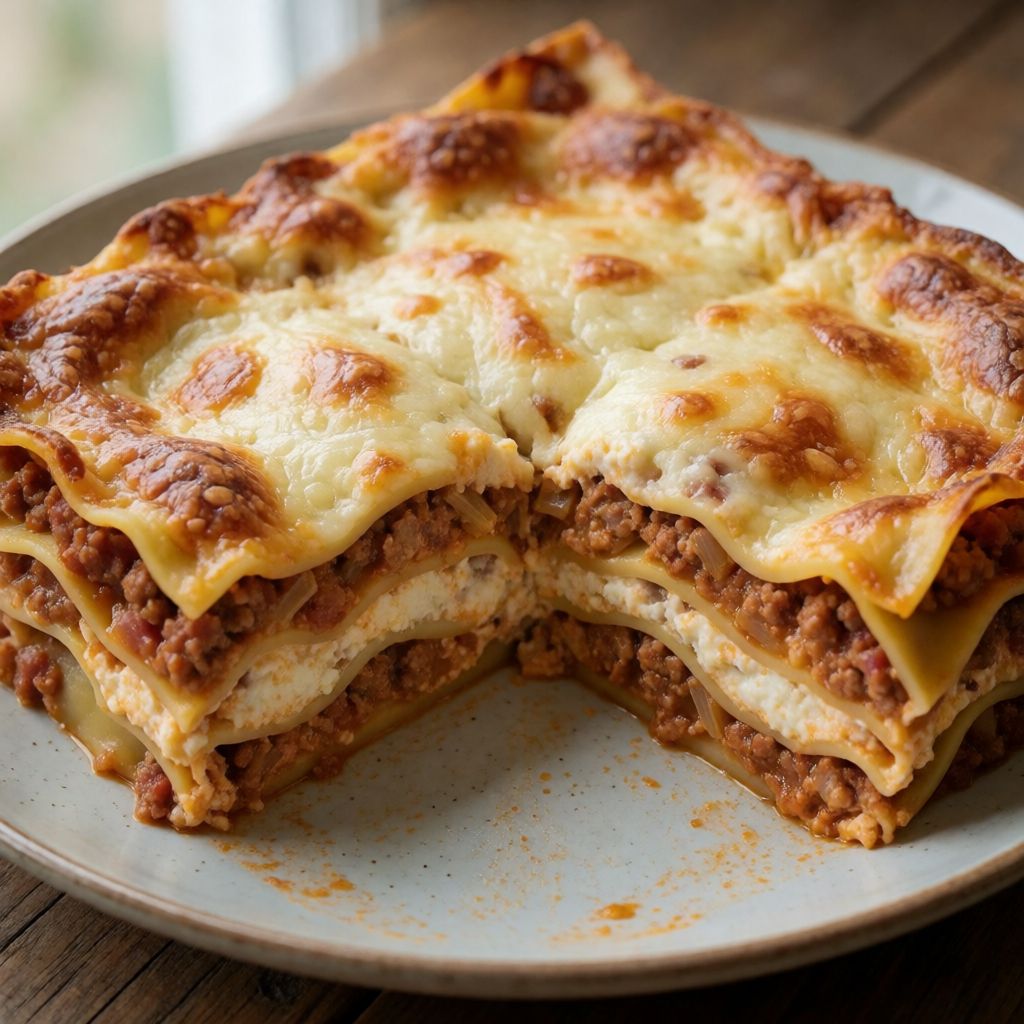
Baked Lasagne with Beef and Bacon
A hearty baked lasagne layered with a rich beef and bacon ragù, ricotta and parmesan.
Labels are worked out automatically from the ingredients and can be wrong. Check the packaging if it matters to you.
Ingredients
- Lasagne sheets
- 400 g Ricotta
- Parmesan
- 300 g Minced beef
- 150 g Bacon
- 1 pcs Onion
- 250 g Tomato passata
- Butter
- 120 ml Red wine
- Salt to taste
- Black pepper to taste
- 80 g Dried porcini mushrooms dried












Steps
Soak the dried porcini mushrooms in warm water, then squeeze them out.
In a frying pan, fry the onion, add the bacon, then the minced beef and cook until browned.
Make sure the mince is heated through to 71°C inside.
Pour in the wine, let it evaporate, add the squeezed mushrooms and simmer gently for 15 minutes.
15 minAdd the tomato passata, season with salt to taste, add black pepper to taste and cook for a further 10 minutes.
10 minGrease a baking dish with butter and layer the lasagne sheets, alternating with the meat sauce, ricotta and parmesan.
Finish with a layer of sauce and generously sprinkle with parmesan.
Bake in a preheated oven at 180°C for 25 minutes.
25 min
This is a lasagne where the meat sauce does double duty — it's a ragù standing in for a slower, longer one, propped up by dried porcini for the depth that normally comes from hours you don't have. What decides whether it works isn't the oven, it's what happens in the frying pan before the oven ever gets switched on.
Beef mince alone, fried fast, gives you cooked meat — not sauce. What turns it into sauce is reduction: the wine driven off until its raw sharpness is gone, the passata cooked down until it clings instead of pools. Skip that and you get lasagne with wet seams, sheets that slide instead of hold. The bacon isn't a flavour add-on here, it's the fat source — it bastes the lean beef while it cooks, because mince this lean has almost nothing to render on its own.
The porcini is the shortcut that doesn't taste like one. Soak them properly and you're not just rehydrating mushroom, you're making a second stock — don't throw that soaking water away, though the recipe as given doesn't call for it; keep it in mind as insurance if your sauce looks tight before it's had its time. Dried porcini carry glutamates fresh mushrooms don't have in the same concentration, which is the actual reason a handful of them reads as "meatier" than a whole punnet of fresh chestnut mushrooms would.
Take the beef first. 300 g for four people is modest — this isn't a dish built to show off meat, it's built so the sauce coats pasta rather than sitting on top of it. If your mince is very lean (the kind sold as "extra lean" on UK shelves), the bacon fat matters even more; without it you'll be adding oil at the pan stage just to stop the meat seizing and going grey instead of browning.
The bacon itself: 150 g, and streaky rather than back bacon is the better pick if you have a choice, because you want the fat-to-meat ratio, not the meat. Pancetta is the obvious swap if you've got an Italian deli nearby, but ordinary UK streaky bacon, chopped small, does the same job — render it properly before the onion goes soft and sweet, not golden-brown-crisp, because crisp bacon in a braise just turns leathery again once it's simmered for twenty-five more minutes.
The onion is there to build the base note, and "fry until golden" is doing a lot of work in one line — it's the Maillard stage, where sugars in the onion start caramelising, and it's also where a lot of people rush and end up with onion that's merely soft, not sweet. Sweet onion is the difference between a sauce that tastes rounded and one that tastes like tinned tomatoes with meat in it.
The wine's job is purely chemical, not aesthetic — it dissolves the browned bits stuck to the pan (the fond) and carries their flavour back into the sauce. "Let it evaporate" means wait until the raw alcohol smell is gone and what's left smells like wine-flavoured meat, not like wine. Any dry red works; you don't need anything you'd drink on its own, but skip anything sweet or fortified, it'll throw the balance toward sugar instead of acid.
Porcini: dried, not fresh, and that's not a preference, it's the point — drying concentrates the umami compounds that make this taste like a sauce that's been on the stove for hours. If you genuinely can't get dried porcini, dried shiitake will do a similar job; fresh mushrooms of any kind won't, they bring water and mild flavour where you need concentration.
Ricotta and parmesan are doing separate jobs though they end up in the same dish. Ricotta is moisture and mildness between layers — a cheat for béchamel, cheaper in effort if not always in money. Parmesan is the salt-forward, savoury top note and the thing that browns and crisps on top in the oven; buy it in a block and grate it yourself if you can, because pre-grated parmesan dries out faster and melts less evenly, it's cut with anti-caking agents that fight against the browning you actually want on that final layer.
One honest note on the oven: 180°C for 25 minutes is enough to heat the layers through and brown the top, not enough to cook raw pasta sheets from scratch — this recipe assumes fresh or pre-cooked lasagne sheets, or the "no pre-cook" dried kind that soften from the sauce's moisture alone. If you're using ordinary dried sheets that need boiling first, you'll need to do that before you start layering, or the middle of your dish will still be crunchy when the top is brown. And don't rush the resting after it comes out — five minutes with a plate loosely over it instead of foil, if that's what you've got, lets the layers set so a slice holds its shape instead of collapsing into sauce on the plate.