
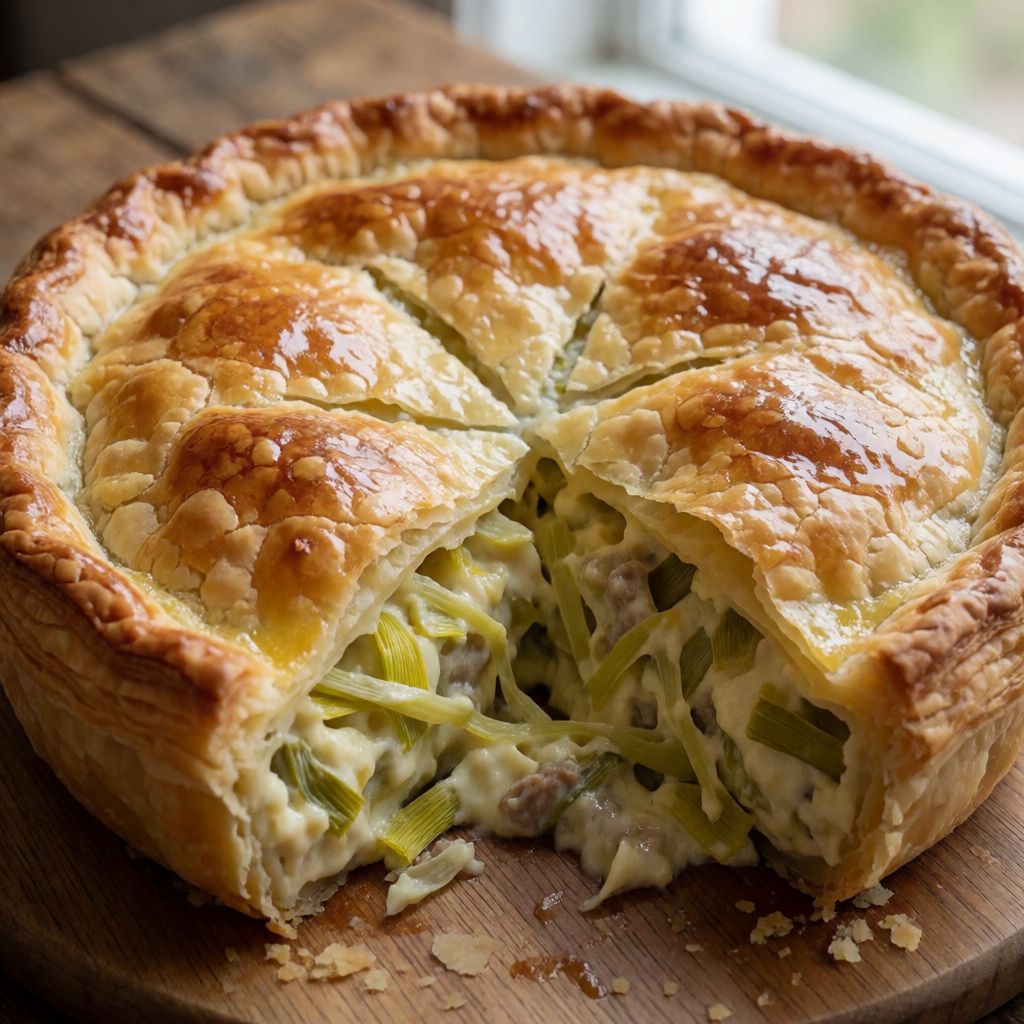
 AI photo
Leek Pie
A buttery puff pastry pie filled with soft leeks, smoked ham, double cream and melted cheese.
Labels are worked out automatically from the ingredients and can be wrong. Check the packaging if it matters to you.
Ingredients
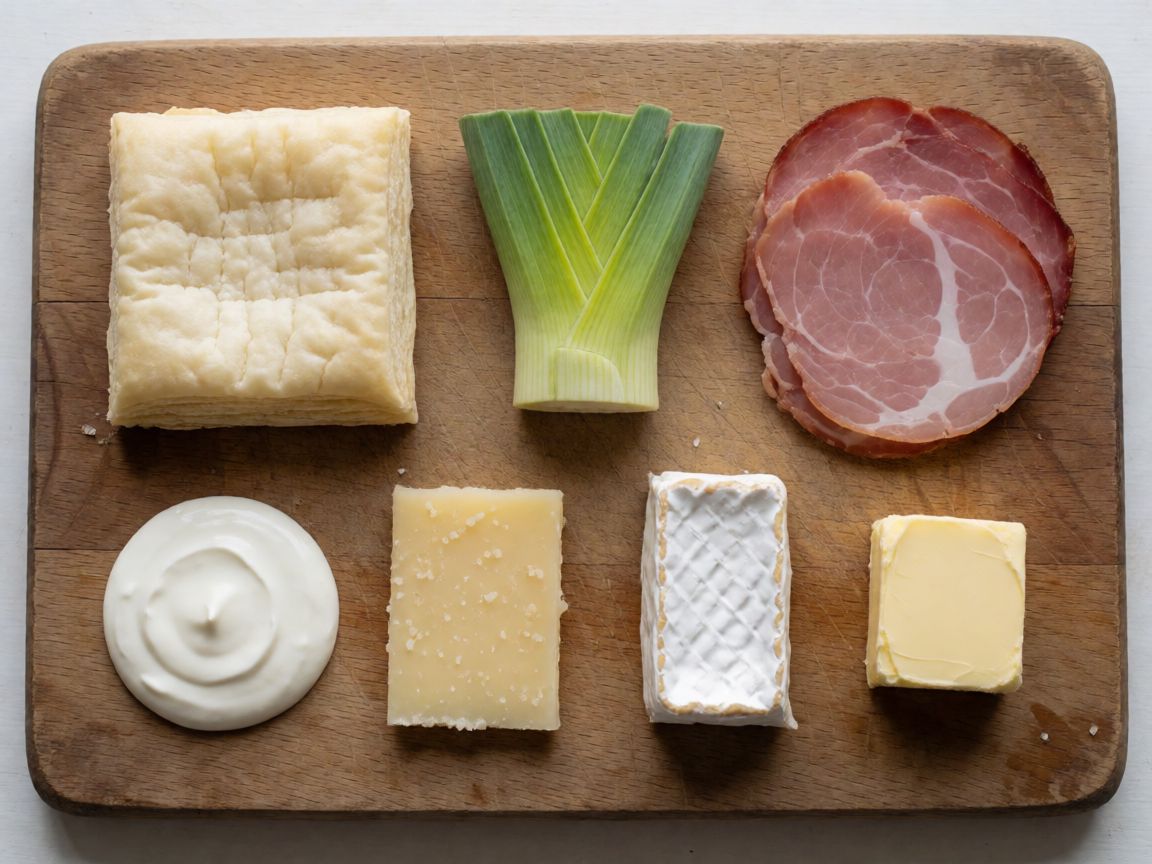
- 1 pcs Ready-rolled puff pastry
- 2 pcs Leek
- 1 pcs Smoked ham
- 50 ml Double cream
- Parmesan to taste
- Brie to taste
- 1 pcs Butter
- Salt to taste
- Black pepper to taste








Steps
Wash and thinly slice the leeks into rings, then cut the ham into cubes.
Melt the butter in a frying pan and fry the ham for a few minutes.
Add the leeks, season with salt and black pepper, and simmer, stirring occasionally.
10 minAt the end of cooking, pour in the cream, stir in the parmesan, and mix everything together.
Unroll the pastry along with its baking paper and use it to line a pie dish.
Spread the filling over the pastry, then arrange thin slices of brie on top.
Bake in a preheated oven at 180°C.
20 min
This is a free-form pie: a case of ready-rolled puff pastry holding a mixture of leek and ham, bound with cream and cheese, baked until the top blisters and the base crisps. What decides whether it works has nothing to do with the oven and everything to do with what happens in the frying pan before the pastry ever sees heat.
Leeks are not onions and don't want onion treatment. An onion you push toward colour — leek you let collapse. It holds far more water in its layers, and if you try to brown it the way you'd brown an onion, the edges catch and go bitter while the inside stays raw and fibrous. So you simmer it gently with the ham already in the pan, stirring, until it bends soft and loses its sharp green bite — that's the cue, not a clock. Ten minutes is the floor, not the target.
The cream and parmesan go in at the end, after the leek has given up its water in the pan, not before. Add cream too early and you're boiling leeks in a thin sauce instead of letting them soften in fat and their own moisture — the filling stays watery, and a watery filling under raw pastry means a soggy base, no matter how hot the oven. The whole point of cooking the filling down first is to arrive at the pastry stage with something closer to a thick ragout than a soup.
Leek: buy it firm, white shaft tight, not splayed and yellowing at the top — that looseness means it's old and the inner layers have gone woody. Slice it thin into rings for one reason: surface area. Thin rings give up their water fast and evenly, so they soften before the ham underneath starts to dry out. No leek in the house, use the white part of a bunch of spring onions, more of them, same gentle treatment — the sugars are different but the softening mechanism is the same.
Ham: smoked ham, cubed, goes in before the leek because it needs the few minutes in butter to render a little fat and build a base flavour the leek can then absorb while it stews. This is also, quietly, an economics point — a pie like this exists because someone had ham left from a Sunday roast and a couple of leeks going soft in the drawer, and didn't want to waste either. If you've no ham, bacon lardons do the same job, maybe with more fat to render off first; a vegetarian version just loses the smoke and needs a pinch more salt to compensate.
Butter, not oil, for the frying: butter has milk solids in it that brown and smell nutty as they heat, and that smell goes straight into the ham and leek. Oil with no smell of its own won't give you that — use it only if you're out of butter and accept the dish will taste a shade flatter.
Double cream is there to bind, not to drown — look for anything with fat high enough that it won't split when it hits hot fat and hot cheese, which in practice means a cream labelled for cooking rather than for pouring over fruit. Parmesan goes into that cream, grated fine, for salt and for body — its aged, low-moisture proteins help the sauce thicken rather than stay runny. Brie goes on top, whole or in slices, not stirred in, because brie's job is different: high moisture, soft rind, it wants to melt into a pool on the surface, not disappear into the mixture. Keep them separate and you get two textures — a thick, savoury base and a molten cap — rather than one muddled cheese sauce.
The pastry: ready-rolled puff is bought lamination — someone else did the hour of folding and resting that traditional puff pastry demands, which is exactly what you're paying for when you buy it instead of making it. Handle it by its own baking paper, not your hands, because warm fingers melt the thin butter layers between the folds before they ever reach the oven, and melted butter means no layers, no rise — just a flat, greasy sheet. The paper isn't packaging convenience; it's there so your body heat never touches the one thing that makes puff pastry puff.
Last thing, and it's not an ingredient you can buy: patience in the frying pan. Rush the leek and you get a filling that's part raw, part cream soup, under a pastry that was never going to crisp anyway. Give it the time to go soft and sweet, and the oven's job gets much easier.