
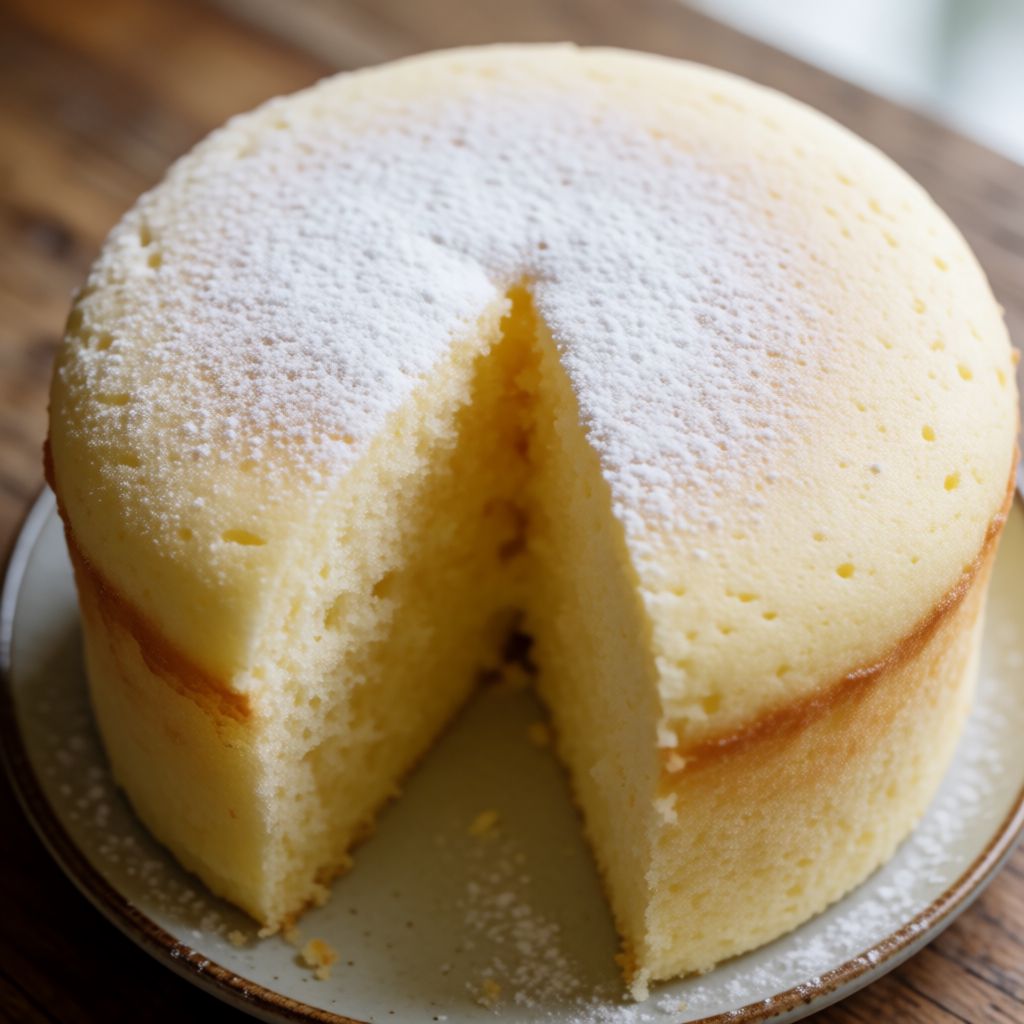
 AI photo
Lemon Cake Without Butter
A light, butter-free lemon cake made with oil, eggs and fresh lemon zest and juice.
Labels are worked out automatically from the ingredients and can be wrong. Check the packaging if it matters to you.
Ingredients
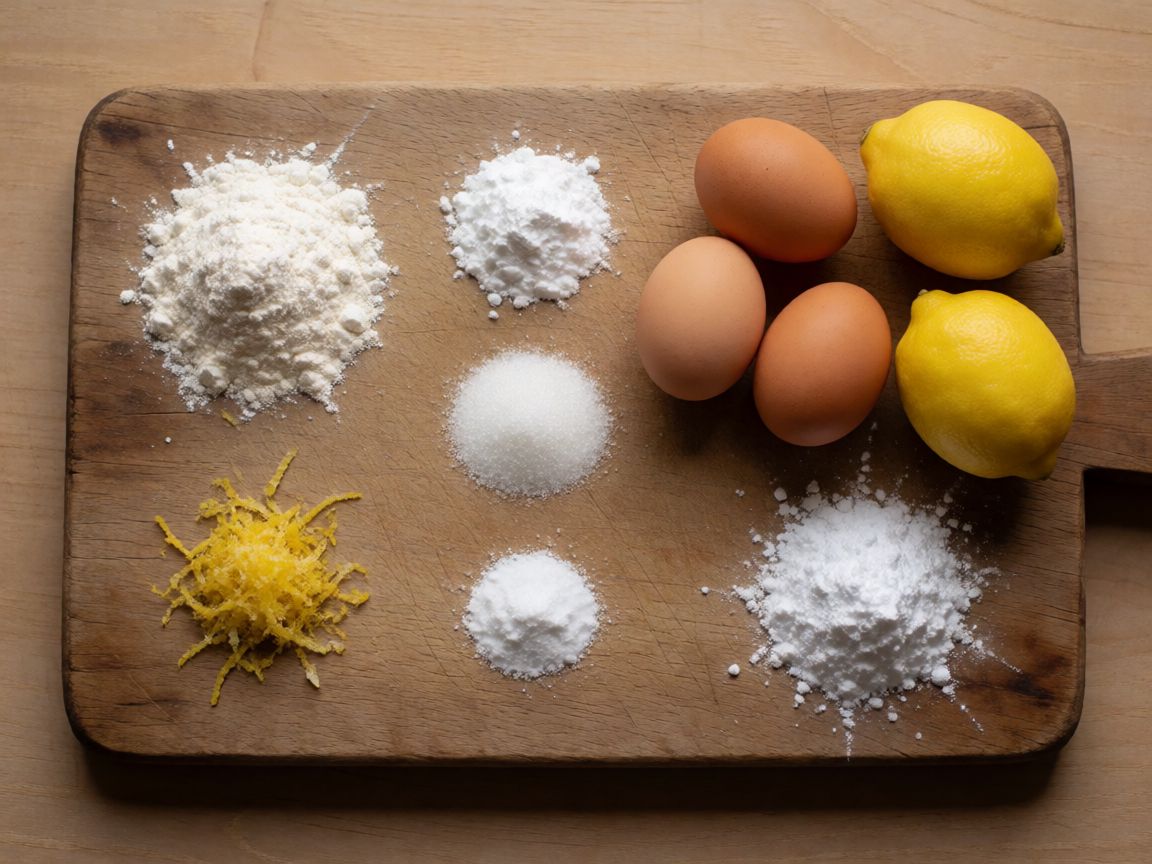
- 150 g Plain flour
- 100 g Potato starch
- 200 g Sugar
- 100 ml Vegetable oil
- 100 ml Water
- 3 pcs Eggs
- 2 pcs Lemon
- Lemon zest from 2 lemons
- 16 g Baking powder
- Icing sugar to taste









Steps
Preheat the oven to 160°C.
In a bowl, combine the eggs and sugar and whisk with a mixer until light and foamy.
Add the oil, water, lemon juice and grated lemon zest, continuing to whisk with the mixer until smooth.
Gradually add the sifted flour, potato starch and baking powder, mixing thoroughly until smooth.
Pour the batter into a 20–22 cm tin, greased with oil and dusted with flour, and smooth the surface.
Bake at 160°C for 40 minutes.
40 minCheck with a wooden skewer for doneness, then turn off the oven.
Remove the cake from the oven and let it cool completely.
Dust with icing sugar and serve.
This is a sponge, not a butter cake — and that's the whole trick of it. No butter means no creaming, no fight to get air into a solid fat, no waiting for anything to come to room temperature on a cold British countertop. The air here comes from eggs and sugar whisked until the mixture turns pale and holds a ribbon off the beater — that's your structure, built mechanically, before flour ever enters the bowl.
What decides whether it rises properly isn't the oven, it's that whisking stage. Eggs and sugar beaten long enough trap thousands of tiny bubbles in a sugar syrup skin; those bubbles are what the baking powder later inflates. Skip ahead too soon and you get a flat, dense disc that tastes fine but sits in the stomach like a stone. Some say a cake needs butter to be rich — no, because richness here comes from oil, which never sets hard and never dries the crumb the way butter can if you misjudge the bake.
The potato starch matters more than it looks like it should. Mixed half-and-half with flour, it cuts the gluten development right down, so the crumb stays tender and slightly short rather than chewy. If you only had flour, the cake would be sturdier, more bread-like — fine, but not this.
Lemon does two jobs, not one: juice for acidity and moisture, zest for the oils that actually carry the smell. The zest is where the real lemon flavour lives — the juice alone gives you sourness but almost no scent, since the fragrant oils sit in the skin, not the flesh.
Flour and potato starch together make the "neutral" base — flour for a little backbone, starch for softness. If you've only got cornflour in the cupboard, it works the same way: both are pure starches with no gluten of their own, so they dilute the flour's grip. Don't swap the ratio the other way though — too much starch and the cake loses the structure to hold itself up, and you get something closer to a wet biscuit than a sponge.
Sugar isn't just sweetness — in the egg-whisking stage it's doing mechanical work, stabilising the foam the way scaffolding holds up wet plaster before it sets. Reduce it a lot and the foam collapses faster than the oven can set it. If you want less sweet, take it from the icing sugar on top, not from the batter.
Vegetable oil wants no flavour of its own — sunflower, rapeseed, anything neutral. Olive oil will fight the lemon rather than support it, so leave that for savoury things. Oil liquid at room temperature is exactly why this cake stays moist a day later, when a butter sponge would already be drying at the edges: butter re-solidifies as it cools and tightens the crumb, oil just sits there, soft.
Eggs at room temperature whip to a bigger, steadier foam than cold eggs straight from the fridge — cold egg white is stiffer and holds less air. If your kitchen's chilly, which in a British winter it usually is, give them twenty minutes out before you start, or stand the bowl briefly over warm water while whisking.
Baking powder here is doing less work than you'd think — it's a second lift, finishing what the egg foam started, not carrying the whole rise alone. That's why 16 g for this volume of flour isn't excessive; most of the lightness is already built in before the powder even gets wet.
On checking doneness: "40 minutes" is a floor, not a verdict. Ovens lie, especially small domestic ones that cycle on and off rather than holding a steady 160°C. The skewer test is the real answer — push it into the centre, and if it comes out dry, you're done; wet batter clinging to it means back in it goes. Turning the oven off and leaving the cake inside for a moment afterwards lets it finish gently rather than getting a thermal shock pulling it straight into a cold kitchen, which is what causes that sunken middle people blame on "bad flour" when it's really temperature shock.
Let it cool fully before dusting with icing sugar — put sugar on a warm cake and it just melts into a damp patch, no white at all. This isn't a cake that needs a stand mixer or a kazan-sized tin; a standard 20–22 cm springform from any UK supermarket baking aisle does the job, and it serves six generously alongside the tea you'd have with it anyway.