
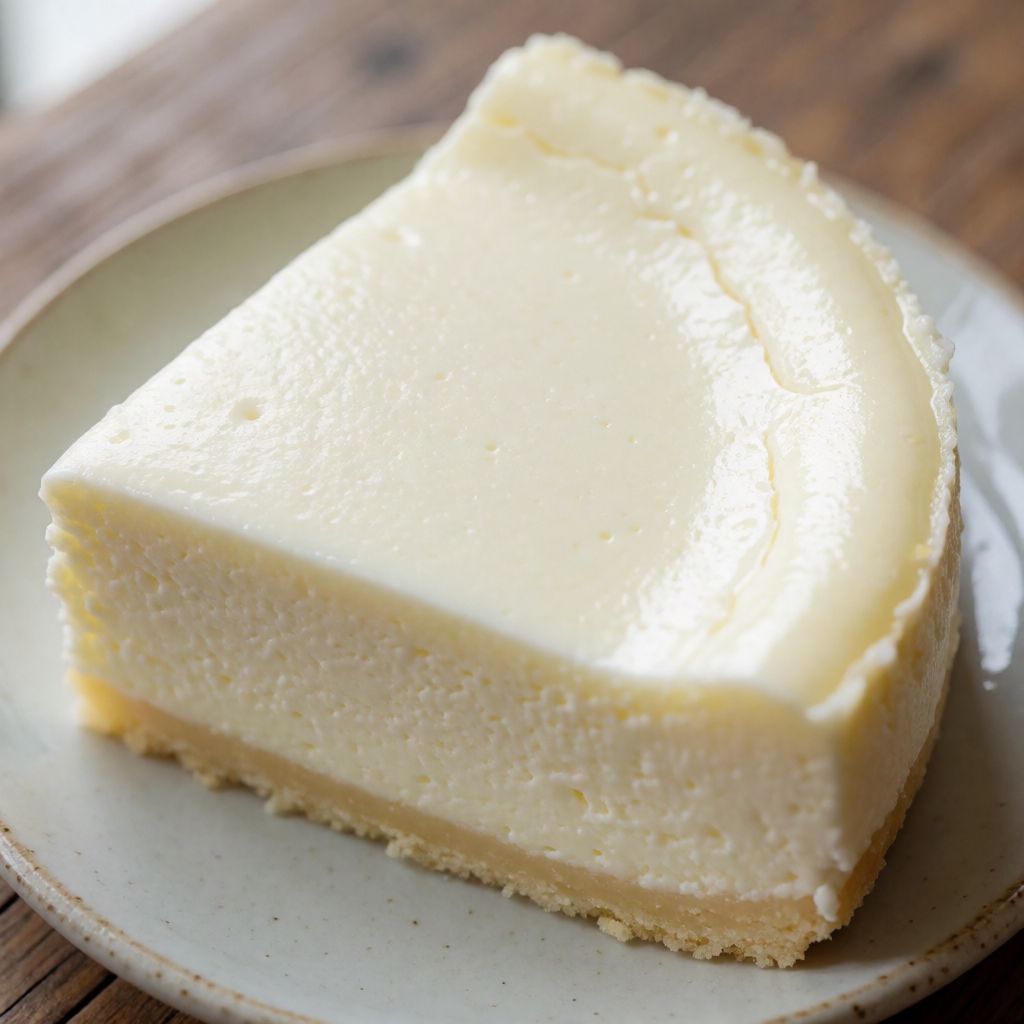
 AI photo
Lemon Cheesecake (No Gelatine)
A no-bake lemon cheesecake with a biscuit base, creamy lemon filling and a glossy lemon topping.
Labels are worked out automatically from the ingredients and can be wrong. Check the packaging if it matters to you.
Ingredients
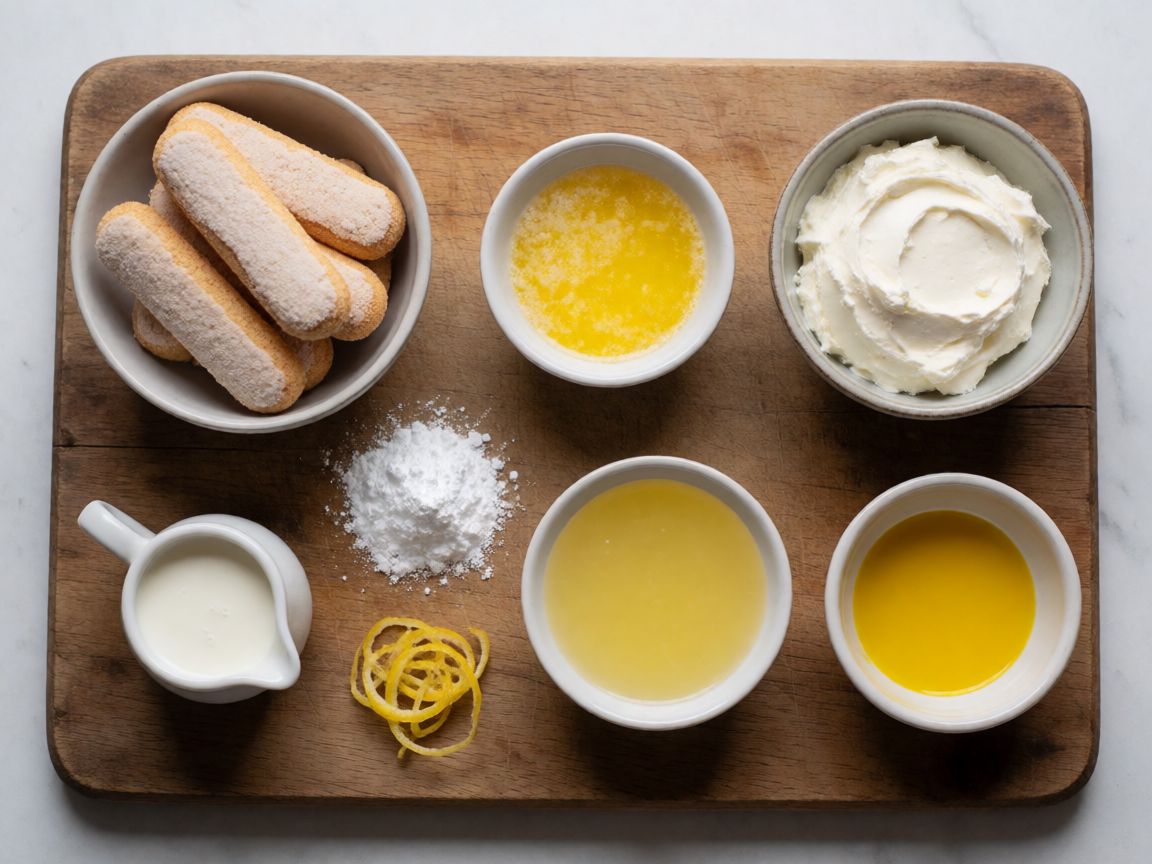
- 200 g sponge finger biscuits
- 100 g butter melted
- 500 g cream cheese
- 250 g double cream
- 120 g icing sugar
- 2 tbsp lemon juice
- 1 pcs lemon zest
- food colouring yellow, to taste, optional
- 200 ml water
- 50 g cornflour
- 75 ml lemon juice
- 60 g icing sugar










Steps
Crush the biscuits and mix with the melted butter, stirring thoroughly until smooth, then press into a 22 cm tin lined with baking paper.
Press the base down firmly, smoothing it with a spoon, and chill in the fridge for 30 minutes.
30 minIn a bowl, beat the cream cheese with the lemon zest and lemon juice.
Whip the double cream with the icing sugar and gently fold it into the cheese mixture.
Spread the filling over the biscuit base and smooth the surface.
Chill in the fridge for at least 2 hours.
120 minMake the topping: dissolve the cornflour and icing sugar in the water.
Pour the mixture into a saucepan, add the lemon juice and, if liked, yellow food colouring.
Cook for a few minutes over low heat until the topping thickens.
Let the topping cool completely, take the cake out of the fridge and pour the topping over the top.
Chill in the fridge to set for at least 4 hours.
240 min
This is a no-bake cheesecake, which means two things decide whether it works: the base holding together without an oven's help, and the lemon curd-like topping staying put without gelatine. Everything else is just assembly.
Some say a cheesecake needs the oven to "set" — no, because this one sets by cold and by starch, not by heat and egg. The filling firms up because chilled cream cheese and whipped double cream stiffen together in the fridge; the topping firms up because cornflour, cooked briefly, turns a thin lemon liquid into a glaze that holds a shape. Two different mechanisms, two different jobs.
The biscuit base is really just butter doing structural work. Melted butter coats the crushed biscuit crumbs, and as it cools in the fridge it goes solid again — that's the only thing gluing your base together. Press it too loosely and it will crumble under the first slice; press it too hard and you get a layer closer to shortbread than crumble, which isn't a fault, just a different bite. Either way, the point of the 30 minutes in the fridge isn't "biscuit o'clock" — it's "has the butter re-solidified yet", and you can feel that by touch: firm and cold, not greasy under your finger.
The topping is where people get nervous without gelatine, and rightly so if they skip the cornflour step. Cornflour (cornstarch, if that's the word on your packet) swells and thickens only when heated in liquid — below a certain warmth it just sits there, grainy and useless, dissolved but not activated. That's why it goes into a saucepan over gentle heat rather than being stirred in cold: you're not just mixing, you're cooking the starch until it swells and the liquid turns glassy and coats the back of a spoon instead of running off it. Low heat matters here for a real reason, not ritual — cornflour thickens fine without a hard boil, and pushing it too hot too fast risks catching and scorching before it's evenly thickened, which you'd taste as a faint burnt note under all that lemon.
Cream cheese: go for the full-fat block type, the kind sold specifically as a spreadable cheese rather than a soft cheese labelled "light" — the lower-fat versions carry more water, and water is exactly what you don't want loosening a filling that has no gelatine to catch it. Double cream, likewise, is doing a job: it's the cream with enough fat (around 48%) to whip stiff and hold that stiffness under the weight of the cheese. Single cream won't whip properly at all; it hasn't the fat for it.
Lemon juice and zest are split between the filling and the topping for a reason beyond flavour layering — the filling gets a little juice plus the zest, which gives aroma without much extra liquid; the topping gets a much bigger hit of juice (75 ml) because that's where the sharp, properly lemon flavour needs to sit, and the cornflour is there precisely to tame that extra liquid back into a set layer. If you're using bottled lemon juice instead of fresh, that's fine for acidity, but you lose the zest's oils unless you still zest a real lemon — the zest is where the actual lemon smell lives, not the juice.
The food colouring is pure theatre, nothing more. Skip it and the topping will be a pale, slightly cloudy yellow from the lemon juice and cornflour itself — perfectly honest, just less "lemon-advert yellow". No mechanism lost either way.
Icing sugar rather than caster sugar in both the filling and topping isn't fussiness — icing sugar dissolves without any grit, which matters when there's no baking afterwards to melt sugar crystals away. Caster sugar in a no-cook filling can leave a faint sandiness you'd notice on the tongue; icing sugar won't.
Patience is the real ingredient holding this whole cake up, more than any item on the list. Thirty minutes for the base to firm, two hours for the filling to set enough to take a topping without it sinking in, four hours — ideally overnight — for everything to finish setting properly before you cut it. Rush any of those stages and you're not getting a lesser cheesecake, you're getting a bowl of flavoured mush with biscuit at the bottom. The fridge is doing the work an oven would do in a baked version; just give it the hours it needs, the same way you'd give a Sunday roast its rest before carving.