
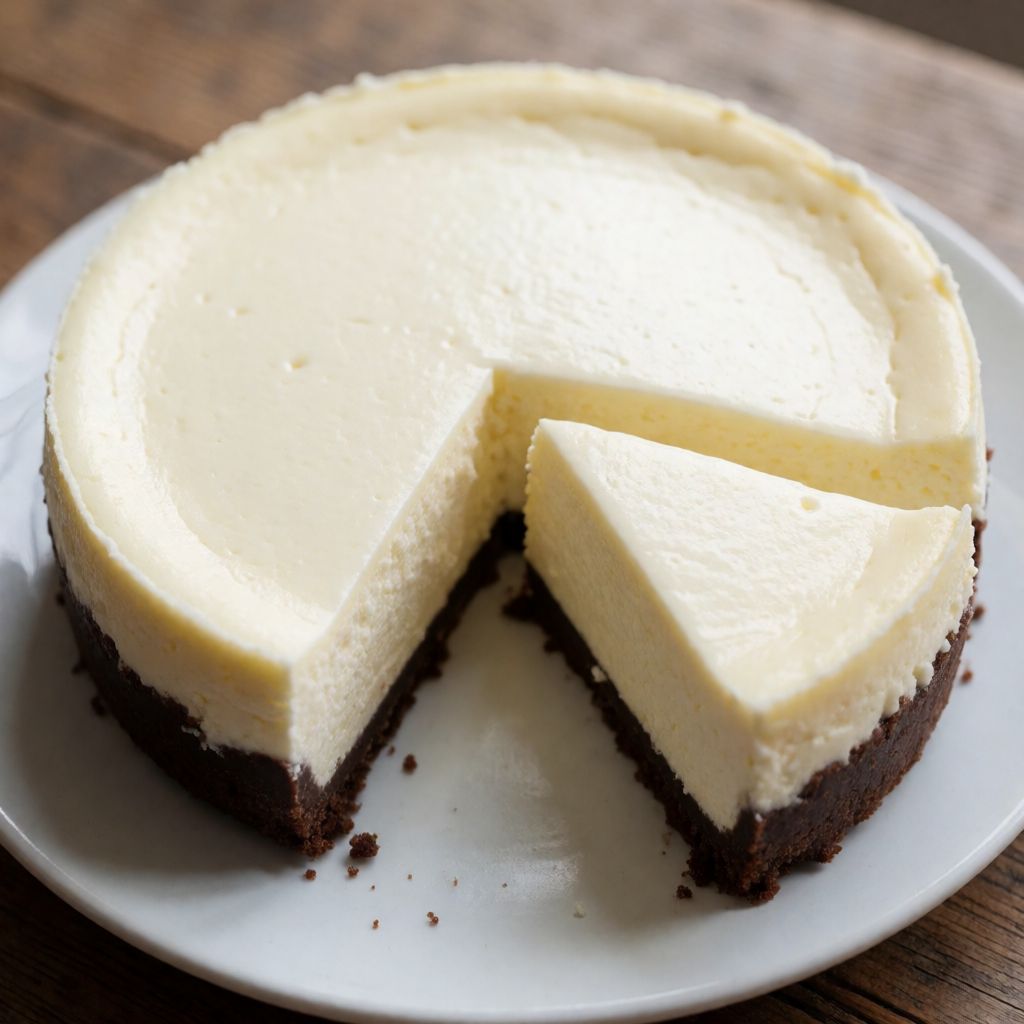
 AI photo
Cold Lemon and Chocolate Cheesecake
A no-bake chilled lemon and chocolate cheesecake with a crunchy biscuit base and a tangy lemon glaze.
Labels are worked out automatically from the ingredients and can be wrong. Check the packaging if it matters to you.
Ingredients
- 300 g chocolate biscuits
- 150 g butter
- 500 g ricotta
- 150 g Greek yogurt
- 400 ml double cream
- 100 ml milk
- 5 g gelatine leaf
- 210 g sugar
- 2 pcs lemon zest
- 300 ml water
- 30 ml lemon juice
- 30 g potato starch
- food colouring yellow, to taste
- dark chocolate to taste
- lemon for decoration












Steps
Cut the biscuits into pieces, blitz in a blender into fine crumbs and transfer to a bowl.
Melt the butter in a bain-marie or in the microwave, combine with the biscuit crumbs and mix well.
Line a springform tin with baking parchment, press in the biscuit and butter mixture and firm up the base.
Put the tin in the fridge to set.
30 minBeat the ricotta with the Greek yogurt, add the sugar and lemon zest and mix well.
Soak the leaf gelatine in cold water.
10 minWarm the milk, add the well-squeezed gelatine, stir until dissolved and combine with the cheese mixture.
Whip the double cream to soft peaks and gently fold it into the cream mixture.
Spread the lemon cream over the prepared base, smooth the surface and cover with cling film.
Put the cake in the fridge to set.
120 minMix the potato starch, sugar and lemon zest, then add the lemon juice and water.
Cook the mixture over heat until it begins to thicken.
Add the food colouring, mix and pour the glaze over the cake, smoothing it with a palette knife.
Put the cake in the fridge to set.
120 minDecorate the cake with lemon slices and dark chocolate shavings.
A no-bake cheesecake stands or falls on the fridge, not the oven. You're building three layers — a biscuit base that has to hold its shape when you cut it, a lemon-ricotta mousse that sets on gelatine and whipped cream rather than egg and heat, and a lemon glaze that sits on top like a thin skin of stained glass. No flame touches the filling. The only cooking here is melting butter and warming milk, both just to get things liquid enough to mix — not to transform anything. Everything else is chemistry and patience: gelatine locking water in place, whipped cream holding air, cold holding both of those in position until you cut it.
Where it goes wrong is almost always rushed cold time. People see "fridge" and think it's dead time, something to skip past. It isn't — it's the only step actually doing the work. Three hours total minimum here, and that's a floor, not a target. Cut it early and the lemon layer slumps rather than slices; cut the glaze stage early and it runs off the sides instead of sitting as a glassy cap. The cling film over the filling before it chills isn't fussy kitchen theatre either — it stops the surface skinning and taking on fridge smells, which a cheesecake, full of dairy, picks up fast.
The base is simplest to get wrong through enthusiasm. Blitz the biscuits too far into dust and they'll compact into something closer to concrete once the butter binds them — fine texturally, but hard to cut cleanly through with a cold knife. Leave bits too big and the base crumbles when you lift a slice. You want crumb, not powder, not gravel. Any plain, dry biscuit with a bit of sugar in it works — digestives, shortbread, graham crackers if you're elsewhere — the chocolate ones here are for colour and bitterness against the lemon, not for any structural reason, so swap freely as long as the biscuit is dry enough to absorb butter rather than go soggy with it.
Ricotta and Greek yogurt together are doing a job neither does alone. Ricotta gives body without being as dense or tangy as cream cheese; yogurt loosens it and adds the sourness that a plain ricotta cheesecake can lack. If you can only get one, lean yogurt-only toward thick Greek yogurt strained further through muslin overnight — regular ricotta on its own is fine, just expect a slightly less sharp finish, which you can correct with a touch more lemon juice.
Gelatine is the skeleton of the whole lemon layer, and leaf gelatine specifically because it dissolves cleanly without the grainy aftertaste powdered gelatine can leave if not fully hydrated first. Soaking it in cold water before use isn't optional theatre — cold water lets it absorb slowly and evenly; drop it straight into something warm and the outside melts before the inside's had a chance to soften, and you get lumps that never fully dissolve, which show up later as little jelly specks in your cream. Squeeze it properly before adding to the milk too — carry over too much water and you dilute your setting power, and the cheesecake stays softer than it should past its three hours.
Whipping the double cream only to soft peaks matters more than it sounds. Whip stiff and fold it in, and you knock the air back out while mixing, losing the lightness that's the whole point of this layer over a dense baked cheesecake. Soft peaks still move and fold easily into the cheese mixture without deflating. Double cream specifically because it has enough fat to hold air when whipped — single cream won't whip at all, and anything lower-fat than double risks collapsing once gelatine and gravity get to work overnight.
The glaze is a cornflour-style thickened syrup — potato starch here does the same job cornstarch does, thickening on heat without the chalky taste raw flour would leave. Watch it on the hob rather than timing it: it goes from thin and runny to visibly coating the back of a spoon, and that visual change is your cue, not a clock. Pour it too hot and it'll melt into the lemon layer underneath rather than sitting as a separate cap; let it cool a little after thickening before it goes on. The food colouring is only there because the glaze on its own, lemon juice and starch, comes out fairly pale and translucent — skip it entirely and you lose nothing but the postcard-yellow shine, the flavour's unaffected.
Decoration last, and genuinely last — chocolate shavings and lemon slices go soft and sad sitting on a warm cake, so they only go on once the glaze has had its full chill and everything underneath is properly, finally, set.