
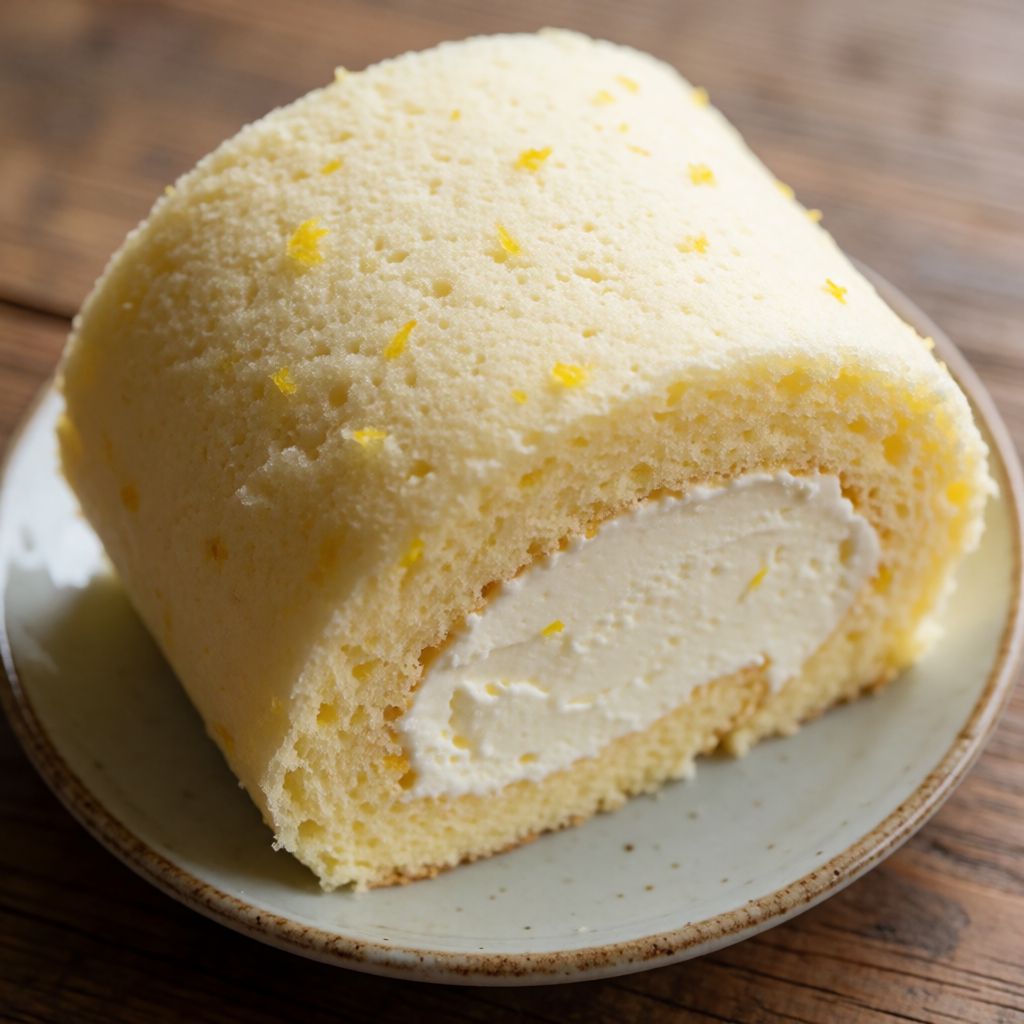
 AI photo
Lemon Sponge Roll with Mascarpone Cream
A light lemon sponge roll filled with a smooth mascarpone cream.
Labels are worked out automatically from the ingredients and can be wrong. Check the packaging if it matters to you.
Ingredients
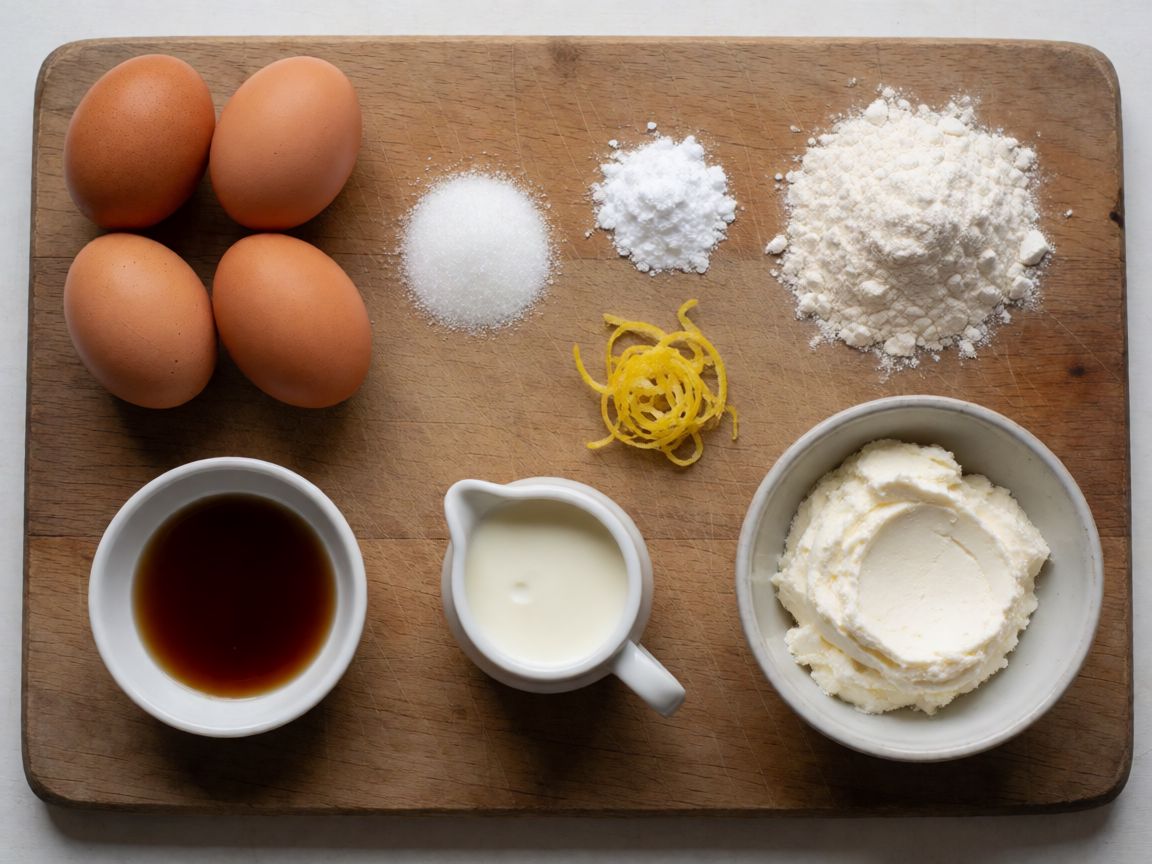
- 4 pcs Eggs
- 130 g Caster sugar
- 8 g Baking powder
- 100 g Plain flour
- 1 tsp Vanilla extract
- 1 pcs Lemon zest from a well-washed lemon
- 200 ml Double cream
- 250 g Mascarpone
- 100 g Icing sugar
- 50 g Lemon juice
- 1 pcs Lemon zest from a second lemon










Steps
Break the eggs into a bowl and add the sugar. Whisk with an electric mixer until pale, light and fluffy.
Add the vanilla extract and the zest of a well-washed lemon.
Sift and fold in the flour and baking powder in batches, mixing gently with a spatula.
Line a baking tray with baking paper and pour the batter in an even layer.
Bake in a preheated fan oven at 180°C for 10 minutes.
10 minRemove the sponge, cover with baking paper and leave to cool completely.
Make the cream: pour the cream into a bowl, add the mascarpone and icing sugar, and whisk.
Pour in the lemon juice and grate in the zest of the second lemon, folding gently.
Peel the paper off the sponge, trim the edges, spread the cream over it and roll up the sponge.
Wrap tightly and chill in the fridge for about 4 hours.
240 minBefore serving, dust with icing sugar if you like.
A sponge roll is a whipped-egg cake, not a risen one. There's barely any flour, no butter, and the baking powder is there to help, not to carry the whole job — the real lift comes from the air you beat into those eggs and sugar. Whisk until the mixture is pale and thick enough to leave a ribbon trail when you lift the beater; that ribbon is your sign the eggs have taken in as much air as they're going to. Skip that stage and no amount of baking powder will save a flat, leathery sheet that cracks the moment you try to roll it.
This is a thin cake baked fast and hot — 180°C, ten minutes — precisely because it needs to set before the air bubbles collapse, and because a thin layer dries out if you give it longer. Ten minutes is a lower bound here, not a deadline: you're watching for a sponge that springs back when you press it lightly and pulls away clean from the paper, not watching the clock. Ovens lie about their own temperature by 10–15 degrees routinely, so the first time you make this, start checking a minute or two early.
The roll only works if the sponge is still flexible when you shape it — which is why it's covered and cooled flat, not rolled warm and then filled. Some say you must roll it warm around paper to "train" the shape before filling, the way a Swiss roll sometimes is — no, because a sponge this thin and eggy doesn't need training, it just needs to not be hot, since heat would melt the mascarpone cream straight into it. Cool completely, then fill, then roll once.
Eggs are the engine of this cake, so use them at room temperature if you can — cold eggs trap air more slowly and your arm will tire before the mixture pales properly. If you've only got a handheld whisk and no machine, this is where patience is the actual ingredient: you need several solid minutes of whisking, not a token thirty seconds, because volume here is built, not assumed.
Caster sugar dissolves into the egg foam far faster than granulated because the crystals are smaller — that speed matters, since undissolved sugar sitting gritty in the batter is a sign the eggs were beaten too briefly to carry it. If caster sugar isn't in your cupboard, granulated will do, but expect to whisk longer.
Baking powder is a safety net, not the main lift — it's there to nudge a slightly underwhipped batter along, correcting for human error rather than doing the heavy lifting itself. Fold the flour and baking powder in gently, in batches, with a spatula and not the mixer: beating at this stage knocks the air straight back out of eggs that took real effort to get in.
Lemon zest wants only the oily yellow skin, not the white pith underneath, because pith is where the bitterness lives — a fine grater or a zester taken in light passes keeps you out of it. "Well-washed" matters for a reason beyond hygiene: most lemons sold loose carry a thin wax coating to stop them drying out in transit, and that wax sits exactly where your zester is about to scrape.
The cream and mascarpone mixture is forgiving on substitution as long as you understand what you're asking of it: you need something that whips to a stable, spreadable body and something rich and barely-sweet to anchor the lemon. Double cream is the right fat content for whipping into structure; single cream won't thicken enough, so don't reach for it here. If mascarpone isn't to hand, a full-fat cream cheese beaten smooth gets you close, though it carries a sharper tang that will fight the lemon rather than sit behind it.
Icing sugar rather than caster in the filling isn't fussiness — caster sugar's coarser crystals stay slightly grainy in a cold, unheated mixture, where icing sugar's fine powder simply dissolves into the fat. Lemon juice should be fresh-squeezed if you can manage it; bottled juice carries a flatter, sometimes metallic note that a dish this simple, with so few ingredients to hide behind, will show up immediately.
The four-hour chill at the end is doing real structural work, not just chilling the cake for serving: it gives the cream time to firm back up after the rolling disturbed it, and lets the sponge relax into its curled shape so it holds when you slice it. Cut it cold and clean with a sharp, non-serrated knife — a serrated edge drags through soft cream and tears the sponge rather than slicing it, which is the usual reason a neat roll turns into a collapsed one on the plate.