
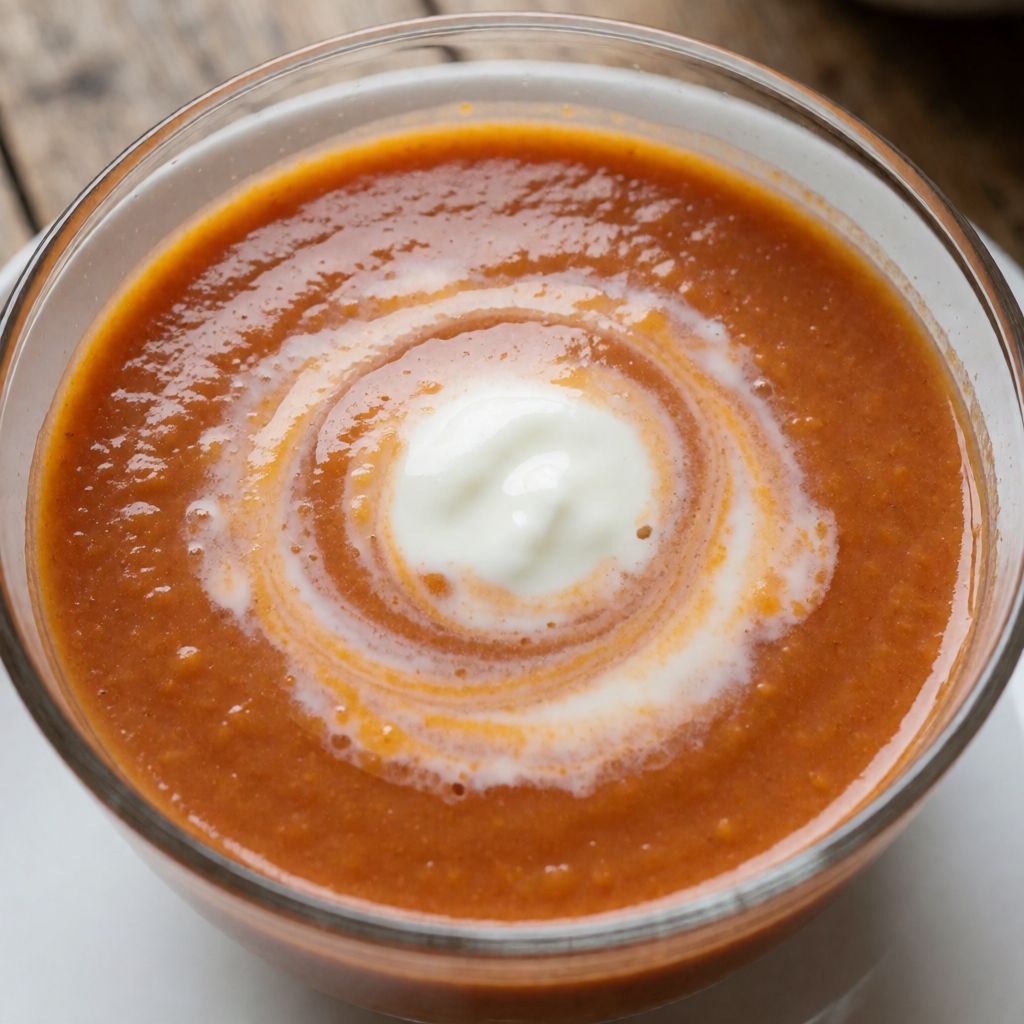
 AI photo
Chilled Red Lentil and Pepper Soup
A chilled lentil and yellow pepper soup, finished with yoghurt — light, fresh and gently spiced.
Labels are worked out automatically from the ingredients and can be wrong. Check the packaging if it matters to you.
Ingredients
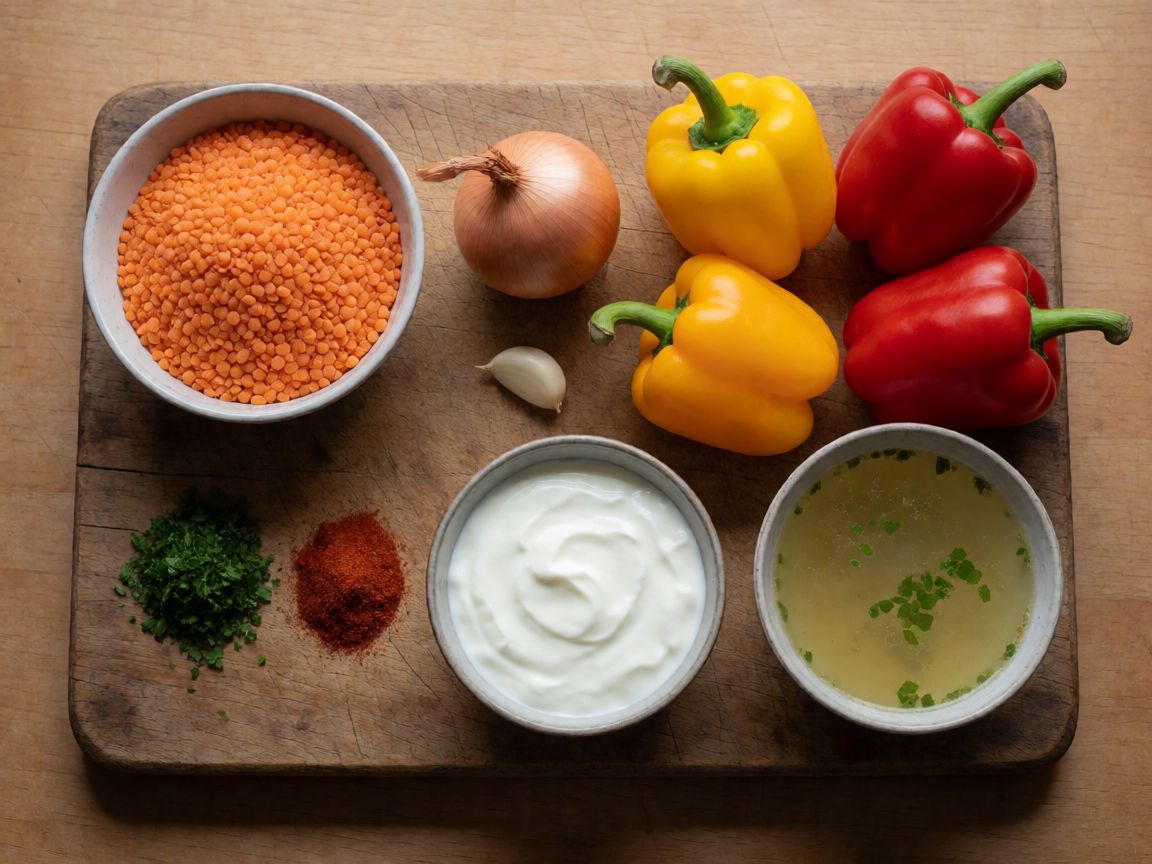
- 200 g Red Lentils
- 1 pcs Onion
- 1 clove Garlic
- 3 tbsp Olive Oil
- 3 pcs Yellow Bell Pepper
- 100 ml Yoghurt
- 1 l Vegetable Stock
- 1 bunch Parsley
- 1 tsp Paprika
- Cumin to taste
- Salt to taste
- Black Pepper to taste












Steps
Wash the yellow bell peppers, halve them, remove the white membranes and seeds, and dice finely.
Peel the onion, chop it finely and fry in olive oil until golden.
Add the crushed garlic, paprika and cumin.
Add the peppers and fry over high heat.
10 minRinse the red lentils and add them to the peppers.
Pour in the vegetable stock, cover and cook over low heat.
15 minBlend a third of the soup with a hand blender until creamy.
Ladle the soup into bowls, let it cool, season with salt and black pepper, and finish with yoghurt.
Red lentils cook down into a soup that doesn't need egg, flour or a roux to feel body in the spoon. That's the whole trick of lentils — no soaking, no skin to split, and once they're soft they fall apart into a natural thickener. What decides whether this works isn't a timer, it's whether the lentils have actually collapsed: bite one, if it's still got a bit of a bean-shape and a faint resistance in the middle, it's not done, give it longer.
Served cold, this is really a soup built backwards from how it's normally made. Most lentil soups are a winter thing, eaten hot the day they're cooked, because lentils thicken as they cool and you want that thickness working for you, not against you. Here you let it cool on purpose, so the starch sets properly — a soup that's merely lukewarm tastes thin and unfinished, because the body hasn't had time to come together. Chilled isn't a style choice here, it's a stage the texture needs to pass through.
The onion-garlic-pepper base fried before the lentils go in is doing a specific job: it's building sweetness and a bit of smoke-adjacent flavour from paprika before the stock arrives and mutes everything with liquid. Fry it dry, in fat, no stock yet — that's the only window you get for any caramelised flavour at all. Once the stock's in, everything just simmers, nothing browns any further.
Start with the lentils themselves. Red lentils, split and husked, are chosen over brown or green ones because they have no outer skin left to hold them together — that's precisely why they disintegrate into a thickener instead of staying as whole beads in the bowl. If you only have green or brown lentils, you can still make this soup, but you'll need to cook them longer and probably finish with a harder blend, because they keep their shape stubbornly and won't collapse on their own the way red lentils do.
The yellow pepper isn't just colour. Diced small and fried hard before the lentils arrive, it gives sweetness that a long-simmered soup otherwise loses — peppers softened slowly in liquid turn bland, but seared briefly in oil first, they hold a trace of their own sugar through the whole cook. Any sweet pepper will do here; red works, it just shifts the colour toward orange-red rather than the warm yellow-gold you'd expect. What you don't want is green bell pepper — it's unripe, and it brings bitterness the dish has no room for.
Paprika and cumin are the only spices doing real work, and they go in with the garlic, into the fat, before any liquid — that's the only moment spices actually bloom in oil rather than just dissolving flat into stock. Skip this step and add them later and you'll taste them, technically, but as dust stirred into water rather than as flavour that's been cooked into the base.
Olive oil here is simply "an oil with no strong flavour of its own that can take a hot pan" — olive oil works, a flavourless vegetable or sunflower oil works too. What you'd lose with a very grassy, peppery extra-virgin is a fight with the paprika and cumin; save the good stuff for drizzling at the table if you want it, not for frying the onion.
Vegetable stock is the liquid that carries all of this — a cube-and-water stock is entirely fine, this isn't a soup where stock quality is the star, the lentils and spices are. Yoghurt stirred in at the end, off the heat, after the soup's cooled: that's for the tang and the cooling sensation on the tongue, which is rather the point of serving this cold in the first place. A thick Greek-style or any plain unsweetened yoghurt works; thin, watery yoghurt will just sink and separate instead of swirling through properly.
In a British kitchen this is an easy soup to misjudge on the pan — "low heat" for the lentil simmer means low enough that the surface barely breaks a bubble, not a hob setting. On most electric or gas rings at home, that's lower than you'll instinctively dial to, because a slightly-too-high simmer scorches the lentils at the bottom of the pan before the top layer's even softened — you'll know it's happened by a faint catch of burnt smell and dark flecks when you stir. A domestic hob runs hotter and less evenly than it feels, so check the bottom with a spoon now and then rather than trusting the dial.
This feeds four as a starter, more like two to three as a full lunch on its own — lentils are filling in a way peppers and stock alone never would be. And give it the time to actually chill through in the fridge rather than just going cool on the counter; patience here isn't optional decoration, it's the difference between a soup that tastes "finished" and one that tastes like it's still warming up.