
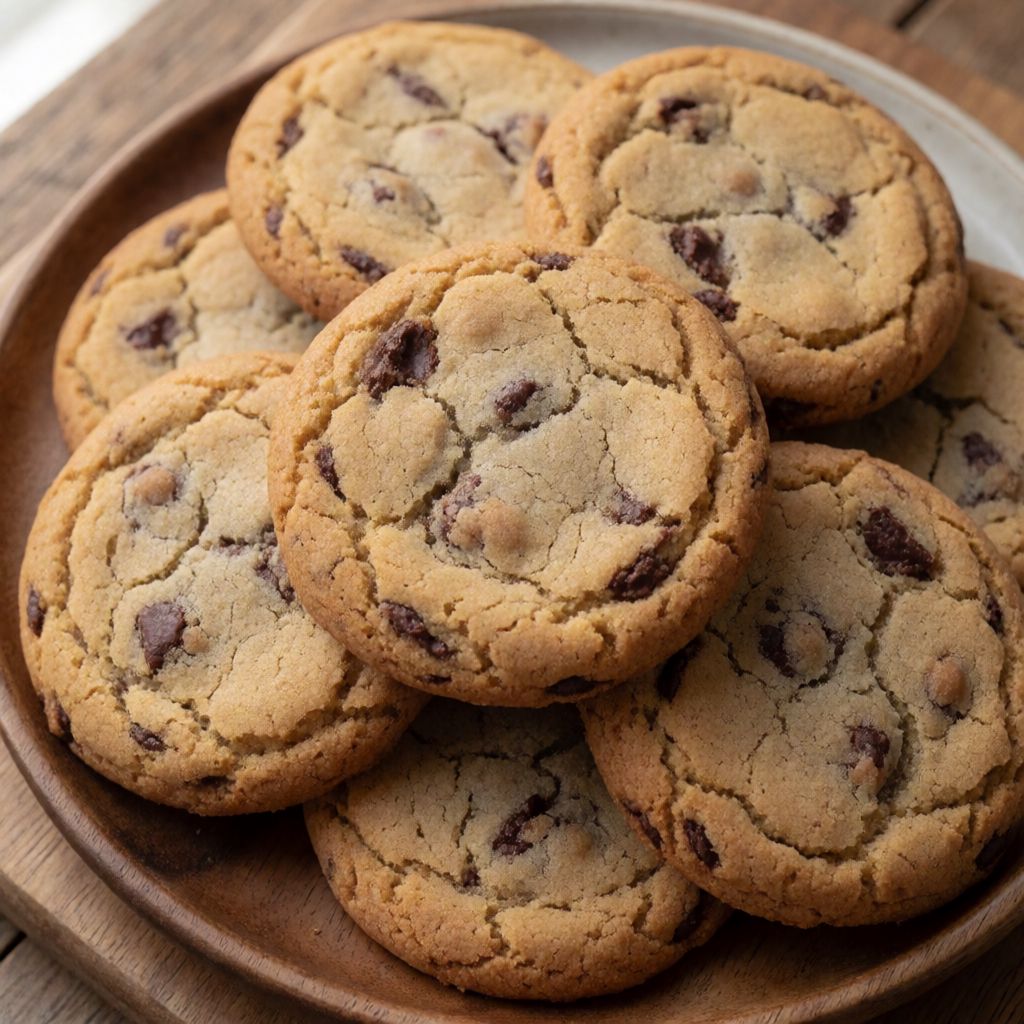
 AI photo
Finnish Liquorice and Chocolate Cookies
Soft cookies combining sweet Finnish liquorice pieces with dark chocolate chunks.
Labels are worked out automatically from the ingredients and can be wrong. Check the packaging if it matters to you.
Ingredients
- 150 g Butter at room temperature
- 100 g Caster sugar
- 100 g Light brown sugar
- 1 pcs Egg
- 200 g Plain flour
- 1 tsp Baking powder
- 0.5 tsp Vanilla sugar
- 1 pinch Salt
- 100 g Sweet Finnish liquorice cut into small pieces
- 130 g Dark chocolate









Steps
Cream the butter, sugar and light brown sugar together until fluffy, then beat in the egg.
3 minMix the flour, vanilla sugar, baking powder, salt, chopped liquorice and chocolate, add to the dough and mix well.
2 minShape into balls about the size of a small golf ball and place on a baking tray lined with parchment paper.
2 minPress the balls down lightly to flatten slightly, leaving enough space between the biscuits as they spread while baking.
1 minBake in a preheated fan oven at 180°C for 13–15 minutes, until golden but still a little soft in the middle.
14 minLet the biscuits cool slightly on the tray before transferring to a wire rack.
3 min
What was changed
We rounded the oven temperature to match the UK display step; all ingredients, including the Finnish liquorice, are kept as in the original.
This is a drawer-tin cookie, the sort a Finnish kitchen keeps ready for when someone comes round with cold hands. The whole point of it is contrast: a chewy, faintly bitter dark chocolate against liquorice, and most people outside Finland hear "liquorice in a biscuit" and brace for something medicinal. It isn't. The liquorice here is the soft, sweet confectionery kind — not the salty ammonium-chloride sweets Finns also eat by the bagful (salmiakki), which is a completely different animal and would ruin this cookie rather than season it. Get the wrong jar and you've made something for masochists, not for tea.
What decides whether it works is not the oven, it's the creaming at the start. Butter and sugar beaten until fluffy isn't a texture instruction, it's physics: the sugar crystals cut thousands of tiny air pockets into the fat, and those pockets are what the baking powder's gas has somewhere to go into later. Skip that stage, or do it with cold butter that won't hold air, and the cookie bakes flat and dense no matter how much baking powder you throw at it. Room-temperature butter isn't a fussy detail — it's the one condition the whole rise depends on.
Butter, at room temperature, is doing structural work, not flavour work — it needs to be soft enough to trap air when you beat it, but not so soft it's turned to oil, because then it just slicks the sugar instead of gripping it. If you've forgotten to take it out, don't microwave it to soften — that melts the outside before the inside catches up and you lose the very air pockets you're trying to build. Cut it small and leave it twenty minutes instead.
Two sugars are doing two different jobs, not one. Caster sugar is fine and sharp-edged, so it cuts into the butter cleanly and gives you crisp edges and good aeration. Light brown sugar carries molasses, which holds onto water — that's what keeps the middle of the cookie chewy days after baking instead of turning to sand. Use all caster and you get a crisper, drier biscuit; use all brown and you get something softer and darker but less lofty. Neither is wrong, but it isn't this cookie.
The egg binds the fat and sugar into something that can hold flour without crumbling, and it's also most of your moisture — one egg, no more, because extra liquid here just thins the dough and spreads the biscuit flatter than the recipe wants.
Plain flour, not self-raising, because the lift is already being managed deliberately with a measured teaspoon of baking powder. Self-raising flour would add its own leavening on top and you'd lose control of how much the biscuit puffs before it sets — too much rise this early and the structure can't hold the chocolate and liquorice pieces, they just sink. Vanilla sugar is a Nordic pantry habit — sugar that's lived next to a vanilla pod — and if you don't keep a jar of it, a few drops of vanilla extract stirred into the wet mix does the same job; the pinch of salt isn't there to be tasted, it's there to stop the sweetness from being flat and one-note.
The liquorice needs to be the sweet Finnish confectionery kind, cut small enough that it softens into little pockets rather than staying as hard, chewy lumps that fight your teeth — if you can't get hold of it, a soft black liquorice allsort with the sugar coating removed is the nearest stand-in, but anything salted will throw the whole balance off, so read the packet before you buy. Dark chocolate, cut into rough chunks rather than bought as uniform chips, melts unevenly on purpose — some chunks turn to a pool, some keep a bit of shape, and that unevenness is what gives you both a gooey bite and a solid one in the same biscuit. Use chocolate around 60–70% cocoa, something you'd eat off the bar, because cheap chocolate with a lot of sugar and little cocoa solids just turns waxy in the oven and won't melt the same way.
Sixteen cookies from this amount is a small tin, not a party platter — plan on two each for a Sunday afternoon with eight people round the table, and have the kettle on, because with milk in the tea this is exactly the kind of biscuit built to be dunked for half a second and no more before the chocolate surrenders.