
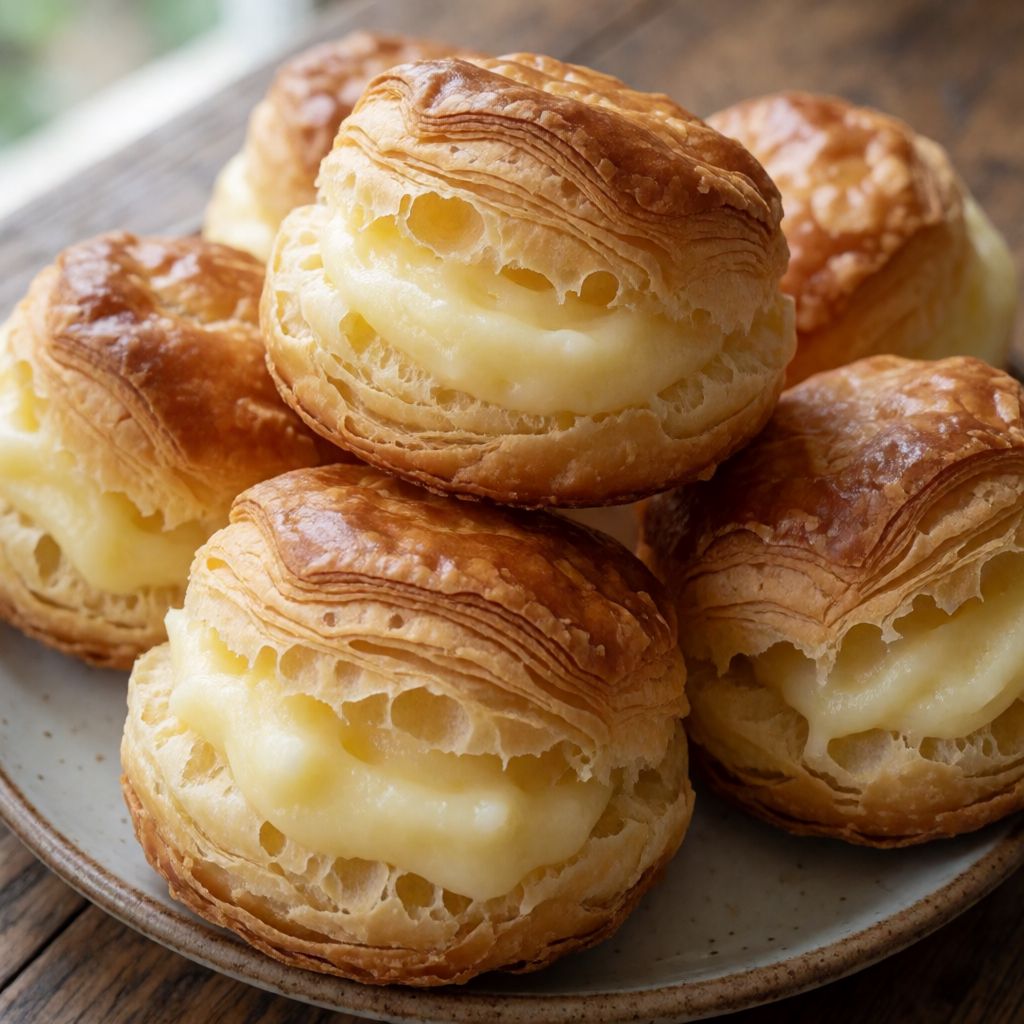
 AI photo
Lulu Messinese – Sicilian Cream-Filled Pastries
Lulu Messinese, Sicilian choux pastries filled with a light whipped cream, dusted with icing sugar.
Labels are worked out automatically from the ingredients and can be wrong. Check the packaging if it matters to you.
Ingredients
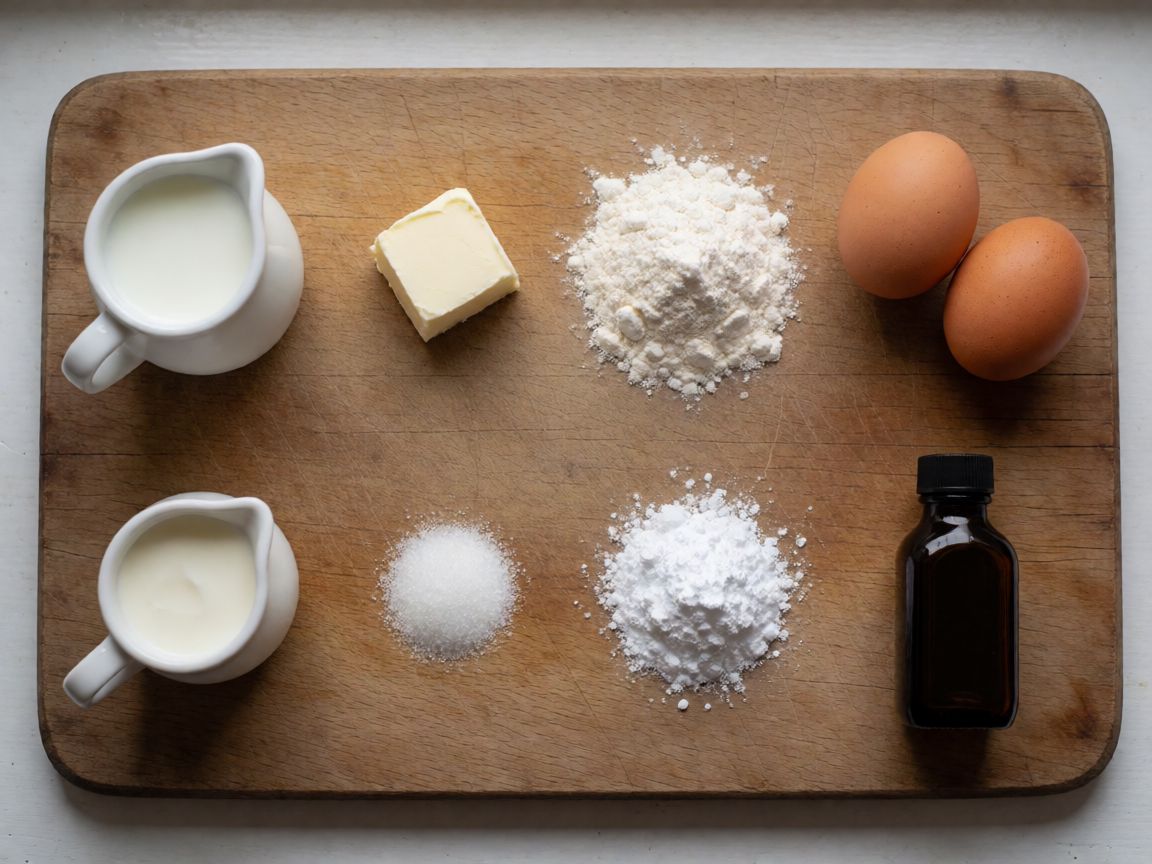
- 60 ml Milk
- 60 ml Water
- 50 g Butter
- 75 g Plain flour
- 2 pcs Eggs
- 1 pinch Salt
- 1 pinch Sugar
- 300 ml Double cream
- 80 g Icing sugar
- Vanilla extract to taste
- Icing sugar to taste, for dusting









Steps
In a small saucepan, combine the butter, milk, water, salt and sugar. Bring to the boil.
Remove from the heat and immediately tip in all the flour at once. Stir vigorously with a wooden spoon until smooth.
Return the pan to the heat and cook the mixture for a further 1-2 minutes, stirring constantly.
2 minTransfer the choux pastry to a bowl and let it cool, stirring occasionally.
Add the first egg and mix vigorously until it is fully absorbed into the dough.
Add the second egg and repeat the same process. The dough should be smooth and fairly thick.
Transfer the dough into a piping bag.
Pipe the dough into moulds greased with butter, filling them halfway.
Bake in a preheated oven at 200°C (top and bottom heat) for 20 minutes.
20 minReduce the temperature to 150°C and continue drying the pastries for a further 15 minutes.
15 minRemove from the oven and let the pastries cool completely.
Whip the double cream with the icing sugar and vanilla extract using a mixer until thick and fluffy.
Transfer the whipped cream into a piping bag fitted with a fine pointed nozzle and fill the pastries from the bottom.
Roll the finished pastries in icing sugar on all sides until fully coated.
Serve.
This is choux pastry — the dough that doesn't rise by a raising agent but by its own steam. You cook it twice: once on the hob to force the flour to swallow the fat and liquid, once in the oven to turn trapped water into steam that blows the dough into a hollow shell. Everything that can go wrong with lulu messinese goes wrong because that mechanism was interrupted somewhere.
What decides whether it works is the egg stage and the oven stage, in that order. Add the eggs too fast or into dough that's still hot and they scramble instead of emulsify — you lose the elasticity that lets the dough stretch around steam without tearing. Open the oven door in the first twenty minutes and the steam escapes before the walls have set, and you get a flat, sad biscuit instead of a shell with a cave inside it.
Some say choux is a "French" pastry and this is just a French bun with Sicilian sugar on top. No — the technique is shared across half of Europe's baking because it's just physics, cheap physics: flour, water, fat, egg, no yeast, no proving time. What makes it Sicilian is the finish — cream, not custard, and a full roll in icing sugar, which is a sugar-island habit, not a French one.
Patience here isn't poetic, it's mechanical. The dough has to cool before the eggs go in, and the shells have to cool completely before cream goes in, or the cream melts and weeps instead of holding its shape.
Butter, milk and water boiled together first, with the flour tipped in all at once off the heat — that order matters more than people think. The boiling liquid partly cooks the starch in the flour on contact, which is what lets the dough go on to hold its shape raw later rather than slump. Stirring it back over the heat for a minute or two after isn't decorative; you're driving off excess moisture so the dough doesn't end up too wet to pipe, and you'll feel the change — the mass pulls cleanly off the sides of the pan and leaves a thin film there. That film is your cue, not a clock.
Milk and water together, not just milk: water makes for a drier, crisper shell because there's less milk sugar to brown and soften the crust; too much milk and you get something closer to a bun. Butter is for flavour and for the fat that coats the flour's gluten and keeps the dough tender rather than tough — any neutral fat with a clean set at room temperature would physically do the steam trick, but butter is why this tastes of Sunday-roast-kitchen home rather than a fairground stall.
The eggs go in one at a time, and only once the dough has cooled enough that it doesn't feel hot to the back of your hand — if it's still hot, the egg starts to cook on contact and you end up with little flecks of scrambled egg through a dough that won't pipe smoothly. Two eggs is a guide, not a law: eggs vary in size, and what you're after is a dough that falls from the spoon in a slow ribbon, holding a soft peak when you lift it, not pouring and not sitting stiff. If it's too stiff to pipe, a tablespoon of beaten egg loosens it; don't just add water, which thins the structure without giving it the protein to reset in the oven.
The two-stage bake is the whole trick. 200°C builds the steam fast enough to push the walls out before they've had time to set hard — a cooler oven just dries the dough before it's expanded, and you get dense little lumps. Dropping to 150°C afterwards isn't about finishing the cooking, the pastry's basically cooked by then — it's about drying the inside walls so they stay crisp and don't collapse into a soggy ring the moment you take them out. Don't open the door early to check: a domestic oven loses heat fast when you do that, the temperature dips, the steam escapes, and a half-risen shell will not re-rise once it's deflated. If your oven's not reliably at 200°C, a cheap oven thermometer is a better friend than guessing by the dial.
Cream filling, not custard, is the Sicilian signature, and the reason is simple economics as much as taste: Sicily is dairy and citrus country more than custard-and-vanilla-pod country, and whipped cream is quicker, needs no cooking, no risk of curdling over a flame in a hot climate. Double cream, not whipping cream, because it has enough fat to hold stiff peaks on its own without collapsing once it's piped into a warm, slightly humid pastry case — a lower-fat cream will weep and soften the shell within the hour. Whip it only to thick-and-fluffy, not to the grainy, split stage — the icing sugar should still be fully dissolved and the surface glossy, not dull.
Filling from the bottom with a fine, pointed nozzle rather than slicing the pastry in half keeps the top crust intact, which is both neater and more practical — a cut top dries out and goes leathery before you've served it. Rolling the finished shells in icing sugar on all sides at the very end, once they're filled and the cream has had a minute to settle, gives you that fine white coat rather than a sugar that's gone translucent and wet from contact with warm pastry. Serves four generously as a tea-time pastry, or fewer if, like most people who've made choux once, you eat the first one straight off the tray to check it worked.