
 AI photo
Marinated Chicken Thighs
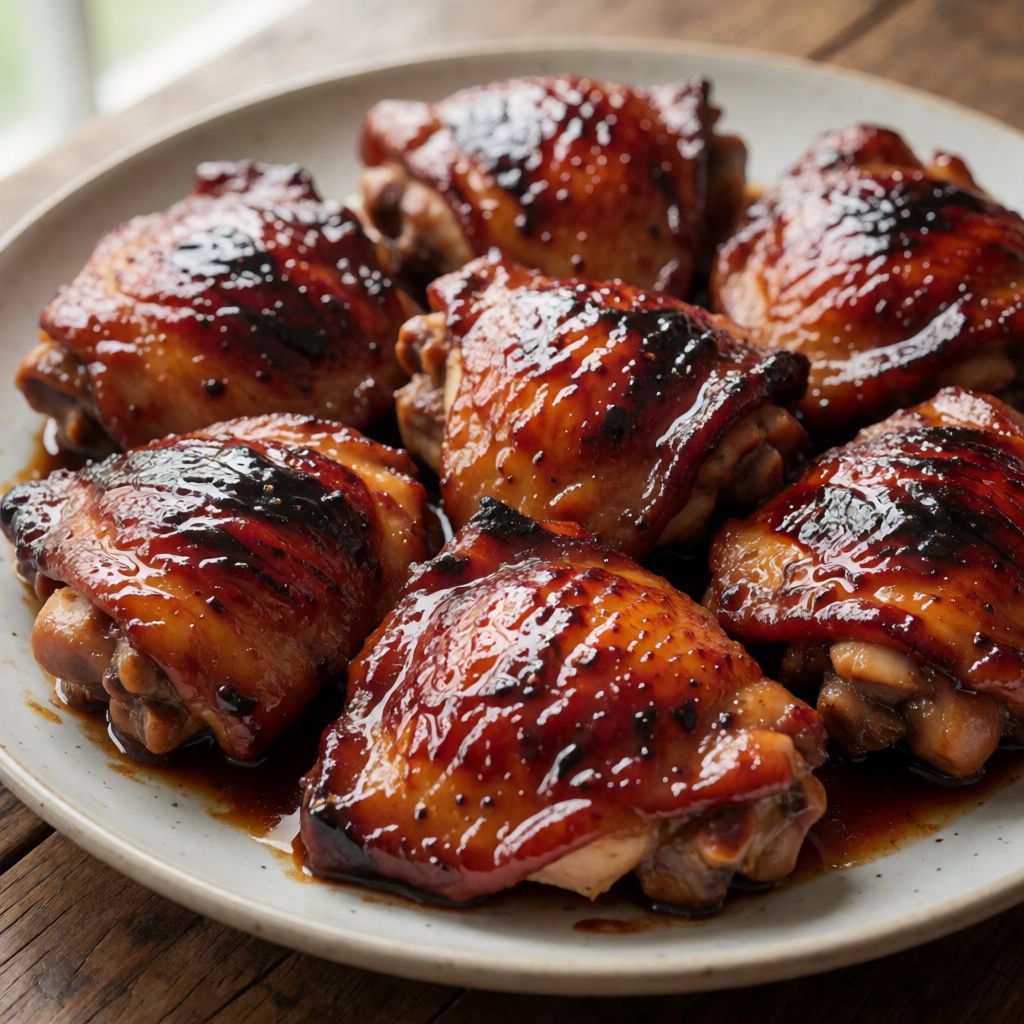
Chicken thighs marinated in a sweet-savoury soy, honey and tomato glaze, then roasted until golden and sticky.
Labels are worked out automatically from the ingredients and can be wrong. Check the packaging if it matters to you.
Ingredients
- 4 pcs Chicken thigh
- 50 ml Olive oil
- 1 tbsp Tomato purée
- 1 tbsp Soft brown sugar
- 1 tbsp Honey
- 2 tbsp Soy sauce
- ½ pcs Lemon juice
- 1 clove Garlic crushed
- ½ tsp Smoked paprika
- ½ tsp Paprika










Steps
Mix the marinade well and generously coat the chicken thighs with it.
Leave to marinate for at least a few hours, preferably up to 24 hours in the fridge.
Place the marinated thighs on a baking tray lined with baking paper and roast in a preheated fan oven at 180°C for 30-35 minutes.
35 min
This is a tray-bake chicken: four thighs sat in a honey-soy-tomato-paprika mix, then roasted until the surface turns into a dark, sticky lacquer. It is the modern version of the Sunday roast — all the shine of slow cooking, ten minutes of actual effort, and an oven doing the rest while you get on with something else.
What decides whether it works is not the thirty-five minutes in the oven. It is the hours before that, in the fridge, and then how you read the finish — by the look of the glaze, not by a timer.
Some say marinating overnight makes the meat tender right through. No — oil and acid barely move past the outer few millimetres of flesh in any realistic time; they are not built to travel. What actually happens during those hours is salt, carried in by the soy sauce, slowly working its way into the meat and changing how its proteins hold onto moisture. That is brining wearing a disguise, not magic, and it is the real reason the fridge time matters more than the oven time.
A flat tray lined with paper is standing in for a kazan here, and it behaves differently — no deep walls, so no pool of juice forms, only a thin film that either glazes or steams depending on how much room the thighs have. Give them space. Doneness looks like a glaze gone matte and tacky rather than wet, and a skewer near the bone pulling out clear juice, not pink.
Chicken thighs are the right cut for this, and not by accident. Dark meat worked harder on the living bird, carries more fat and connective tissue, and forgives a few extra minutes in the oven the way a breast never would — which is also why it used to be the cheap half of the bird, before everyone decided white meat was the polite choice. Bone-in holds moisture better if you can get it; boneless is fine too, you'll just need to judge by the skewer test a little earlier.
The oil, tomato purée and the two sugars are a team, not separate flavours. Oil carries the fat-soluble parts of the paprika and garlic into the meat and keeps the surface from drying into cardboard before it browns. Tomato purée brings its own sugars and a savoury depth that helps the glaze darken rather than just go sweet. Brown sugar and honey both melt to syrup under heat — the molasses in the sugar gives a bitter edge that stops the whole thing tasting like dessert, and honey's stickiness keeps the glaze glossy instead of turning crystalline. Any sugar that melts cleanly — muscovado, demerara, even golden syrup instead of the honey — will do that job; plain white sugar works but tastes flatter, with none of the molasses bitterness to lean on.
Soy sauce is doing the real brining here, so look for one with a dark, almost meaty smell — that's the fermentation talking, not an additive. Tamari if you need it gluten-free; fish sauce at a pinch, though it brings its own voice to the party and you'll taste it. Lemon juice has a smaller, later job — it is not tenderising anything, it is cutting through the sweetness and the fat so the dish doesn't sit heavy on the tongue. Garlic crushed rather than sliced breaks open more cells and pushes more of its flavour into the oil-based marinade, which is why crushed tastes louder than chopped for the same clove.
The two paprikas aren't duplicates. Sweet paprika is just colour and a round, mild pepper flavour. Smoked paprika is peppers that were actually dried over oak smoke back in Spain, long before refrigeration existed and smoking was simply how you kept a harvest from rotting — so the bonfire note is already baked into the spice, no charring required on your part. Use either alone if that's what's in the cupboard, but together they're doing two different jobs, colour and smoke-echo, and the dish is a bit flatter without one of them.
A fan oven at 180°C moves hot air evenly round the tray, which is why there's no need to turn anything halfway — a non-fan oven runs cooler at the same number, so expect to lean on the skewer test rather than the clock if that's what you've got. The baking paper under the thighs is there to catch sugar drips before they scorch onto the metal — skip it and you'll be scrubbing a blackened tray and breathing in burnt-sugar smoke instead of eating dinner.
Patience is the actual ingredient that makes this dish, not a nice-to-have. I once left thighs in this marinade two days by accident, and they came out better, not worse, because the salt simply had more time to work. Rush the fridge stage and you'll get the same glaze on the outside but paler, drier meat underneath, no matter how long you leave it in the oven afterwards. Four thighs feed four people, one each, with rice or boiled potatoes alongside to take on whatever glaze runs off the tray.