
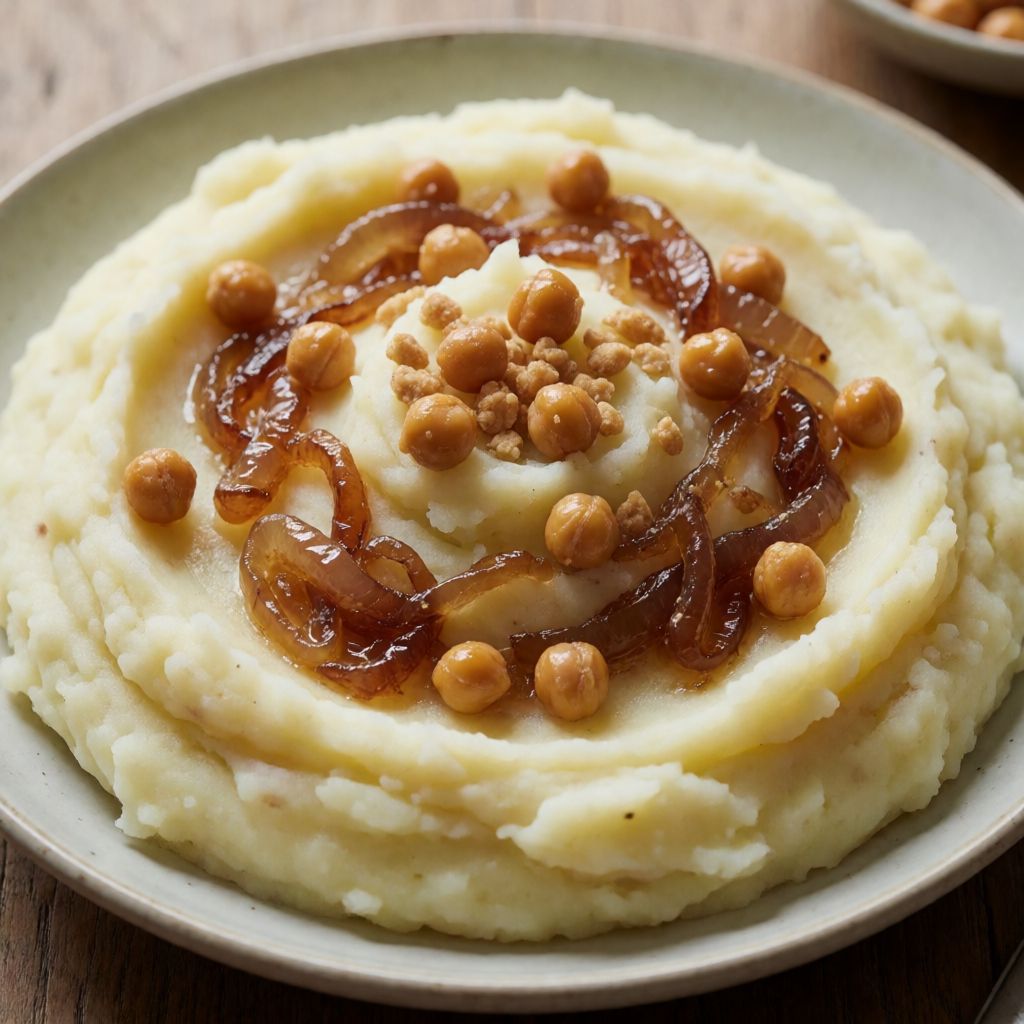
 AI photo
Mashed Potato with Caramelised Onion and Crispy Chickpeas
A comforting mashed potato topped with sweet caramelised onion and carrot, smoky crispy chickpeas, pickled beetroot and fresh herbs.
Labels are worked out automatically from the ingredients and can be wrong. Check the packaging if it matters to you.
Ingredients
- 100 g Pickled beetroot diced
- 1 bunch Chives finely chopped
- 1 bunch Parsley finely chopped


Mashed Potato
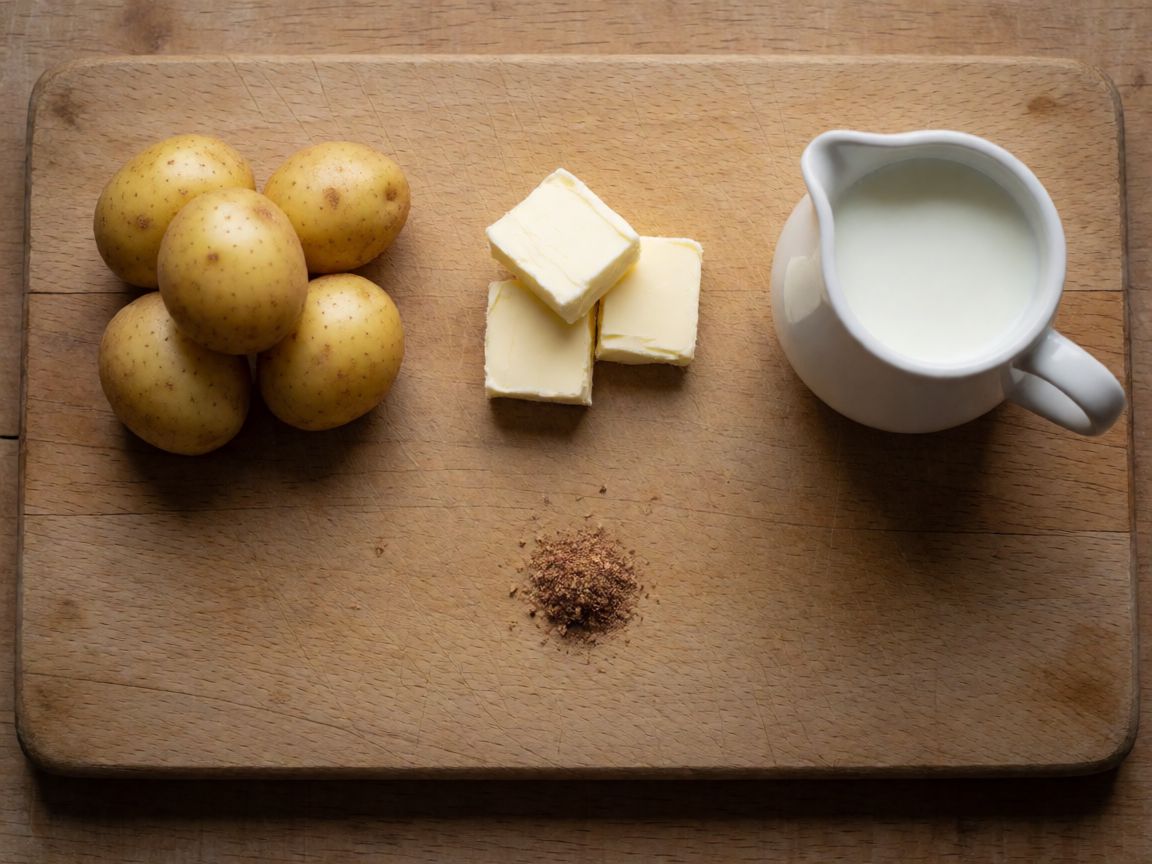
- 1.5 kg Potatoes
- 100 g Butter
- 100 ml Milk
- Salt
- Black pepper freshly ground
- 1 pinch Nutmeg




Crispy Chickpeas
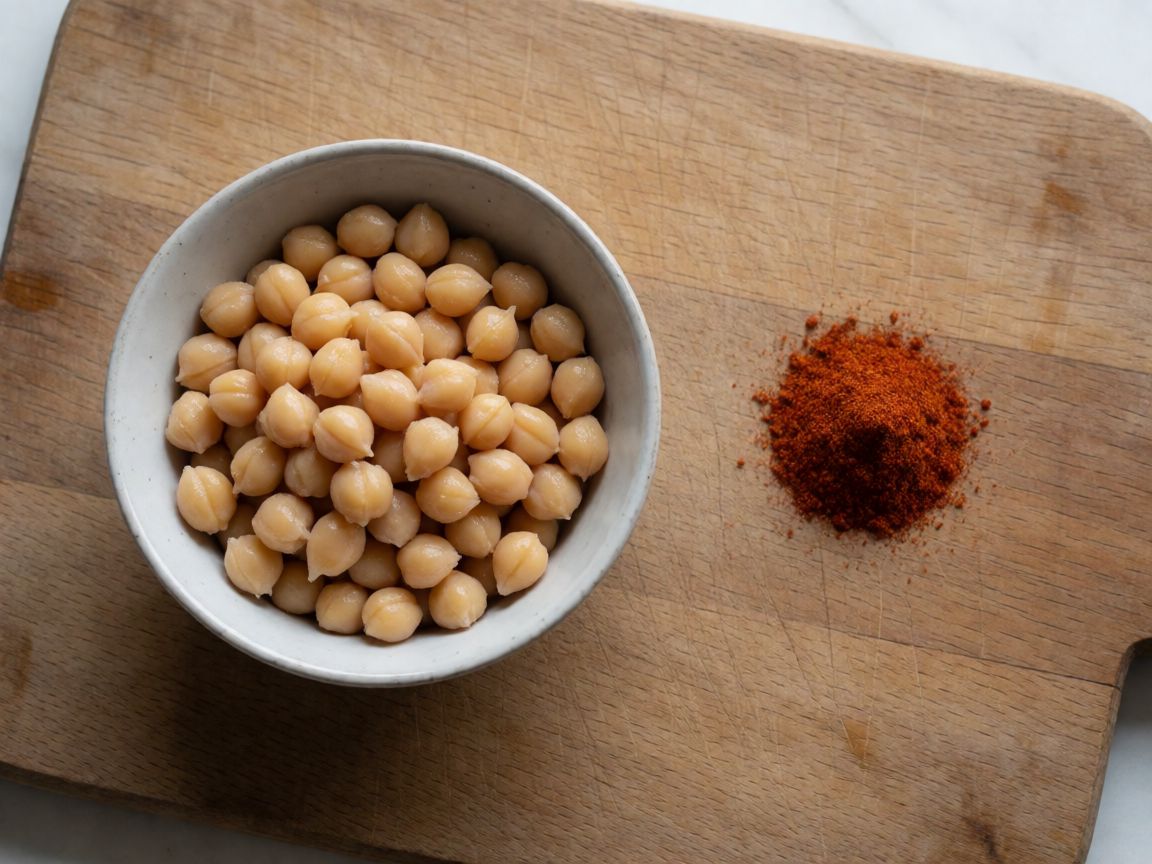
- 1 can Chickpeas drained and rinsed
- 0.5 tsp Smoked paprika
- 1 tbsp Olive oil for frying
- Salt



Caramelised Onion Topping
- 4 pcs Onions finely chopped
- 2 pcs Carrots finely diced
- 50 g Butter
- 2 tbsp Soy sauce
- 100 ml Double cream
- 1.5 tsp Smoked paprika
- 1 tsp Sriracha
- Black pepper freshly ground



Steps
Mashed potato: boil the potatoes in plenty of unsalted water until soft.
Drain and mash the soft potatoes with the butter, cut into small cubes. Beat with a mixer until the mash is lovely and fluffy, then pour in the milk to reach the desired consistency.
Season the mash with salt, pepper and nutmeg.
Crispy chickpeas: rinse the chickpeas and pat dry with a clean cloth. Mix well with the oil, then with the spices.
Spread the chickpeas on a baking tray lined with baking paper and bake in a preheated fan oven at 170°C for 20-25 minutes, until golden and crisp.
23 minFry the onions and carrots in butter over low-medium heat for 15-20 minutes, until the onion is soft, sweet and starting to caramelise slightly.
18 minAdd the soy sauce, cream, smoked paprika and a little sriracha to the onions. Bring to the boil and simmer for a few minutes, season with freshly ground pepper.
Serve the mashed potato on plates, topped with the onions, crispy chickpeas, pickled beetroot and fresh herbs.
What was changed
Oven temperature rounded to the nearest step for this market's ovens .
This is mash dressed up as a proper plate of food: three separate little projects — potato, onion, chickpea — that only become a dish when they land on the plate together. None of them is hard. What's hard is timing them so the chickpeas are still crackling when the onions are still glossy and the mash hasn't gone cold and gluey waiting for both.
The mash is the easy part to get wrong. Boil the potatoes whole-ish in plenty of water, no salt yet — salt in the water now just slows the water down and you end up with a half-cooked outside and a bullet in the middle. You want them properly soft, the kind of soft where a knife goes in and meets no resistance at all, not "fork tender" which is a phrase that tells you nothing. Then you drain hard — steam off properly, because leftover water is the difference between mash and wallpaper paste once the milk goes in.
The onion and carrot pan is really a British gravy wearing a disguise: soy sauce, cream, smoked paprika and sriracha turned into something that tastes like it's been in your family for generations, when actually it's a short red-onion-and-marmite logic borrowed and modernised. Low heat here isn't a suggestion — it's the only way to get the onion to turn sweet instead of just soft. Rush it on high heat and you get onion that's collapsed and bitter at the edges before it's had time to caramelise; slow is what lets the sugars actually develop instead of just the water boiling off.
Start with the potato itself, because 1.5 kg sounds like a lot until you remember potato is mostly water and you're about to beat half of it back in as milk and butter. Use a floury, starchy potato — a Maris Piper or King Edward, the ones that go fluffy and slightly dry when baked — not a waxy salad potato, which holds its shape under a knife but turns gluey the second you mash it, because its structure is built to resist breaking down, which is exactly what you don't want here. Some say add the butter cold, straight from the fridge, to "keep the mash light" — no, because what actually keeps it light is beating in air with the mixer before the milk goes in; cold butter just takes longer to melt through and leaves little unincorporated lumps. Soften it first.
The milk you add at the end, warm if you can be bothered, cold if you can't — it's there purely for looseness, so treat the 100 ml as a suggestion, not a rule. If you've only got cream in the fridge because you bought it for the onions, use a splash of that instead and cut the butter slightly; it'll just be richer, no harm done. Nutmeg is doing something specific and small: it's not there to taste of nutmeg, it's there to round off the dairy so the mash doesn't taste flatly "milky." A pinch only — this is a background note, not a flavour.
The onions: four of them, finely chopped, because this needs bulk that will reduce down to almost nothing by the time it's caramelised — onion loses most of its volume as water cooks out of it. Butter rather than oil for this pan because you want the milk solids in the butter browning gently alongside the onion, adding a nutty note the onion can't make on its own; if you're avoiding dairy, a neutral oil works, you just lose that particular depth. The carrot is there for sweetness and a bit of bite against all that soft onion and potato — dice it small enough that it actually cooks through in the same time as the onion, or it'll still be raw-crunchy when everything else has gone soft.
Soy sauce and cream together sound like an odd marriage, but soy here is standing in for salt plus a savoury, almost meaty depth — umami, if you want the word for it — that a plain pinch of salt can't give you. The sriracha and smoked paprika are doing the same job from two directions: paprika gives a smoky base note, chilli gives a flash of heat on top. Scale both to your own tolerance; there's no authority here insisting on 1.5 teaspoons exactly, it's a dish built to be adjusted by taste as you go, tasting with a clean spoon each time.
For the chickpeas — patting them properly dry with a cloth is not fussy, it's the entire mechanism of the step. A tinned chickpea comes out wet from its brine, and oil poured onto something wet just sits on top and shallow-fries rather than coating. Dry first, then oil, then spice, and they roast rather than steam. A domestic oven runs hotter or cooler than its dial says more often than people assume, so treat 20–25 minutes as the lower bound and go by colour and sound: they should look matte gold, not pale, and when you shake the tray they should rattle slightly rather than thud. If you don't trust your oven, check at the earlier end and give them more rather than less.
The pickled beetroot and the herbs at the end aren't garnish in the decorative sense — the beetroot's sharp vinegar cuts through all that butter and cream, and the chives and parsley bring something green and alive to a plate that's otherwise entirely brown, red and beige. Chop them properly fine; big ragged pieces of raw herb are unpleasant to actually eat, not rustic. And have everything timed so they go on last, straight from the board — herbs sitting around go limp and lose whatever brightness they were there for.
This feeds four as a side, generously, which in a British flat usually means it's standing in for the mash at a Sunday roast, minus the roast — which is fair enough, because what's doing the work here, the long-cooked onion and the crisp chickpea, is more interesting than most of what usually sits next to the gravy.