
 AI photo
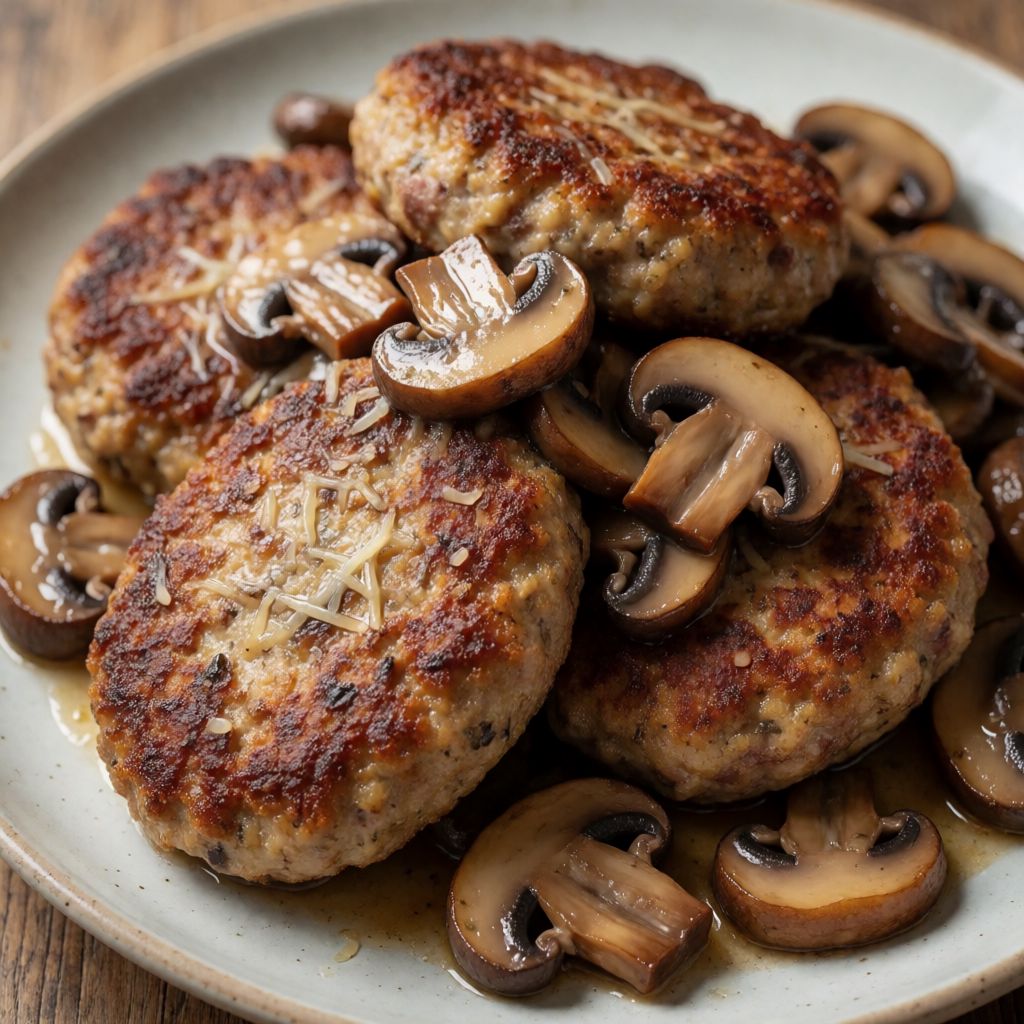
Meat Patties with Mushrooms
Tender mince patties simmered with mushrooms in a white wine and stock sauce.
Labels are worked out automatically from the ingredients and can be wrong. Check the packaging if it matters to you.
Ingredients
- 700 g Mushrooms
- 500 g Mixed beef and pork mince pork, beef
- 50 g Breadcrumbs stale
- 30 g Parmesan or Grana Padano
- 2-3 tbsp Plain flour
- 3 tbsp Water or milk
- 1 pcs Eggs
- 150 ml Vegetable stock made from a stock cube
- 50 ml White wine
- 2-3 clove Garlic
- Parsley to taste, optional
- Salt to taste
- Black pepper to taste
- 4 tbsp Olive oil













Steps
Clean the mushrooms with a damp cloth and a small brush to remove any soil, then slice thinly.
Heat two tablespoons of olive oil with one peeled, lightly crushed clove of garlic and fry for a few minutes.
5 minAdd the mushrooms and finely chopped parsley, season with salt and fry for about 5 minutes until the mushrooms turn pale and creamy, with no excess moisture.
5 minRemove the garlic and set the mushrooms aside.
Soak the stale breadcrumbs in a bowl of water for a few minutes, then squeeze out well with your hands.
Mix the soaked crumbs with all the other ingredients: the mixed mince, egg, parsley, Parmesan, salt and black pepper. Knead by hand until smooth.
Shape the mixture into patties by rolling between your palms, about 40 g of mixture each.
Spread the flour on a plate and coat the patties.
In a wide pan, heat two tablespoons of olive oil with a crushed clove of garlic; as soon as the garlic starts to sizzle, add the patties and gently brown on all sides.
Pour in the white wine and, once it has evaporated, continue cooking with the stock.
After a few minutes add the fried mushrooms, cover with a lid and cook on medium-low heat until the sauce and patties are done. Doneness: internal temperature 71°C.
Remove the garlic and add plenty of chopped parsley before serving.
What you've got here isn't a burger with gravy — it's two separate cooking problems solved in the same pan, then married at the end. The mushrooms are sautéed alone first, dry, in their own batch, because mushrooms and raw mince thrown in together just steam each other in released water and you get grey, sad meat and rubbery fungi. Keep them apart until both are nearly finished, then let them simmer together so the patties drink the mushroom and wine flavour instead of fighting it.
The patty itself is built, not just mixed. Bread soaked and squeezed dry, egg, cheese — these aren't filler, they're what stops a lean mince patty turning into a tight little meatball of pure protein that squeezes itself dry as it cooks. The crumb holds water inside the structure of the meat; without it you get the thing everyone blames on "overcooking" when really it's under-binding.
What decides whether this works is restraint at two points: don't crowd the mushrooms (dry pan contact, not a steamy pile), and don't rush the patties past brown-on-the-outside into the sauce — they want a seared crust first, so the wine and stock reduce around something already holding its shape, not around raw mince that'll fall apart into the liquid.
This isn't a thirty-minute fry-up. The soaking, the two separate cooks, the simmer to finish — each step buys you something. Rush it and you'll taste exactly where you rushed.
Mushrooms, 700g for six people sharing the dish as part of a plate, not the whole meal — that's roughly four good handfuls once sliced. Wipe them, don't drown them under a tap: mushrooms are mostly water already, and a wash just adds more that has to cook back out, which is the same problem as crowding the pan, just earlier. Any firm cultivated mushroom works here — chestnut, button, even a mix with something wilder if you've got it — the fibrous ones that hold shape when sliced thin. Avoid the ones that are already slimy or weeping; they've started the breakdown you're trying to do deliberately in the pan.
The mince: a mix of beef and pork, 500g, because pork brings fat and beef brings flavour and structure, and together they render a juicier patty than either alone — this is the same logic behind any good burger blend, just older and less branded. If you can only get one, pork alone needs a touch more fat somewhere (a spoon of oil worked into the mix), beef alone wants a bit more moisture, which is exactly what the soaked bread is already doing.
Breadcrumbs soaked then squeezed — this is a panade, and the point is precision: dry breadcrumbs added straight to mince will pull moisture out of the meat as they cook, the opposite of what you want. Pre-soaked and squeezed, they're already saturated, so they just sit there as tiny reservoirs releasing moisture back into the meat as it tightens on the heat. Stale bread works better than fresh because it drinks water fast without turning to paste. No stale bread — a slice of regular white or wholemeal, dried out for a few minutes in a low oven, does the job.
Parmesan or Grana Padano, 30g — not for cheesiness, you won't taste "cheese" distinctly, you'll taste savoury depth, because the cured, aged crystals are pure glutamate, the same effect a stock cube or a splash of fish sauce gives elsewhere. Any hard aged grating cheese substitutes on that logic — pecorino if you want more bite, a mature cheddar in a pinch, though it'll shift the flavour toward Sunday-roast territory rather than Italian.
Flour for dusting before the pan — this isn't batter, it's a thin dry coat that gelatinises fast in hot oil and gives you the actual crust that holds the patty together while the wine goes in around it. Skip it and the first splash of liquid will start dissolving the surface of the meat before it's set.
Stock from a cube plus white wine: the acid in the wine cuts the richness of two meats and mushroom, and it needs to actually cook off — "once it has evaporated" isn't decoration in the method, it's the difference between a sauce that tastes of raw alcohol and one that tastes of reduced wine. If you don't drink, or don't have any open, a splash of wine vinegar loosened with water gets you the acidity without the alcohol, though you lose some of the roundness.
Garlic goes in whole and crushed, not minced, and comes back out before serving — that's an infusion technique, you want the oil carrying garlic's aroma without the texture of garlic bits turning bitter from sitting in a hot pan the whole cooking time. If a clove scorches black at any point, it's gone bitter — fish it out and start that bit again rather than cooking around it, because bitterness in oil spreads to everything that oil touches afterwards.
On doneness: 71°C internal is the actual target, not a guess. In a flat without a probe thermometer, the honest cue is cutting one patty open — no pink, juices running clear rather than pink-tinged. That's patience doing its job: pull them too early because the clock said "it's been a while" and you're serving something that looks cooked but isn't; a few minutes under a lid on low, letting carryover heat finish the job gently, costs you nothing and saves the whole plate.