
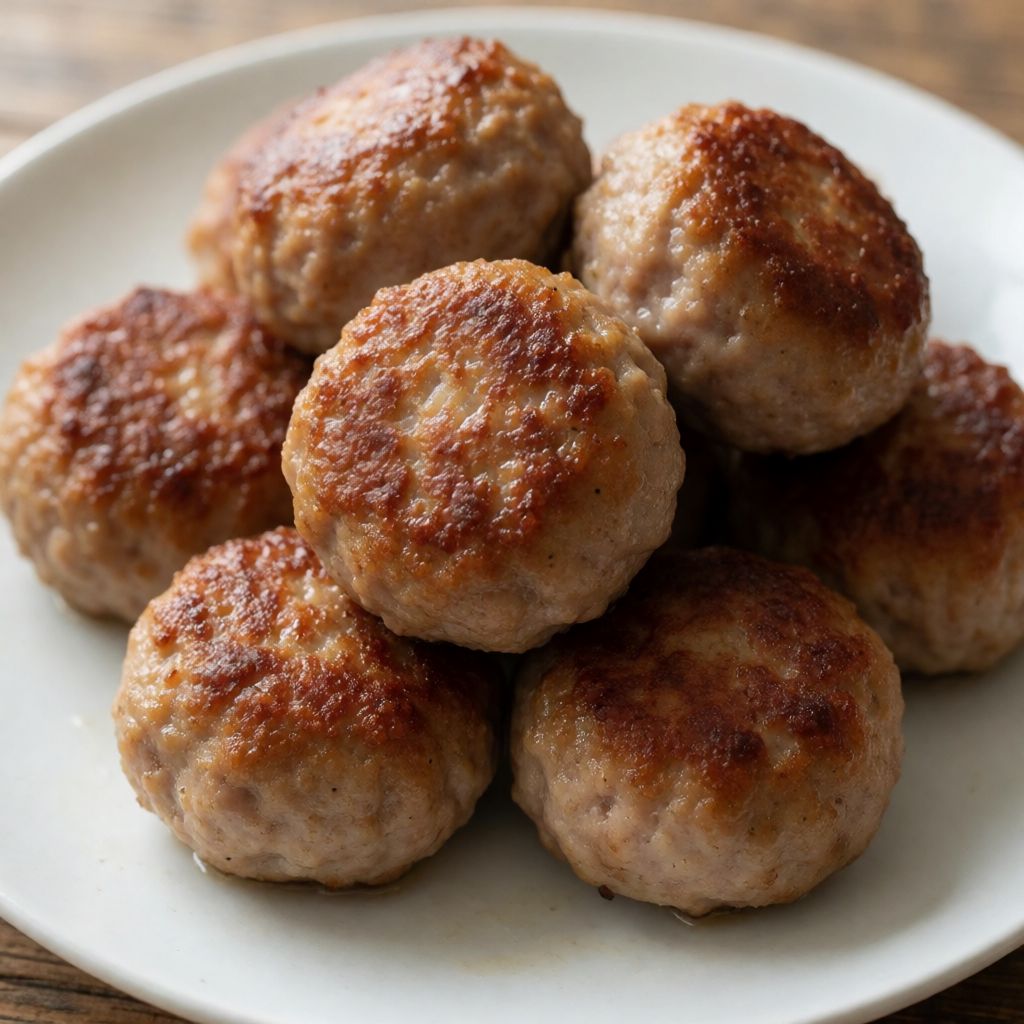
 AI photo
Meatballs
Juicy pork meatballs flavoured with thyme and cumin, pan-fried until golden.
Labels are worked out automatically from the ingredients and can be wrong. Check the packaging if it matters to you.
Ingredients
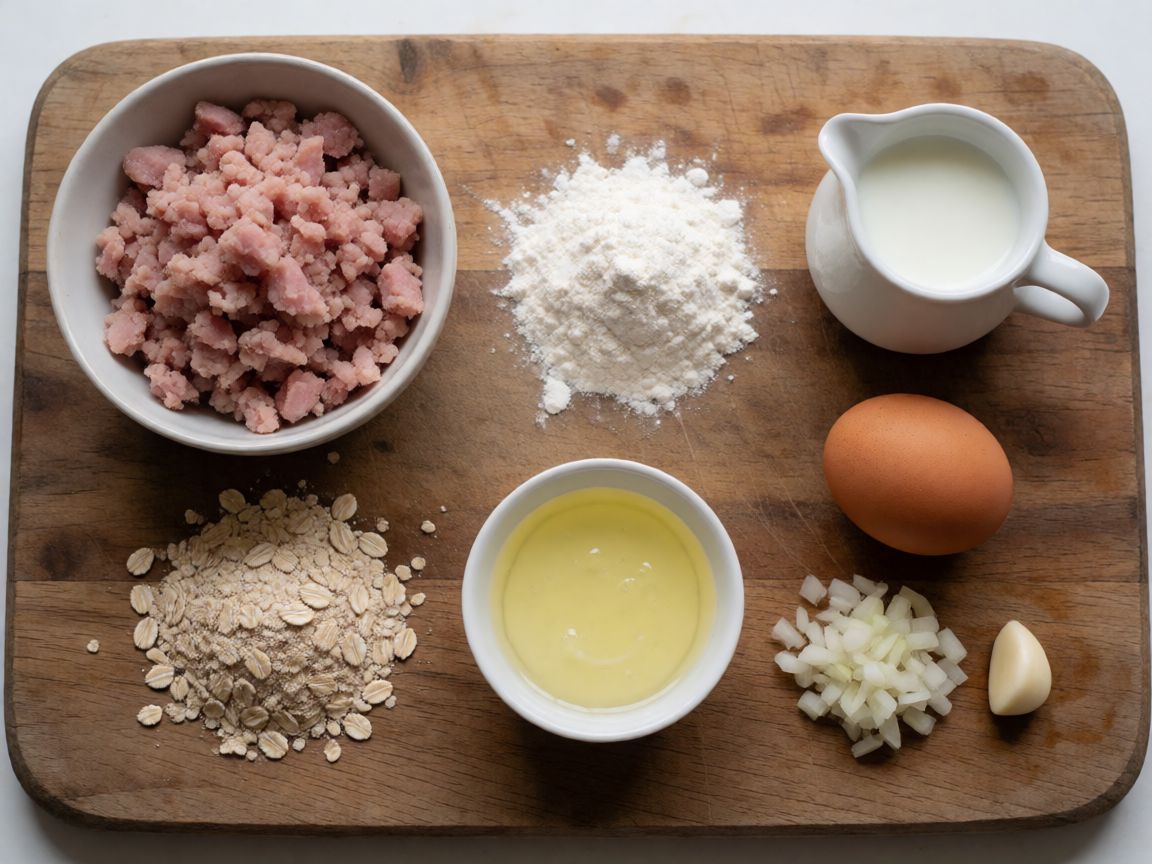
- 500 g Pork mince
- 2 tbsp Plain flour
- 2 tbsp Porridge oats
- 100 ml Milk
- 1 pcs Egg white
- 1 pcs Egg
- 1 pcs Onion finely chopped
- 1 clove Garlic finely chopped
- 1 tsp Dried thyme
- 0.5 tsp Cumin
- Salt to taste
- Black pepper to taste
- 3 tbsp Olive oil for frying
- 1 tbsp Butter for frying













Steps
Mix all the ingredients with a hand mixer for 2-3 minutes.
Let the meatball mixture rest in the fridge for at least half an hour.
30 minShape the mixture into meatballs.
Fry the meatballs in a pan with butter and olive oil over medium heat for about 5 minutes on each side, until cooked through.
10 min
These are not fried mince blobs — they're a protein structure you build on purpose, and everything in the method exists to make that structure hold when heat hits it. A meatball falls apart for one reason only: the meat proteins were never asked to grip each other. The hand mixer for two to three minutes isn't "combining ingredients," it's dragging out myosin — the sticky protein in muscle fibre — until the mince turns from loose crumbs into something that clings to the paddle. Skip that and no amount of egg will save you.
The second decision point is the fridge rest. Thirty minutes isn't a suggestion, it's the oats and flour drinking in the milk and the fat in the mince firming back up after being warmed by your hands and the mixer. A mix that goes straight into the pan is still wet and soft in the middle — it spreads instead of holding a ball, and you end up pressing it flatter with the spatula, annoyed, blaming the recipe. Patience here is the actual ingredient, not a line you skip to get to frying.
Frying is where most of the visible damage happens, and "medium heat" tells you nothing useful on its own — what you're watching for is the crust going from pale and sweating to a deep, dry gold, and a meatball that feels firm, not springy-wet, when you press it with the back of a spoon. Some say turn them constantly to "seal in juices" — no, because turning too often never lets a crust form at all, and a crust is what actually keeps the inside moist, by acting as a lid once the surface proteins set.
Pork mince itself decides half the outcome before you touch a spoon. You want visible fat running through it — close to a fifth of the weight — because fat is what keeps the ball moist once the proteins tighten up under heat. Pure lean mince fries dry no matter how carefully you do everything else; this is a fat problem, not a technique problem. If pork isn't what's in the fridge, beef chuck or a lamb shoulder mince with similar marbling behaves the same way — the criterion is fat content, not the species.
Flour, oats and milk together are doing one job: they're a panade, a starchy sponge that locks liquid inside the mix so it releases slowly while cooking instead of all at once into the pan. This is why a meatball with panade stays soft after frying and one without it turns into a dense pellet — the starch is holding water the meat alone can't. Any absorbent starch with no flavour of its own will do the same work: dry breadcrumbs, a slice of stale bread soaked in the milk and mashed in, even cooked rice at a pinch. The oats aren't sacred, they're just what was in this particular cupboard.
The egg white and the whole egg are doing two different jobs, not one job twice. Egg white sets into a tight, almost rubbery mesh on its own — pure binding, no extra fat, no extra richness. The whole egg brings the yolk's fat and flavour on top of that. If you've only got whole eggs in the house, use one and don't go hunting for a separate white — you lose a little tightness, not the dish.
Onion and garlic go in raw and finely chopped, and the fine chop matters more than it looks: a coarse dice leaves pockets of onion that never fully cook inside the meatball, and raw onion in a bite reads as bitter and sharp against the meat, not sweet. Finely chopped, the same sulphur compounds mellow as the meatball cooks through, because there's no thick lump insulating itself from the heat.
Thyme and cumin are dried on purpose here, not from laziness — dried spice disperses evenly through a cold, dense mince in a way a wet fresh herb can't, and it won't add moisture the panade then has to absorb instead of milk. Cumin in an otherwise plain British mince mixture is worth noticing: it's a small trace of the spice trade sitting quietly in a very domestic dish, not a flourish, just history settling into a cupboard.
Butter and olive oil frying together is a genuinely practical pairing, not a flavour affectation. Butter alone browns beautifully and then burns, because its milk solids catch heat fast; olive oil alone never gives you that same nutty depth. Together, the oil buys the butter time before it scorches, so you get the flavour of browned butter without the bitterness of burnt butter — a reasonable trick for a domestic hob, which runs hotter and less evenly than it feels like it does. A wide frying pan here does the kazan's job well enough; just don't crowd it, or the meatballs steam each other soft instead of browning.