
 AI photo
Meatloaf with Roasted Root Vegetables
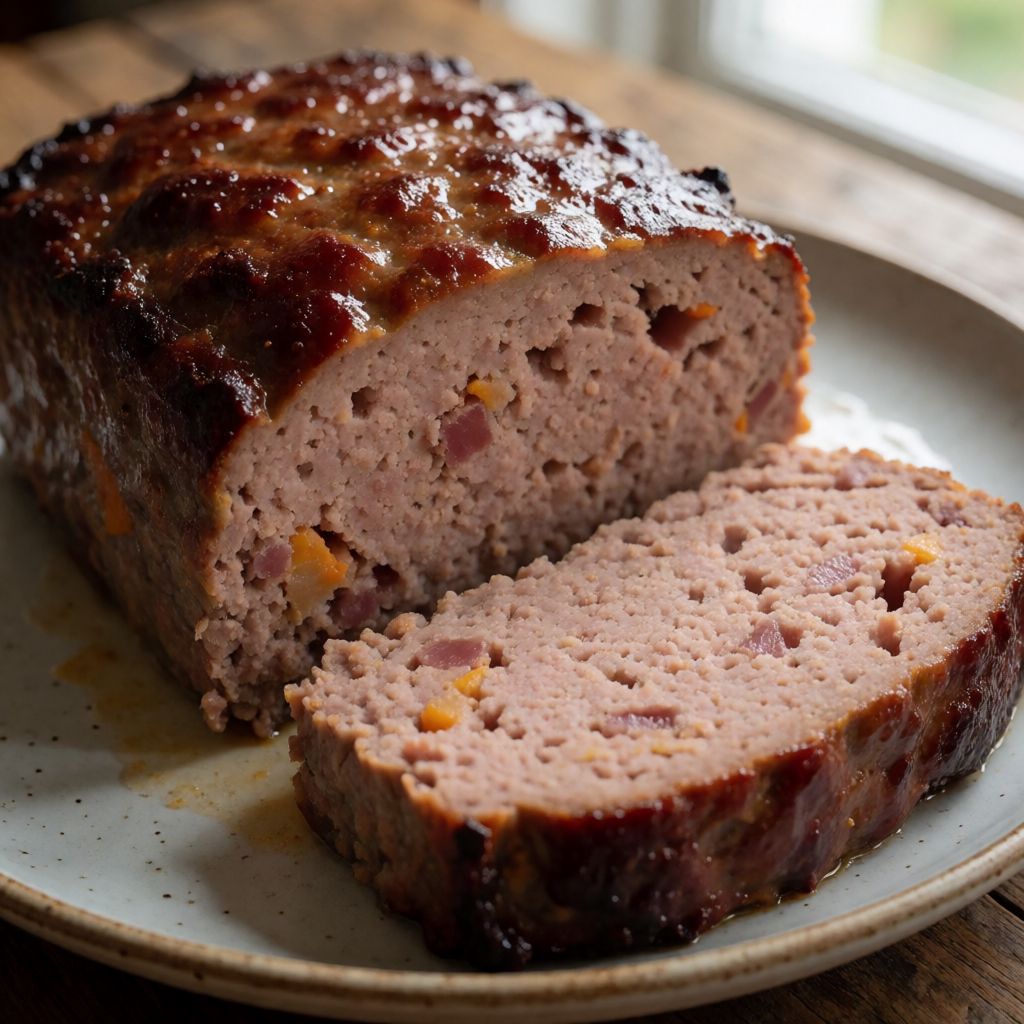
A hearty minced pork meatloaf wrapped in bacon and roasted alongside beetroot, carrot and potato.
Labels are worked out automatically from the ingredients and can be wrong. Check the packaging if it matters to you.
Ingredients
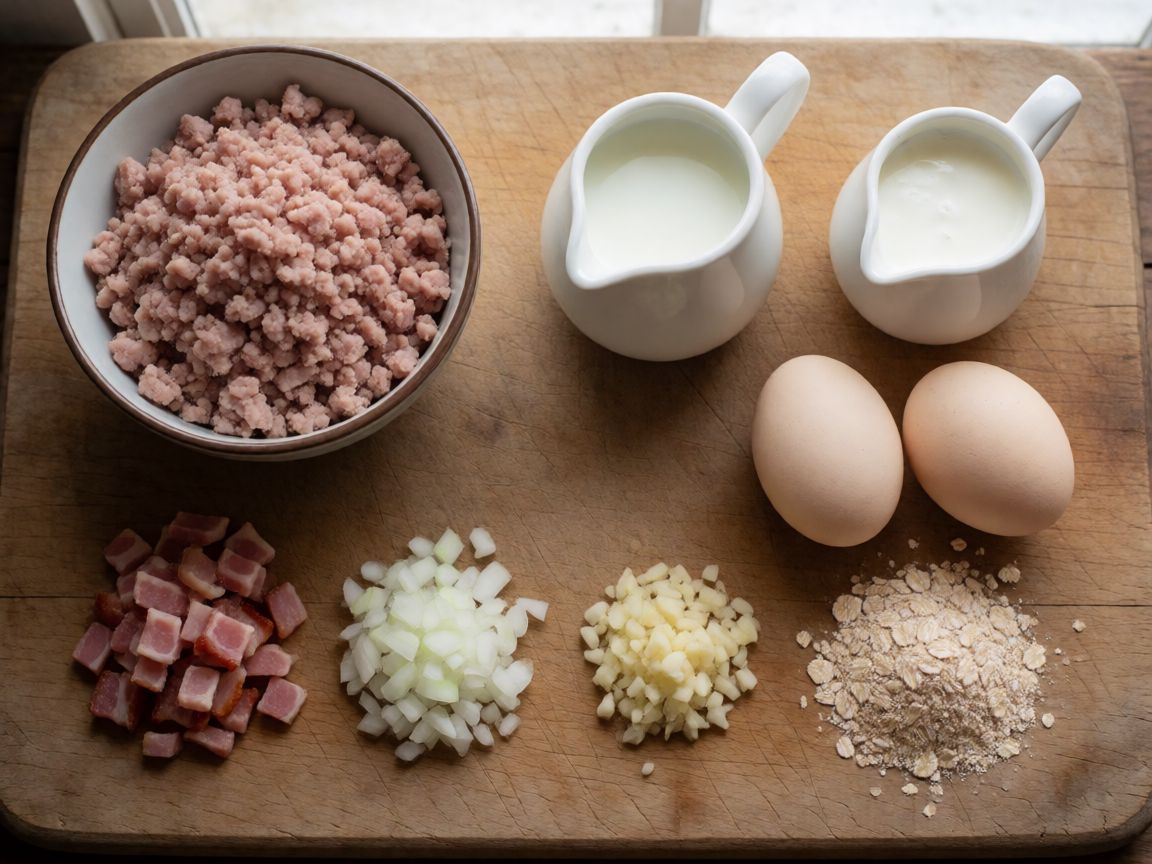
- 800 g Minced pork
- 3 pcs Bacon fried until crisp and diced small
- 2 pcs Onion finely chopped
- 2 clove Garlic finely chopped
- 200 ml Milk
- 50 ml Double cream
- 2 pcs Eggs
- 20 g Porridge oats
- 2 tbsp Thyme fresh, finely chopped
- 1 tsp Rosemary fresh, finely chopped
- 2 tsp Salt
- 2 tsp Black pepper freshly ground
- 4 tbsp Breadcrumbs
- 15 pcs Bacon
- 250 g Beetroot cut into large cubes
- 250 g Carrot cut into cubes
- 400 g Potato cut into large cubes
- 3 tbsp Thyme fresh, finely chopped
- 1 bunch Thyme fresh, for serving
















Steps
Put all the meatloaf ingredients in a large bowl and beat with a mixer for 3 minutes.
3 minShape the mixture into a meatloaf in a roasting tin large enough to hold the loaf and the diced root vegetables.
Sprinkle the loaf with breadcrumbs, lay a thin layer of bacon over the top along its length, and arrange the root vegetables with fresh thyme on either side of the tin.
Place in an oven preheated to 180°C (fan/convection) and roast for about 1 hour; the internal temperature should reach about 75°C.
60 minStir the potatoes and root vegetables a few times during roasting.
Before serving, sprinkle with a little fresh thyme.
This is a Sunday roast reduced to one tin: the meatloaf stands in for the joint, the beetroot, carrot and potato stand in for the roasties, and they cook together so the fat and juice from the meat baste the vegetables instead of you doing it with a spoon. That's the whole logic of the dish — one source of heat, one source of fat, two things finishing at roughly the same time.
What decides whether it works is the mixer, not the oven. Minced pork on its own, squeezed into a loaf shape and baked, comes out dry and crumbly — it falls apart when you cut it, because the proteins haven't been worked into a bound structure, just piled up. Beating the mix for a full three minutes with eggs, milk, cream and oats does the job a sausage machine does by emulsifying: it coats every strand of meat in liquid fat and egg protein, so it sets as one dense piece rather than a scoop of mince that happens to be loaf-shaped. Short the mixing, and you get a crumble, not a loaf — no amount of extra oven time fixes that afterwards.
Some say you should handle meatloaf mix as little as possible, the way you'd handle pastry — overworking makes it tough. That's a rule borrowed from the wrong recipe. Pastry toughens because you develop gluten in flour; this isn't flour, it's meat, and what you're building here isn't elasticity but a stable emulsion. Three minutes of beating is short for a stand mixer and about right by hand with a wooden spoon and some shoulder — you're looking for the mix to go from loose and wet to tight and slightly glossy, pulling together rather than slopping.
On the 75°C mark — don't treat that number as a formality. Pork needs to get there to be safe, and it's also the point past which the loaf starts to squeeze out its own moisture and toughen. A probe thermometer earns its keep here; without one, judge by feel — press the centre and it should give back slightly rather than stay dented, and the juice that runs when you cut it should be clear, not pink. An hour at 180°C fan is the lower bound for an 800g loaf of this shape; a shallower, wider loaf gets there faster, a tall narrow one takes longer, because what's actually cooking is the distance heat has to travel to the middle, not the clock.
On the vegetables: beetroot, carrot and potato cut into large cubes aren't an afterthought garnish, they're there because they take almost exactly as long as the meatloaf to go from raw to done, if cut to a similar size and stirred so they don't just sit baking on one face. Beetroot is the slow one of the three — it holds its structure longest, so if yours is still faintly resistant when the potato's soft, that's not a fault, that's beetroot being beetroot. Test by bend and give, not by time: a cooked carrot cube yields when pressed, doesn't snap.
Minced pork is the base because it's fatty enough to self-moisten without you adding extra fat to the pan — a loaf made from lean mince, beef say, would need fat built back in or it dries out under this method. If you only have beef or a leaner mince, the fix isn't more cooking, it's more fat in the mix: a bit more cream, or swap some of the mince for fattier meat.
The fried, diced bacon inside the mix is for texture against the smooth meat paste — little salty, crisp-edged pockets breaking up what would otherwise be uniform. The milk and cream aren't for flavour so much as for keeping the mixture loose enough to beat into that emulsion; oats and breadcrumbs are the opposite job, soaking up the extra liquid so the loaf holds its shape rather than running flat in the tin. If you're out of oats, more breadcrumbs does the same work; if you're out of breadcrumbs, oats alone will do, just use slightly less milk to compensate.
Thyme and rosemary, fresh rather than dried, because dried herbs this close to raw meat taste dusty against pork's own fat — fresh ones release their oil as they cook rather than sitting inert. No fresh thyme in the house — dried works in the mix itself, just use less, maybe a third of the amount, since dried herbs are concentrated.
Patience here isn't really about the clock, it's about not opening the oven to poke at things every ten minutes, which just lets the heat out and makes the oven work twice as hard to recover it — stir the vegetables, yes, but close the door again straight after and let the hour do what it needs to.