
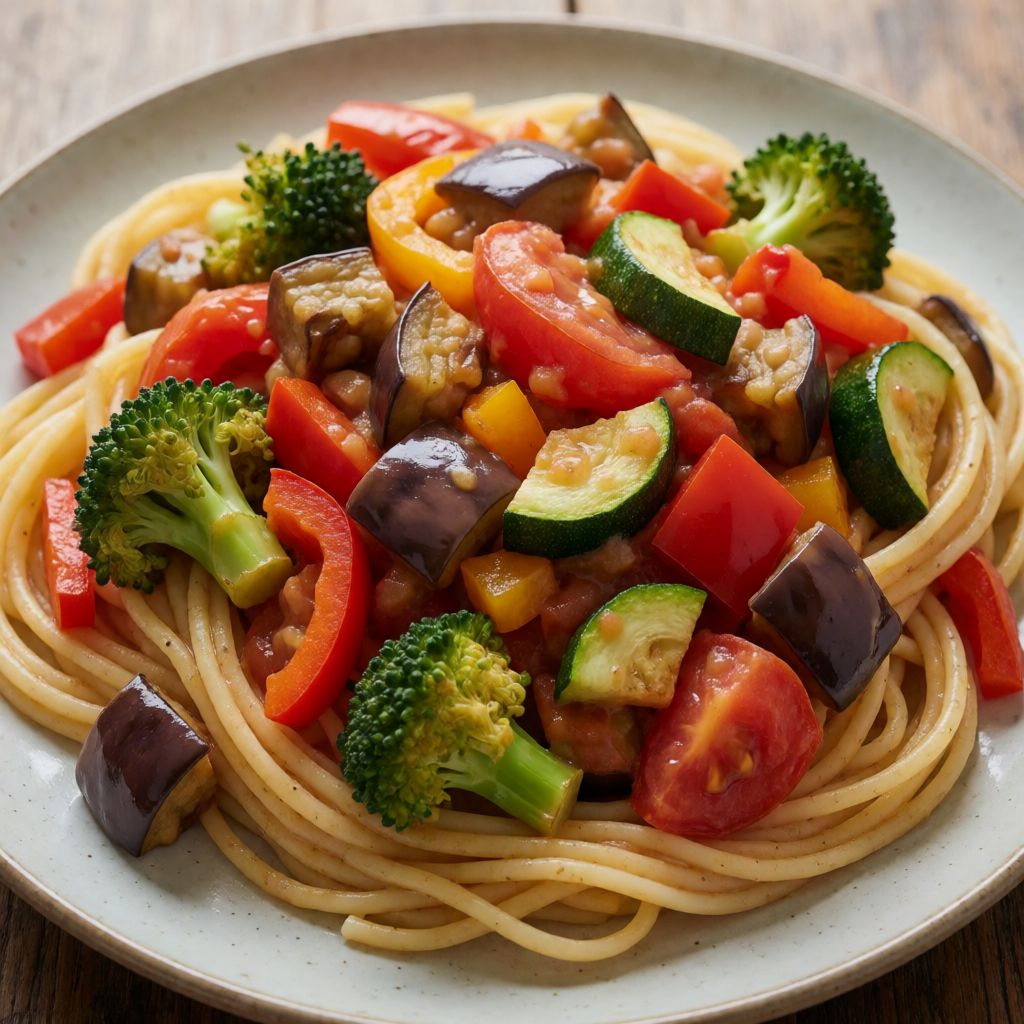
 AI photo
Tender Mediterranean Pasta
A creamy Mediterranean pasta with aubergine, courgette, pepper, broccoli and tomato, finished with cream and Parmesan.
Labels are worked out automatically from the ingredients and can be wrong. Check the packaging if it matters to you.
Ingredients
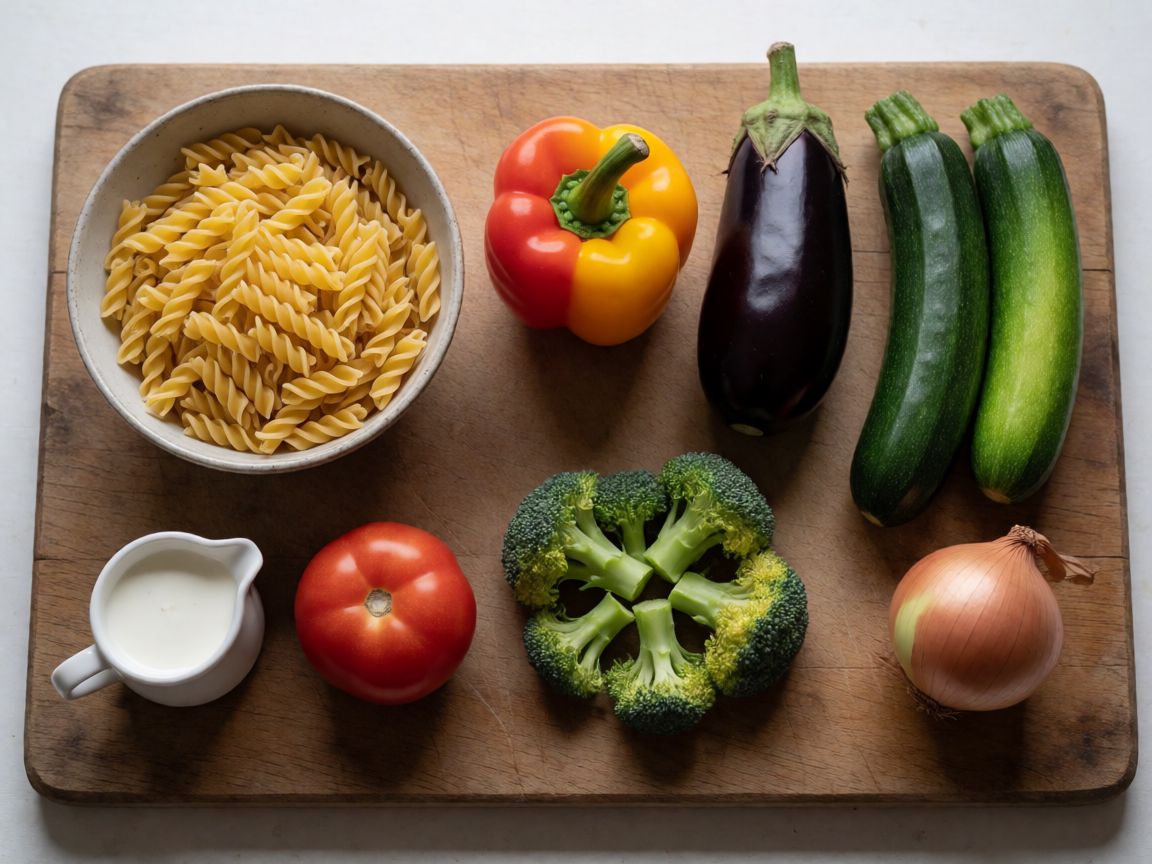
- 400 g Pasta
- 1 pcs Bell pepper
- 1 pcs Aubergine
- 2 pcs Courgette
- Broccoli to taste
- 1 pcs Tomato
- Onion to taste
- Salt to taste
- 1 package Double cream
- Parmesan to taste










Steps
Cut all the vegetables into small cubes, season with salt and cook them together in a little water until fully tender.
Once the vegetables are cooked, purée them through a sieve or with a blender until smooth, transfer to a large frying pan and stir in the double cream.
Boil the pasta, combine it with the vegetable sauce and heat over high heat for 20 seconds, sprinkling with Parmesan and stirring.
Forget the word 'Mediterranean' for a second — the pepper, aubergine, courgette, tomato, this is the ratatouille basket, no argument there. But ratatouille earns its flavour the slow way: vegetables sautéed separately, each losing its water in oil, each catching a little colour before they're allowed to meet. This recipe skips all of that. The vegetables go straight into a splash of water, boiled soft, then blended smooth and finished with cream. What you get isn't ratatouille at all — it's a vegetable velouté, and the cream is doing the job that oil and caramelisation would have done in the original dish: carrying flavour, coating the tongue, making a watery purée taste like something.
So the whole thing turns on one word in step one: 'a little water.' Not a pot you drown the vegetables in — a splash, just enough that nothing catches on the bottom while everything else cooks in its own juice. Courgette and tomato throw off plenty of liquid on their own; add too much on top and you've built yourself a vegetable soup, and no amount of cream stirred in afterwards will bring the taste back up to where it was. If you're worried about scorching on a thin domestic pan, put a plate over it instead of a lid — you'll trap the steam, the vegetables stew in that, and you keep the water you poured in to a token amount.
Four hundred grams of dry pasta, by the way, is not a portion for one — call it a plate for three, generous for two if you're hungry after a walk. Don't let the card mislead you; weigh out what your table needs and scale the vegetables the same way, they're all 'to taste' except the pepper and aubergine, which the recipe fixes at one each because that's roughly the ratio that keeps the sauce from turning into a single-vegetable mush.
On the vegetables themselves: the bell pepper's colour is a choice, not a detail. Red and yellow peppers are riper, sweeter, and will push the sauce toward a mellow, almost fruity note; green pepper is unripe and brings a grassy, slightly bitter backbone — fine if you want the sauce less sweet, wrong if you're already fighting bitterness from an underdone aubergine. For the aubergine, pick one that's taut and glossy, heavy for its size. An old, wrinkled aubergine has started losing water from the inside, and it cooks spongy no matter how long you give it — that's a defect you can't fix at the stove, only avoid at the shop. Courgette: smaller and younger means fewer seeds and less water inside, which matters here because you're already managing how much liquid ends up in the pan. Broccoli needs watching from the other direction — tender enough to purée, no further. Push it past that point and it turns grey and starts smelling of sulphur, a smell cream will not cover up.
The tomato is there for acidity and body, not sweetness — if yours is pale and underripe, a short extra simmer or a small spoon of tomato paste will do the job it was meant to do. Onion is the aromatic base; it doesn't need to be fried first here, since everything's going into water and then a blender, but don't skip it — it's doing quiet, structural work under the louder vegetables.
Double cream earns its place by fat content, roughly half fat to the rest water — that's what lets it sit in a hot pan without splitting into grease and liquid. The substitution criterion is exactly that: anything rich enough in fat to hold together under heat. Crème fraîche works. Full-fat Greek yoghurt can stand in, but add it off the heat, stirred through once the pan's away from the flame, or it will curdle and you'll have little white flecks through your green sauce instead of silk. Parmesan, at the end, is salt and savoury depth in solid form — buy it in a block and grate it yourself if you can, because pre-grated Parmesan is often cut with starch to stop it clumping, and that starch is exactly what makes a sauce go gluey instead of glossy. Any hard, aged, low-moisture cheese covers the same ground — Grana Padano is a close cousin, Pecorino will do it saltier and sharper.
One more word on the sieve versus the blender in step two. A blender is faster, but broccoli's stalks and pepper skins have fibres a blender just chops into smaller fibres — you'll still feel them on the tongue. A sieve catches what the blender can't break down. If you've only got a blender, that's fine, just don't expect the same silk; it's a trade of ten extra minutes of pushing purée through mesh for a texture no machine in a home kitchen quite matches. And give the vegetables the time they actually need before any of this — rushing the boil to save ten minutes is how you end up blending something half-raw, and no cream fixes a sauce that still tastes of boiled-but-not-cooked vegetable.