
 AI photo
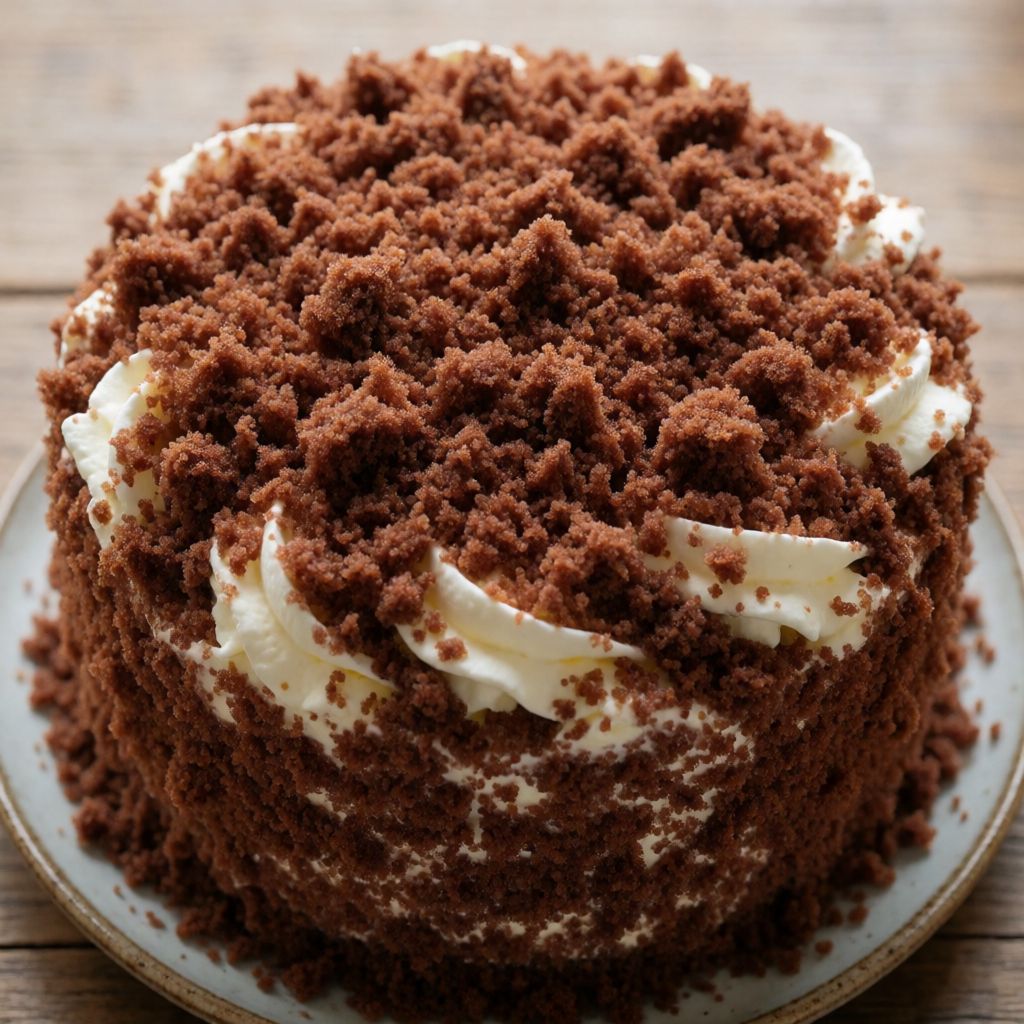
Chocolate Mimosa Cake
A soft chocolate sponge cake filled and coated with whipped cream and dark chocolate chips, finished with sponge crumbs and cocoa.
Labels are worked out automatically from the ingredients and can be wrong. Check the packaging if it matters to you.
Ingredients
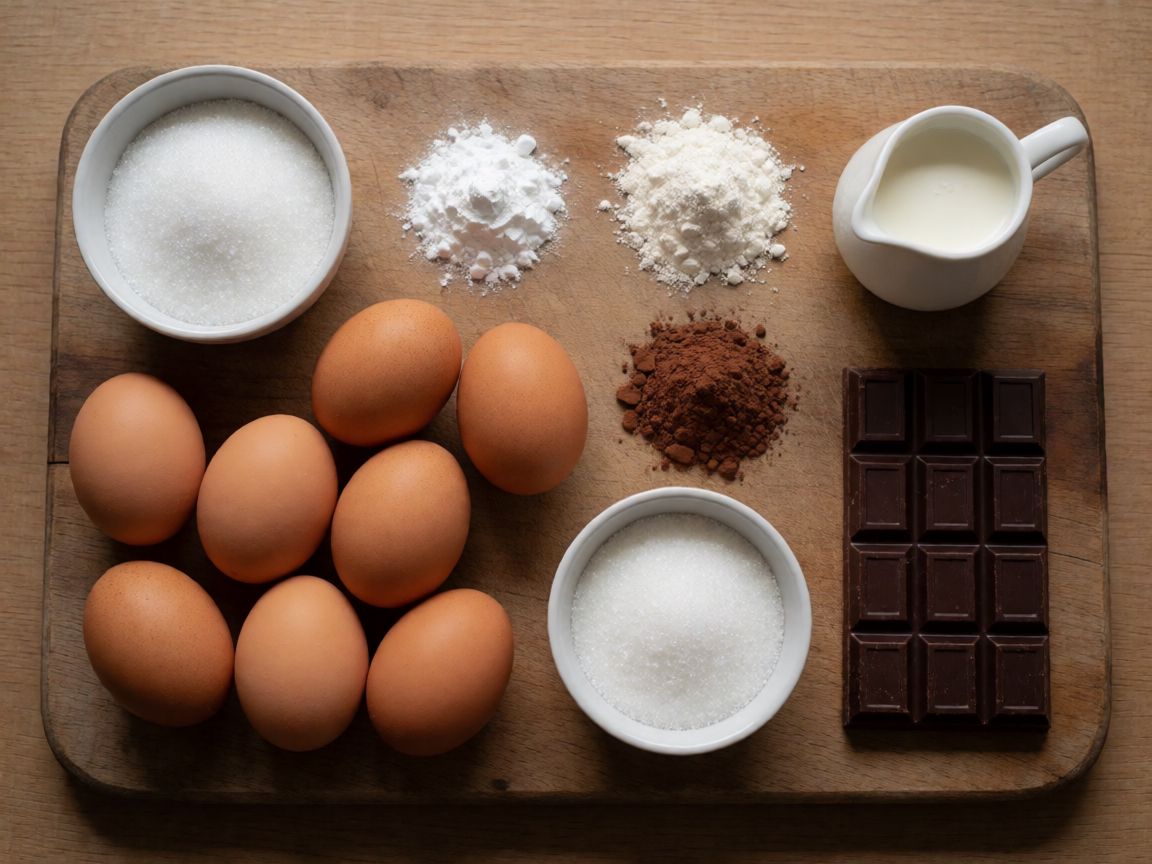
- 7 pcs Eggs
- 200 g Caster sugar
- 130 g Potato starch
- 100 g Plain flour
- 30 g Cocoa powder
- 750 ml Double cream
- 110 g Caster sugar
- 100 g Dark chocolate chips
- Milk to taste
- Cocoa powder to taste





Steps
Crack the eggs into a large bowl, add the sugar and whisk with an electric mixer for 10-15 minutes until light and creamy.
15 minSift the potato starch and flour, folding them in gradually with a spatula. Add the cocoa powder and mix.
Pour the batter into two greased 22 cm tins. Bake at 180°C with fan assistance for about 15 minutes.
15 minRemove the finished sponges from the oven and leave to cool completely.
Whip the cream with the sugar until thick, add the dark chocolate chips and gently fold through. Chill in the fridge.
From one sponge, cut 3 discs of different sizes using a serrated knife. Cut the second sponge into 1 cm cubes.
Place the largest disc on a serving plate, brush with milk and cover with the cream filling.
Place the next smaller disc on top, brush with milk and cover with filling. Repeat with the smallest disc.
Cover the whole cake with the cream filling, smoothing it evenly on all sides with a spatula.
Scatter the sponge cubes over the whole cake and dust with cocoa powder.
Leave the cake in the fridge for a few hours before serving.
This is Mimosa cake, and the name tells you everything about the trick: those golden cubes scattered over the cream are meant to look like the little puffs of mimosa flowers, or — depending who's telling the story — like scrambled egg, which is why in some kitchens it's called "egg cake" instead. Underneath the disguise it's a very ordinary chocolate sponge, cut down into a dome, rebuilt as a dome, and then camouflaged with its own crumbs. No fondant, no piping bag, no cake-decorating skill required — the decoration is a magic trick done with a knife and a sieve.
What decides whether it works isn't the baking, which is forgiving, it's the cutting. You're taking one flat round sponge and turning it into three stacked discs of shrinking size, like a wedding cake pretending to be one layer. If you cut those discs freehand and wonky, the stack leans and the whole dome looks like it's been in an accident. A serrated knife, a light hand, and accepting that "different sizes" just means noticeably smaller each time, not geometrically precise — that's the whole skill.
The second decision point is the cream. Six hundred and fifty millilitres of double cream whipped with sugar until it holds its shape is not a drizzle, it's structural — it's the mortar between your three discs and the render coat over the whole dome. Whip it too far and it turns grainy and starts to split, especially once you fold in chocolate chips that want to drag it down; stop just short of stiff, while it still looks glossy, not chalky.
Start with the eggs, because that 10-15 minutes of whisking is the entire rising agent in this sponge — there's no baking powder on the list, and that's not an oversight. Beating whole eggs with sugar until pale and thick traps air into the mixture mechanically; that trapped air is what the heat of the oven expands into a sponge. Some say you can rush this with a hand whisk in two minutes — no, because what you get instead is a flat, eggy pancake with cocoa in it. The mixture should roughly triple in volume and leave a ribbon trail when you lift the whisk. That's your doneness cue, not the clock.
The potato starch alongside plain flour is doing a specific job: starch alone gives a sponge that's light but a bit short on structure, flour alone can turn gummy once cocoa and cream are added on top. The mix of the two gives you a sponge dry enough to hold a knife-cut shape without crumbling to dust, but still soft enough to soak up the milk you brush on later. If you can't get potato starch, cornflour does the same starch job — just don't swap all the flour for it, or the sponge loses the backbone it needs to be sliced into discs and cubes.
Fold, don't stir, once the starch and flour go in — you've spent fifteen minutes building air into those eggs, and heavy stirring now knocks it straight back out. The cocoa goes in at the same stage, mixed rather than folded, because by then you're not protecting delicate air bubbles so much as distributing colour and flavour evenly.
The 180°C fan oven setting matters because fan ovens run hotter-feeling than their dial suggests — they circulate the heat so it hits the sponge from all sides, which is exactly what you want for an even rise across two thin tins rather than a dome in the middle. Fifteen minutes is a lower bound, not a guarantee: press the centre lightly, it should spring back rather than leave a dent, or a skewer should come out clean. Every domestic oven lies a little about its own temperature, so trust the sponge, not the dial.
Double cream is non-negotiable here, not snobbery — it's the fat content, around 48%, that lets it whip into a stable structure strong enough to hold up three stacked sponge discs. Lower-fat creams simply won't hold that shape; they'll slump, and a slumping filling means a leaning cake. The dark chocolate chips folded in at the end are there for texture as much as flavour — little pockets of bite inside the soft cream — so fold them in gently right before you use the cream, not earlier, or they'll sink.
The milk you brush onto each disc is doing a quiet but essential job: it stops the cut sponge drying out at the edges while it sits assembled in the fridge, and it helps the layers taste like one cake rather than three stacked biscuits. Tea-with-milk habits aside, plain whole milk is what you want here, nothing flavoured — you're after moisture, not another taste competing with the chocolate.
Finally, the cubes of the second sponge scattered over the finished dome aren't decoration in the icing sense, they're camouflage with a purpose: they hide every uneven patch of cream smoothing you didn't quite manage, the way a long coat hides whatever you're wearing under it. A light dusting of cocoa on top finishes the illusion and adds a last touch of bitterness against all that whipped cream. And the few hours of chilling at the end — don't skip or shorten this. It's not inactive time, it's the step where the whole cake decides whether it's going to hold together on the plate or collapse the moment your knife goes in.