
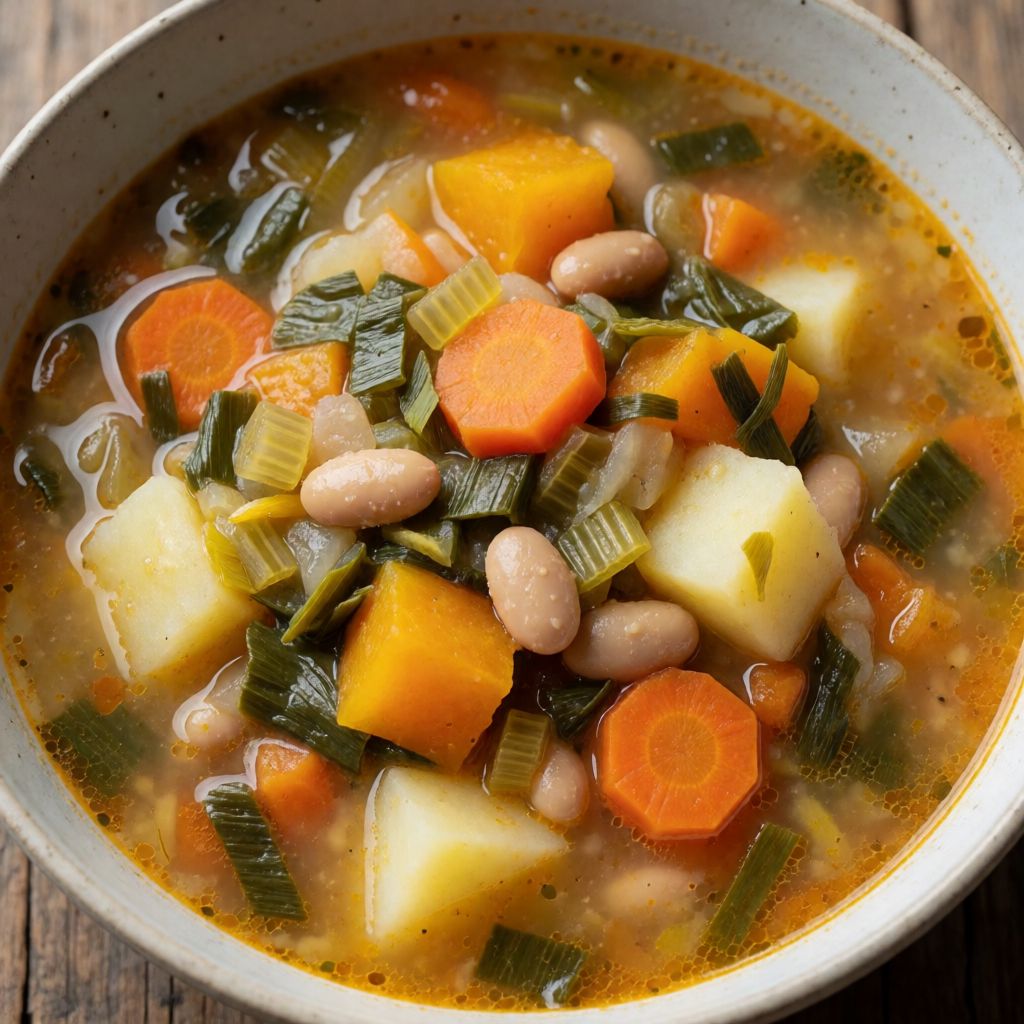
 AI photo
Ligurian Minestrone
A hearty Ligurian vegetable and bean soup finished with a spoonful of pesto.
Labels are worked out automatically from the ingredients and can be wrong. Check the packaging if it matters to you.
Ingredients
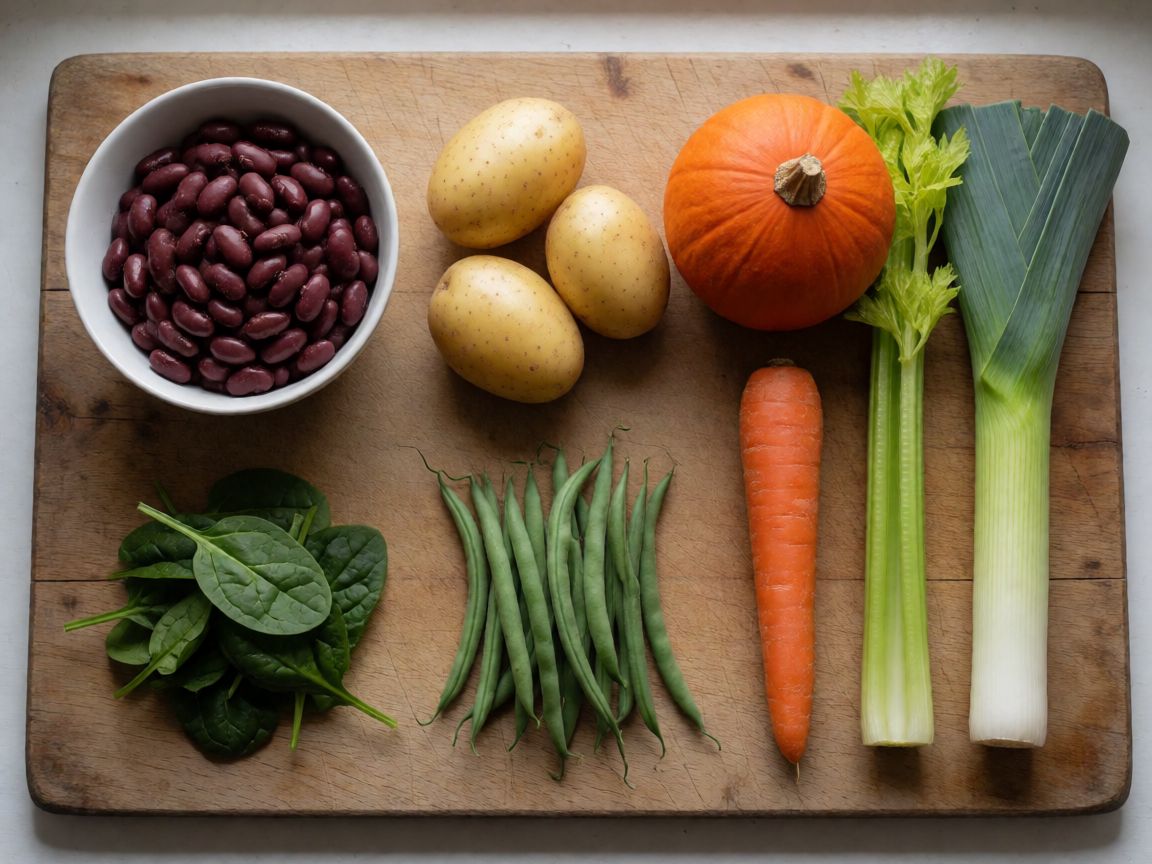
- 150 g borlotti beans
- 3 pcs potatoes
- 1 pcs pumpkin
- 1 pcs carrot
- 1 pcs celery stalk
- 1 pcs leek
- 100 g green beans
- 50 g spinach
- 1 pcs bay leaf
- 4 tbsp pesto
- olive oil to taste
- salt to taste
- black pepper to taste













Steps
Boil the beans with the bay leaf in water for at least 40 minutes.
40 minCut the celery into rings, the pumpkin into cubes, the potatoes into cubes, and finely chop the leek.
Add the chopped vegetables to the pot with the beans, remove the bay leaf, add salt and cook for another 40 minutes.
40 minChop the spinach and green beans, add to the soup and cook on low heat for a further 20 minutes.
20 minRemove from the heat, let cool slightly, add 4 tablespoons of pesto and stir.
Season with olive oil and black pepper to taste, and serve hot or warm.
Minestrone is a peasant soup that got dressed up and sent abroad, and the version with pesto is specifically Genoese — it tells you exactly which coast it's from, because basil doesn't grow everywhere in Italy with that intensity, and Liguria has been trading it in jars and tins since the 19th century. What decides whether this works is not the list of vegetables — swap half of them and nobody will complain — but the order in which things go into the pot, and the fact that pesto is stirred in off the heat, never cooked.
The dried borlotti bean is the backbone. It needs real time in water before anything else happens, and "40 minutes" in the recipe is a floor, not a target — an old bean, or one that sat in your cupboard two winters, will sit there stubborn at 40 minutes and need longer. You test it the only honest way: bite one. If it's still chalky in the middle, it stays on the heat. No amount of clever seasoning later fixes an underdone bean — that's a defect you can't cover up, so don't rush the one step that actually needs rushing.
Everything added after the beans — potato, pumpkin, celery, leek — goes in while the beans are already soft enough to tell you so, not on a clock independent of them. The vegetables aren't there to be *al dente*; they're there to collapse a little into the broth and thicken it. You'll know the carrot-family vegetables are done when a piece gives against the spoon instead of resisting — that's the "bends instead of snaps" test, and it works here as well as anywhere.
The one rule that actually matters and that people break constantly: pesto is not an ingredient you cook, it's a finishing sauce. Basil loses its scent to heat — the volatile oils that make pesto taste like pesto cook off, and what's left is olive-green sludge that tastes mostly of garlic and oil. So the soup comes off the heat, cools for a minute so it won't scald the basil, and only then gets the pesto stirred through. Some say you can add it earlier "to let the flavours mingle" — no, because that's exactly how you lose the flavour you were trying to add. If you're making your own pesto rather than using a jar, the same logic applies to the making of it: basil gets bruised in a mortar or blitzed cold, never warmed.
On borlotti beans: dried ones need soaking the night before if your bag doesn't say "quick cook" — this recipe doesn't mention soaking, which tells you either the beans are meant to be small and fresh-ish, or you're expected to know and do it anyway. If you're working from a British supermarket shelf, tinned borlotti (drained, about two tins for 150g dried equivalent) saves you the 40-minute boil entirely — just warm them through with the bay leaf for ten minutes before the vegetables go in, and don't tell anyone, because nobody will taste the difference in a soup this busy.
The pumpkin is doing a job most British kitchens hand to squash — and squash is the honest substitute, not a compromise. Butternut, if that's what's on the shelf, behaves the same way: it breaks down at the edges and thickens the broth, which is the actual point of it being there, not decoration. Same logic for the leek — it's an onion that's gentler and sweeter, used because it was what grew well on the Ligurian coast; a regular onion, finely chopped, does the same structural work if that's what you have.
Celery here is the stalk, not the leaf — it's there for its faint bitterness and crunch-that-softens, balancing the sweetness of pumpkin and leek. If your stalks are thick and stringy, as supermarket celery often is, pull the strings off with a peeler before slicing into rings; otherwise you get threads caught between your teeth, which is a real defect, not a fussy one.
Green beans and spinach are the two ingredients most likely to be frozen in a British freezer already, and frozen is fine — they go into the pot straight from frozen in the last stretch, no thawing needed, since they're going to cook briefly either way. Fresh spinach wilts almost the moment it meets hot liquid, so if yours looks cooked before you've finished stirring, that's not overcooking, that's spinach doing exactly what spinach does.
Olive oil at the end is seasoning, not cooking fat — this is a soup, nothing is fried in it, so the oil you drizzle on top should be one with actual flavour, an extra virgin, because its whole job is to sit on the surface and be tasted raw. That's different from "oil with no smell of its own" used for frying elsewhere — here you want the opposite, oil that announces itself. If you don't have good olive oil, don't substitute a neutral one and call it the same dish; leave it out rather than fake it.
This is a two-hour pot for four people who are in no rush — the kind of cooking where you put the beans on, go do something else, and come back when the smell changes. That waiting is not dead time to eliminate; it's the thing that turns dried beans and cheap vegetables into a soup that holds together. Rush it and you get hard beans floating in thin broth with pesto on top — all the ingredients present, none of the mechanism that makes them a minestrone.