
 AI photo
Mini Potato and Caper Pizzas
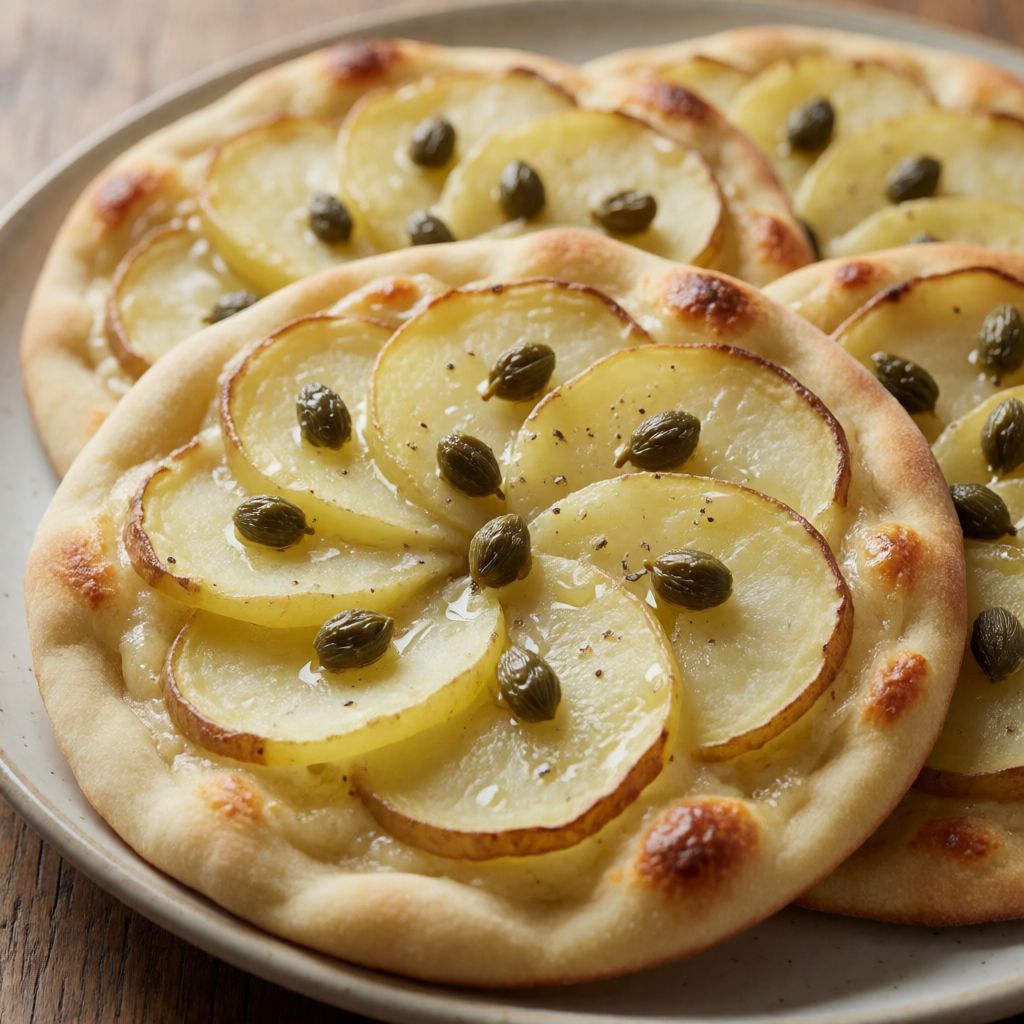
Little homemade pizza bases topped with sliced potato, mozzarella and olives or capers, finished with thyme and olive oil.
Labels are worked out automatically from the ingredients and can be wrong. Check the packaging if it matters to you.
Ingredients
- 25 g Yeast
- 300 ml Water
- 3 tbsp Olive oil
- 1 tsp Salt
- 300 g Plain flour
- 250 g Durum flour or wholemeal, einkorn or spelt flour
- 1 tbsp Olive oil extra for the bowl and kneading
- 3 pcs Potato thinly sliced
- 125 g Mozzarella sliced
- 1 tbsp Olives
- Salt to taste
- Black pepper to taste, freshly ground
- 1 bunch Thyme fresh








Steps
Dissolve the yeast in a bowl with the water.
Add a little flour, the olive oil and salt, mix well, then gradually add the remaining flour until the dough is smooth and elastic.
Transfer the dough to a bowl greased with olive oil and leave to rise, covered, on the counter for 1 hour. Divide the dough into equal pieces and press each by hand into a flat pizza base.
60 minLay the bases on baking parchment and top with fresh mozzarella, thin potato slices and olives or capers, as you like.
5 minTransfer the pizzas with the parchment onto a hot baking tray and bake in a preheated fan oven at 250°C for 10 minutes.
10 minSprinkle the finished pizzas with a pinch of flaked salt, freshly ground black pepper, fresh thyme and a drizzle of olive oil.
Serve straight away, though they're also good cold, for example in a lunchbox.
These are personal-sized flatbreads, not pizza in the Neapolitan sense — think of them as savoury scones that happen to be round and topped. Twelve of them, each about the size of a saucer, built from a plain yeasted dough that has to do two jobs: rise enough to be light, and stay stiff enough that raw potato slices don't sink into it like stones into mud. That tension is what decides whether these work.
The potato is the whole gamble here. You're laying it on raw, thin, and trusting ten minutes at a screaming-hot oven to cook it through before the base either burns or stays pale and gummy. Some say pizza topping just needs heat and time — no, because potato specifically needs *thinness* more than heat. A slice thicker than a coin is still crunchy-raw when the cheese underneath has already gone past melted into leathery. Slice it like you're shaving, not chopping, and the problem disappears before it starts.
The two flours are doing a quiet but real job. Plain flour alone gives you a soft, slightly bland base — fine, but forgettable. Durum (or spelt, or einkorn) brings a firmer bite and a faint nuttiness, because it's a harder wheat with more structure to its gluten. Mixed with plain flour, you get a base that holds its shape under wet toppings instead of going soggy-floppy in the middle, which is the usual complaint with homemade flatbreads once you lift them off the tray.
The oven is the part most home kitchens get wrong, and it's worth being honest about it. The recipe wants 250°C fan — that's near the ceiling of what a domestic oven will give you, and even then, a kazan or a wood-fired pizza oven is hitting 400°C plus. You won't get a leopard-spotted crust at home, and that's fine: what you're actually chasing is a base cooked through before the potato on top turns leathery and the cheese turns to rubber. The trick that actually helps a domestic oven punch above its weight is preheating the tray itself — the recipe says "hot baking tray" for a reason. A cold tray under the dough means the base steams instead of crisping; it sits in its own trapped moisture and comes out pale and tacky underneath. A preheated tray or a baking stone, if you own one, gives the base a hard contact shock the moment it lands, which is the only way a home oven mimics what a proper oven floor does by default.
Yeast first, into water, before anything else touches it — that's not ritual, that's biology. Yeast needs to wake up and start feeding before salt and oil arrive, because salt slows fermentation and oil coats the dough and makes it harder for water to reach the yeast cells at all. Dissolve it, let it sit a minute looking cloudy and faintly alive, then build the dough around it. If your kitchen's cold — and most British kitchens in winter are — the hour's rise can easily need longer. The dough is ready when it's domed and springs back slow and soft when you poke it, not when the kitchen clock says sixty minutes. Time here is a floor, not a verdict.
On the flour: durum, wholemeal, einkorn, spelt — the common thread you're choosing on is protein structure and bite, not flavour nostalgia. Any firmer, higher-protein flour than standard plain flour will do the same job of stiffening the dough against wet toppings. If you've only got plain flour in the cupboard, use it all — the bases will be a touch softer and more bread-like, which isn't a failure, just a different bread.
Mozzarella: buy the kind sold in water, sliced thin, not the pre-shredded bagged stuff meant for melting on bigger pizzas — that's drier and stringier by design, made to survive a long bake without weeping. Here you want wet, mild cheese that melts fast in ten minutes and doesn't fight with the potato for moisture. If mozzarella's not to hand, any mild melting cheese with a similarly low smell of its own works — a young Monterey Jack, for instance — because the point is for it to disappear into the background behind the potato and capers, not announce itself.
Olive oil shows up three times — in the dough, for greasing the rising bowl, and drizzled at the end — and each use is different. In the dough it tenderises and adds a little flavour; on the bowl it's purely to stop the dough sticking and tearing as it rises, which matters more than people think, because a torn dough skin lets gas escape unevenly and gives you a lopsided base. The final drizzle is seasoning, not cooking — do it after the oven, not before, or the heat just cooks the oil's flavour away instead of letting you taste it.
Patience is the ingredient nobody puts on the shopping list, but it's the one this recipe actually needs most: the hour's rise can't be rushed by turning the oven on early or kneading harder. It's chemistry on its own clock. Everything after that — the slicing, the ten minutes in a scorching oven — moves fast, almost rudely fast by comparison. Good for a Sunday when the roast is already taking up the oven's attention for hours and you need something quick to put out alongside it, or cold the next day in a lunchbox, which these honestly survive better than most hot-eaten bread does.